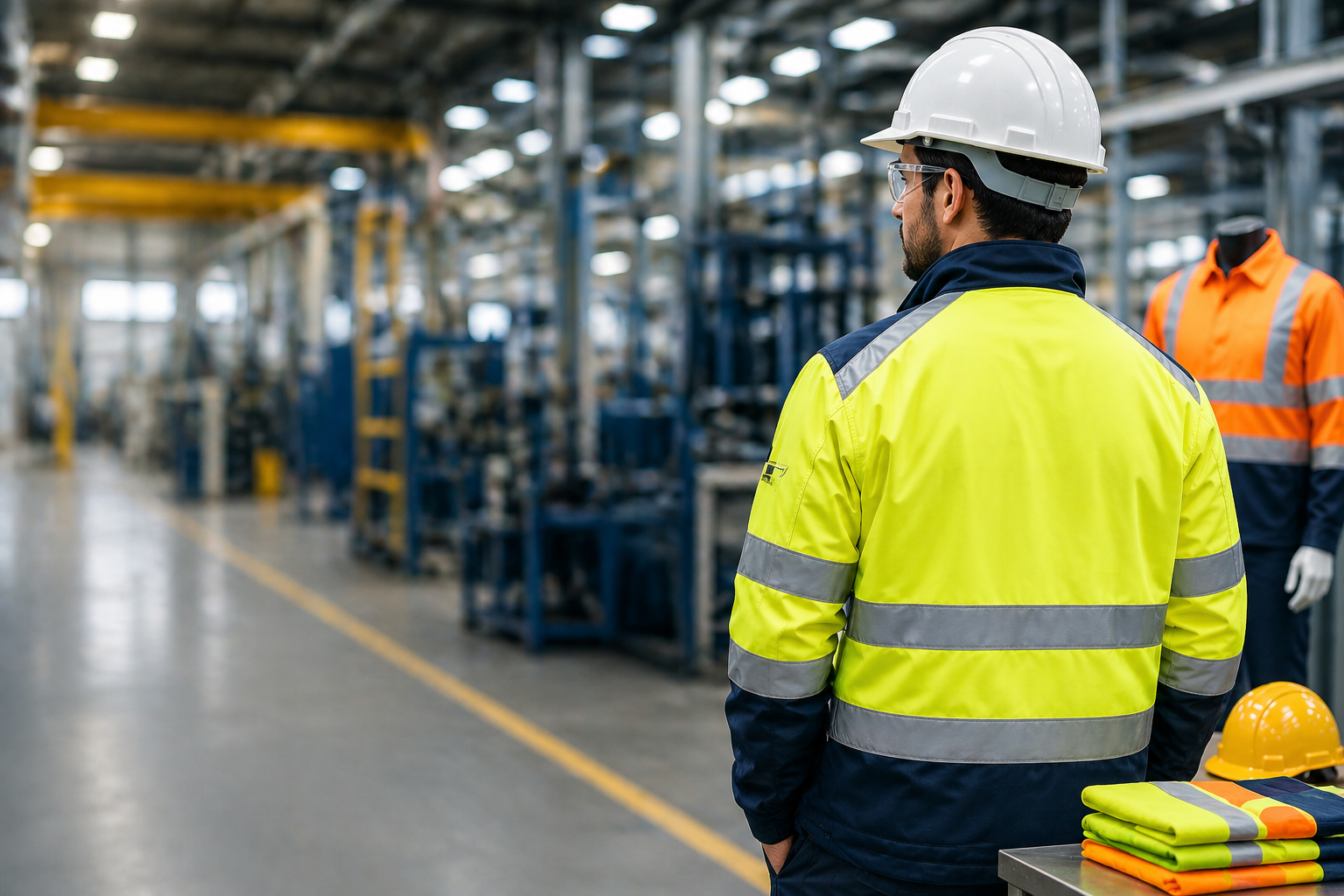
A worker walks onto a construction site wearing a high-visibility vest that loses its reflective strips after ten washes. A chemical plant technician wears a flame-resistant jacket that was never tested to the correct standard. Neither worker knows there is a problem until there is.
When something goes wrong, the question is not just “what happened?” It is also “who supplied the clothing, and did it meet the required standard?” That question carries serious legal, financial, and reputational consequences for the employer.
Choosing the right safety clothing manufacturer is not a procurement formality. It is a direct line of defence against workplace liability.
The Workplace Liability Stakes in India
India’s workplace safety data is sobering. According to DGFASLI (Directorate General Factory Advice Service and Labour Institutes), an average of three factory workers die, and eleven are injured every day in registered industrial establishments. In 2024, at least 240 manufacturing, mining, and energy sector accidents were recorded by December alone, resulting in over 400 fatalities and more than 850 serious injuries.
Under India’s legal framework, employers carry significant obligations:
- The Factories Act, 1948, requires employers to maintain safe working conditions and provide appropriate protective equipment.
- The Occupational Safety, Health and Working Conditions (OSH) Code, 2020 mandates that workplaces be free from hazards and that workers receive protective gear at no cost.
- The Employee Compensation Act requires employers to compensate workers injured on the job, including medical expenses, lost wages, and, in severe cases, lump-sum payments for permanent disability or death.
Fines for violations can range from thousands to lakhs of rupees, depending on severity. ³ And beyond the legal penalties, an injured worker, a court case, or a regulatory inspection can cost a business far more in lost productivity, damaged reputation, and management time.
The clothing your workers wear is directly tied to these obligations. A safety clothing manufacturer that cuts corners on fabric performance or certification compliance does not just supply poor clothing; it transfers liability risk onto you.
What a Safety Clothing Manufacturer Actually Does
A safety clothing manufacturer does more than stitch fabric into garments. The process begins with risk mapping, understanding the specific hazards present in the work environment, and designing protective clothing to address each one systematically.
Different work environments require different protection:
- Construction and civil works — abrasion resistance, high-visibility elements, reinforced stress points
- Oil, gas, and petrochemical — flame-resistant fabrics tested to EN ISO 11612
- Chemical handling — chemical-resistant materials and appropriate barrier properties
- Outdoor and night-shift operations — retroreflective tape meeting EN ISO 20471 standards
- Healthcare and food processing — antimicrobial fabrics, easy-clean finishes, hygienic construction
A generic garment cannot reliably address all of these. A credible safety clothing manufacturer builds protection into the garment design from the beginning — not as an afterthought.
Armstrong Products supplies certified workwear and high-visibility clothing across industrial, corporate, and healthcare sectors, serving clients such as ONGC, L&T, JSW, and Adani environments where safety performance is non-negotiable.
How the Right Manufacturer Reduces Your Liability
- Certified Products Protect You Legally
When an employee is injured and a claim is filed, one of the first questions regulators and courts ask is whether the protective clothing met the applicable standard. A certified safety clothing manufacturer provides documentation that answers that question definitively.
Key certifications required from any supplier:
- IS 15809 — Indian Standard for high-visibility warning clothing
- EN ISO 11612 — Flame-resistant protective clothing
- EN ISO 20471 — High-visibility clothing for professional use
- ISO 9001 — Quality management systems
- Oeko-Tex Standard 100 — Fabric free from harmful substances
Non-compliance with certified safety clothing can result in penalties or legal action. ⁴ Certified products, on the other hand, position the employer as having taken every reasonable step to protect workers, which significantly limits liability exposure.
- Consistent Quality Reduces Incident Rate
Garments often fail at stress points, collar joins, elbow reinforcements, and reflective strip attachments rather than across the full fabric. A reliable safety clothing manufacturer applies reinforcement strategically at known failure points and tests garments under real-use conditions.
Ask any manufacturer you are evaluating:
- What is the tested wash durability of the reflective elements?
- At what temperature can the garment be laundered while retaining its protective properties?
- What is the colourfastness rating after 50 wash cycles?
A supplier that cannot answer these questions is not engineering protection into the garment. A supplier that can answer them with test reports is giving you documented evidence that the clothing performs.
Consistent garment quality also reduces the defect rate in delivery. A defect rate below 1% is the benchmark for a reliable supplier. ⁵ Higher defect rates mean some workers are wearing substandard clothing without knowing it.
- Proper Fit and Comfort Drive Compliance
A technically certified garment that workers refuse to wear offers zero protection. This is one of the most overlooked aspects of safety clothing selection.
Workers resist wearing safety clothing when it is:
- Too heavy or restrictive for the tasks involved
- Poorly sized, causing discomfort during extended wear
- Uncomfortable in high-temperature or humid conditions
For Indian working conditions specifically, breathable cotton blends and moisture-wicking fabrics significantly improve all-day compliance. A safety clothing manufacturer that offers proper sizing ranges, including smaller and larger sizes beyond standard, ensures every employee gets a garment that fits well enough to wear consistently.
When workers wear their protective clothing correctly and consistently, incident rates fall. That directly reduces your liability exposure.
- Traceability and Documentation for Audit Readiness
Factory inspectors under the OSH Code 2020 and the Factories Act require employers to demonstrate that safety protocols are in place and followed. One key element of that audit trail is the documentation behind your safety clothing.
A credible safety clothing manufacturer should be able to provide:
- Fabric and material test certificates
- Batch-level production records
- Third-party inspection reports from agencies such as SGS or Intertek
- Certification copies for every standard the garment claims to meet
Without this documentation, an employer cannot prove compliance during an inspection, even if the clothing itself performs correctly. The documentation is as important as the garment.
Red Flags When Selecting a Safety Clothing Manufacturer
Not every supplier that claims compliance actually delivers it. Watch for these warning signs:
- The certificates shown are expired or do not match the specific garment being supplied.
- No physical test reports available, only verbal assurances
- Fabric GSM or composition is not disclosed in the specification sheet.
- Reflective tape or flame-resistant treatment is applied post-manufacture rather than integrated into the fabric.
- Pricing that is significantly below market rate, quality, safety testing, and certified materials have real costs.
The last point matters particularly for safety-critical applications. A flame-resistant jacket that has not been properly tested is not a cost-saving. It is an uncertified risk sitting in your workers’ wardrobe.
What to Ask Before Placing an Order
When evaluating a safety clothing manufacturer for your workplace, these questions cover the most critical ground:
On certifications:
- Which specific standards does this garment meet, and can you provide test reports?
- Are the certifications current and applicable to the garment specification I am ordering?
On fabric and construction:
- What is the fabric composition and GSM?
- What is the colourfastness and reflective strip durability rating after repeated washing?
On production:
- Can I visit the facility or receive a third-party factory audit report?
- What is your defect rate on delivered orders?
On delivery and after-sales:
- What is your on-time delivery rate for bulk orders?
- How do you handle the replacement of defective units?
A manufacturer that answers these questions openly and with documentation is one worth working with. Hesitation or vagueness on any of these points is a signal to look elsewhere.
The Cost of Getting It Wrong
The financial case for choosing the right safety clothing manufacturer is straightforward.
A single serious workplace injury can lead to:
- Employee compensation payments under the Employee Compensation Act
- Legal fees and court costs if the matter is disputed
- Regulatory fines if safety protocols are found lacking
- Reputational damage with clients, partners, and prospective employees
- Productivity losses during investigation and recovery periods
None of these costs is speculative. They are regular outcomes of workplace incidents where protective clothing was inadequate. Against this backdrop, the cost difference between a certified safety clothing manufacturer and an uncertified one is rarely significant, but the liability difference is enormous.
Key Factors When Choosing a Safety Clothing Manufacturer
| Factor | What to Check | Why It Matters |
| Certifications | Current, garment-specific test reports | Legal compliance and liability protection |
| Fabric performance | GSM, colorfastness, wash durability | Consistent protection over garment life |
| Fit and comfort | Size range, breathability, and Indian climate suitability | Worker compliance with wearing requirements |
| Defect rate | Below 1% on delivered orders | Ensures no worker receives substandard clothing |
| Documentation | Batch records, third-party inspection reports | Audit readiness under OSH Code |
| Delivery reliability | On-time delivery rate of 95%+ | Operational continuity, no coverage gaps |
Conclusion
The right safety clothing manufacturer does three things for your business simultaneously. It protects your workers from physical harm. It protects your organisation from legal and financial liability. And it ensures that when a regulatory inspection or legal question arises, you have the documentation to demonstrate full compliance.
Those three outcomes are connected. Better clothing means fewer injuries. Fewer injuries mean fewer claims. And proper documentation means that even when incidents do occur, your organisation is demonstrably on the right side of its legal obligations.
Procurement decisions about safety clothing should be made with the same rigour as decisions about safety equipment, training, and risk assessment. The garment is part of the safety system, not separate from it.
Armstrong Products supplies certified workwear, high-visibility clothing, flame-resistant and industrial workwear, rainwear, and safety footwear to leading organisations across India. Every product is backed by consistent quality standards, proper certifications, and pan-India delivery capability.
FAQs
Q1. What makes a safety clothing manufacturer different from a regular uniform supplier?
A safety clothing manufacturer engineers protection into the garment from the design stage. This includes selecting fabrics tested for specific hazards (flame resistance, chemical resistance, high visibility), applying reinforcement at structural stress points, and obtaining certifications that prove the garment meets national and international safety standards. A regular uniform supplier focuses on appearance and fit. A safety clothing manufacturer focuses on protection performance first, then fit and appearance.
Q2. Which certifications should I require from a safety clothing manufacturer in India?
For high-visibility clothing, look for IS 15809 (Indian Standard) and EN ISO 20471 (international). For flame-resistant workwear, EN ISO 11612 is the key standard. ISO 9001 confirms quality management processes are in place. Oeko-Tex Standard 100 confirms the fabric is free from harmful chemicals. Always ask for current test reports, not just claims of certification.
Q3. Can my business be held liable if an employee is injured while wearing substandard safety clothing?
Yes. Under the Employee Compensation Act and the Factories Act, employers are responsible for providing adequate protective equipment. If an injury occurs and the clothing supplied did not meet the required standard, the employer faces compensation liability, possible regulatory fines, and, in some cases, criminal proceedings under the OSH Code. Sourcing from a certified safety clothing manufacturer with documented compliance significantly reduces this exposure.
Q4. How do I verify that the safety clothing I am ordering actually meets the claimed standard?
Request garment-specific test reports from accredited laboratories, not just certificate copies. Third-party inspection reports from agencies like SGS or Intertek provide independent verification. You can also place a sample order and have the garments independently tested before committing to bulk quantities.
Q5. Why does worker comfort matter for workplace liability?
A garment that workers refuse to wear because it is uncomfortable offers no protection at all. If an employee removes or does not wear their safety clothing and is subsequently injured, the employer can still face partial liability for not ensuring compliance with PPE requirements. A safety clothing manufacturer that prioritizes comfort and fit in its designs helps ensure workers wear their protective clothing consistently, which is the only way the clothing actually reduces risk.
Q6. How often should safety clothing be replaced?
Replacement frequency depends on the garment type, usage intensity, and washing frequency. Flame-resistant and chemical-resistant garments must be replaced if they show signs of degradation, damage, or if they no longer meet the tested wash durability standard. High-visibility clothing should be inspected regularly for reflective strip performance. A good safety clothing manufacturer will provide recommended replacement guidance based on the garment’s certified wash durability.
Q7. Does Armstrong Products supply safety clothing for regulated industries like oil and gas or construction?
Yes. Armstrong Products supplies certified workwear and safety clothing to clients operating in oil and gas (ONGC), heavy construction (L&T, Afcons), steel and power (JSW, Jindal), and other regulated sectors. You can explore the full range of workwear and high-visibility clothing on the website.