Picture a welder in a fabrication shop floor. Sparks land on his sleeve every few minutes. The ambient temperature sits above 45°C. He bends, reaches, and twists throughout an eight-hour shift. His uniform is the only layer between him and a serious burn.
Now consider the factory manager who ordered those uniforms without verifying a single fabric specification.
The gap between a garment that merely looks like workwear and one that actually performs under shop floor conditions is enormous. Understanding that gap is exactly what separates serious industrial uniform manufacturers from standard clothing suppliers.
This blog walks through the full design process behind high-performance industrial workwear from hazard mapping to fabric selection, construction techniques, fit, and certification, covering everything a procurement manager or safety officer needs to know.
What Shop Floors Actually Demand
Before any industrial uniform manufacturer cuts a single meter of fabric, the question to answer is: what hazards will this garment face?
Shop floors across different industries present very different risks. A steel plant has radiant heat and molten metal splash. An electronics assembly line has electrostatic discharge (ESD) risk. A food processing facility requires hygienic, non-contaminating fabrics. A chemical plant demands resistance to acid splashes and solvent exposure.
Each environment requires a purpose-built response. Experienced industrial uniform manufacturers do not apply a single design template across all sectors. They begin with a structured hazard assessment, then design the garment around the identified risks.
Common shop floor hazards that drive garment design:
- Thermal and flame exposure — welding, foundries, oil and gas, chemical processing
- Chemical contact — acid splash, solvent exposure, corrosive material handling
- Electrostatic discharge — electronics manufacturing, cleanroom environments, explosive atmospheres
- Abrasion and mechanical stress — metal fabrication, construction, heavy engineering
- Low visibility — logistics, warehousing, outdoor worksites, night shifts
- High heat and humidity — Indian manufacturing environments, outdoor industrial sites
A factory uniform manufacturer that skips this hazard-mapping step will produce a garment that looks compliant on paper but fails in practice.
Step 1: Fabric Selection — The Core of Industrial Workwear Design
The fabric choice determines 80% of a garment’s protective performance. Industrial uniform manufacturers select fabrics based on the specific hazard profile of the work environment, not on cost alone.
Flame-Resistant (FR) Fabrics
FR fabrics fall into two categories:
- Inherently FR fabrics — the flame resistance is built into the fibre chemistry at a molecular level. These include Nomex, Kevlar, and modacrylic blends. The protection does not wash out over time.
- Treated FR fabrics — standard fabrics treated with flame-retardant chemicals. These are more affordable but can lose performance after repeated industrial laundering if the treatment degrades.
For oil and gas, welding, and chemical processing environments, inherently FR fabrics are the preferred choice because protection durability is guaranteed regardless of wash cycles.
Cut and Abrasion-Resistant Fabrics
For metalworking and fabrication environments, fabrics woven with Kevlar, Dyneema, or steel core yarns protect against cuts and abrasions. These are significantly stronger than standard cotton or polyester weaves and are critical where sharp edges, metal swarf, or abrasive surfaces are routine.
Chemical-Resistant Fabrics
These fabrics are designed to resist penetration by acids, solvents, oils, and other corrosive substances. The fabric acts as a barrier without degrading on contact, standard cotton or polyester would absorb and transmit the chemical to the skin.
ESD-Protective Fabrics
In electronics manufacturing and explosive-atmosphere environments, garments must dissipate electrostatic charge safely. Industrial uniform manufacturers use fabrics woven with conductive carbon or metallic filaments meeting EN 1149-1 or EN 1149-3 standards. A standard polyester shirt in these environments is not just ineffective — it is an active hazard.
Moisture-Wicking and Breathable Fabrics for Indian Conditions
For shop floors across India, especially in warmer states, breathability is as important as hazard protection. Cotton blends and moisture-wicking technical fabrics significantly reduce heat stress and fatigue during long shifts. A worker uncomfortable in their uniform will remove or modify it, which defeats the entire purpose.
Armstrong Products’ work wear range is designed with precisely this balance in mind: protective performance alongside comfort suited to Indian industrial conditions.
Step 2: Garment Construction — Where Engineering Meets Stitching
The fabric alone does not make a high-performance garment. How it is cut, joined, and reinforced determines whether it holds up under real working conditions.
Reinforcement at Stress Points
Industrial uniform manufacturers identify the points on a garment that face the highest mechanical stress, typically elbows, knees, collar joins, pocket openings, and crotch seams. These areas receive additional reinforcement through:
- Double or triple stitching at structural joins
- Bartack stitching at pocket corners and stress concentration points
- Fabric overlays at the elbow and knee panels for abrasion-prone roles
- Taped or bound seams in chemical-resistant garments to prevent liquid ingress through the stitch line
A garment that fails at a seam under physical stress is no different from one that was not designed for the purpose at all.
Reflective Tape Placement
For high-visibility workwear, the placement and integration of retroreflective tape is not decorative. It is engineered. EN ISO 20471 specifies minimum visible areas, placement zones, and performance standards for retroreflective materials. Compliant industrial uniform manufacturers integrate the tape so that it remains effective across the garment’s full service life, including after repeated washing, rather than simply meeting the standard on a new garment.
Pocket and Utility Design
On a working shop floor, a garment must also be functional. Industrial uniform manufacturers design pockets and utility features based on the actual tools and materials workers handle:
- Deep chest and thigh pockets for tools and communication devices
- Pen holders and document pockets for supervisory roles
- Utility loops for small equipment on maintenance uniforms
- Secure closures to prevent loose items from falling into machinery
These functional details are the difference between a uniform that workers actively use and one they struggle against.
Step 3: Fit, Sizing, and Ergonomic Design
A technically perfect garment that does not fit correctly will either restrict movement or become a safety hazard in itself. Loose fabric near rotating machinery is dangerous. A jacket too tight across the shoulders prevents full arm extension during overhead work.
Serious factory uniform manufacturers address this through:
- Full-size range production — including sizes appropriate for India’s workforce demographics
- Articulated seams — seams positioned to follow the body’s natural movement lines, allowing bending and reaching without the garment pulling tight
- Stretch panels — strategic placement of stretch fabric at elbows, knees, and back panels to maintain mobility without compromising protection
- Gender-specific cuts — workwear designed for the proportions of women workers, not simply a scaled-down male pattern
The Asia-Pacific region, including India, represents one of the fastest-growing markets for protective clothing, with a compound annual growth rate of 6.3% driven by rising industrial activity and stricter safety regulations. That growth is accompanied by rising expectations for fit, comfort, and functional design, not just basic protection.
Step 4: Certifications and Compliance Testing
High-performance industrial workwear must be verified, not just described. Reputable industrial uniform manufacturers submit garments to accredited laboratory testing before production begins at scale.
Key standards relevant to Indian industrial environments:
| Flame-resistant workwear | EN ISO 11612 |
| High-visibility clothing | EN ISO 20471 / IS 15809 |
| Electrostatic protection | EN 1149-1 / EN 1149-3 |
| Chemical-resistant clothing | EN 13034 / EN 14605 |
| General quality management | ISO 9001 |
| Fabric chemical safety | Oeko-Tex Standard 100 |
| Food processing workwear | DIN 10524 |
Certifications serve two purposes. They confirm the garment performs as required. They also protect the employer — a certified garment with documented test reports is a legally defensible choice if an incident occurs and liability is questioned.
Armstrong Products supplies certified workwear to clients across heavily regulated sectors, including ONGC, L&T, JSW, Adani, and Halliburton. You can explore the full corporate wear, high-visibility wear, and work wear ranges on the website.
Step 5: Customization Without Compromising Protection
Brand identity is a genuine business requirement, even on the shop floor. Industrial uniform manufacturers integrate customization, colour, logo, and departmental colour-coding without compromising the garment’s protective properties.
Key customization considerations:
- Logo embroidery vs. printing — embroidery is more durable and preferred for industrial garments; printing may degrade under harsh washing conditions.
- Colour consistency — batch-to-batch colour consistency matters for departments that use colour-coding to identify roles, risk zones, or shift groups
- Reflective tape and logos — placement of branding must not cover or reduce the visible area of retroreflective tape on high-visibility garments
- Label and marking — care labels, wash instructions, and size markings must be permanently attached and readable after industrial laundering.
A well-designed industrial uniform carries the company’s brand with professionalism while performing every technical requirement the environment demands.
What to Look for in Industrial Uniform Manufacturers
When selecting a factory uniform manufacturer for your shop floor, evaluate them on these criteria:
- Hazard mapping capability — do they ask about your specific work environment before designing?
- Fabric certification — can they provide test reports for the specific standards your environment requires?
- In-house production — manufacturers with their own facilities have more control over quality at every stage
- Wash durability data — how does the garment perform after 50 industrial washes?
- Size range — does the range cover all your workers, including women and non-standard sizes?
- Trial order process — will they supply a sample run before bulk production?
Armstrong Products satisfies each of these criteria across its range of industrial and safety clothing and has done so for clients across oil and gas, construction, steel, hospitality, and healthcare for over two decades. Explore the full workwear and safety clothing range here.
Conclusion
The shop floor does not forgive poor decisions. A uniform that was bought on price alone, without verifying fabric performance or certifications, is a liability for the worker wearing it and for the employer responsible for it.
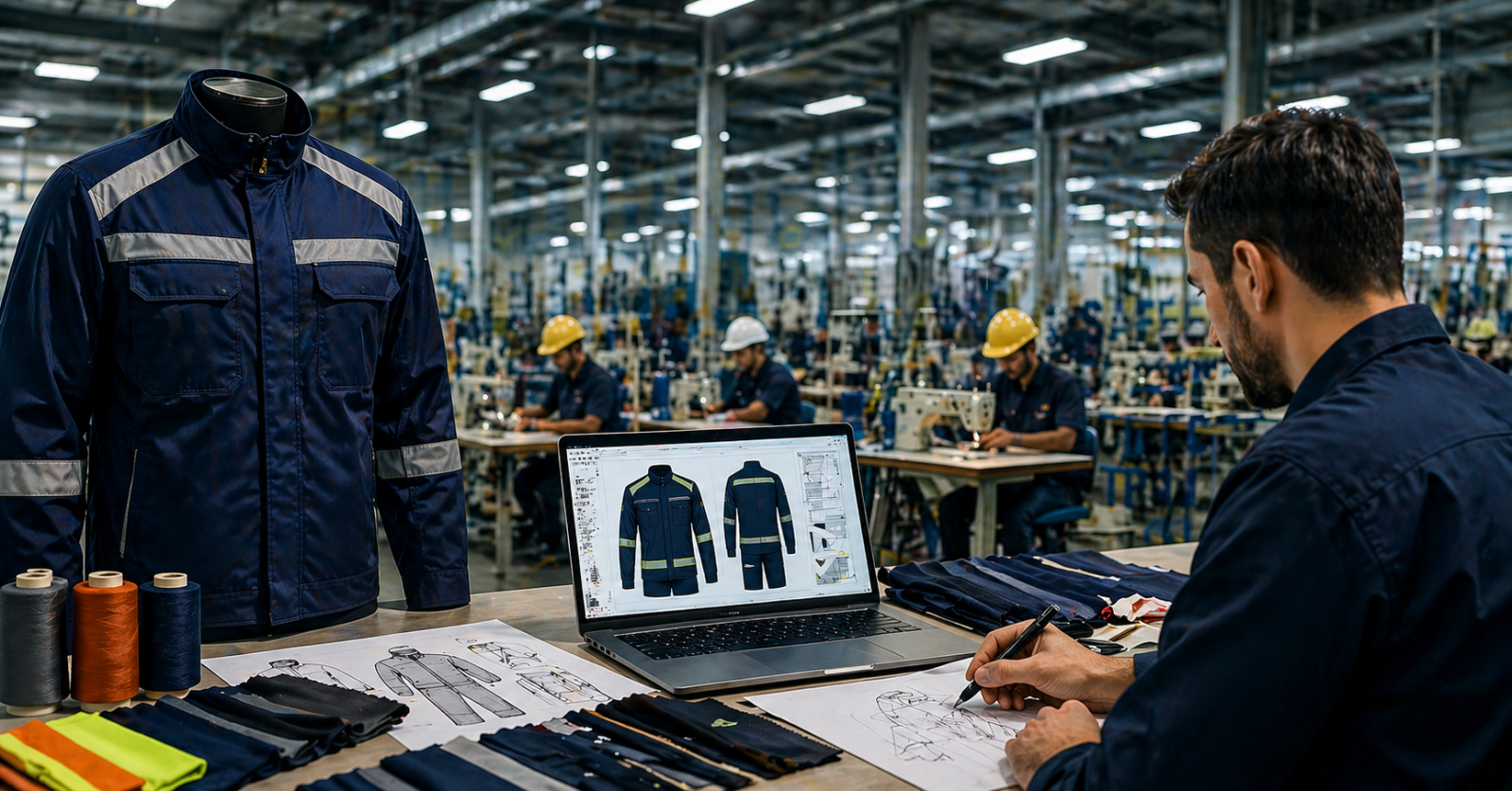
The best industrial uniform manufacturers treat garment design as an engineering process. They start with the hazard. They select the fabric that addresses it. They build the garment to withstand real working conditions. They test it to the relevant standard. And they deliver it in a fit that workers will actually wear.
That is the standard every factory uniform manufacturer should be held to, and the standard procurement teams should demand before placing any bulk order.
FAQs
Q1. What is the difference between an industrial uniform manufacturer and a regular workwear supplier?
An industrial uniform manufacturer designs garments specifically around workplace hazard profiles. This includes selecting certified fabrics for flame resistance, ESD protection, or chemical resistance, reinforcing structural stress points, and testing finished garments to national and international safety standards. A regular workwear supplier focuses primarily on appearance, branding, and fit without the same level of hazard engineering built into the garment.
Q2. How do industrial uniform manufacturers decide which fabric to use?
The process begins with a hazard assessment of the work environment. Flame exposure requires FR fabrics such as Nomex or Kevlar blends. Chemical contact requires barrier fabrics. ESD risk requires conductive-filament weaves. Abrasion risk requires high-tensile fabrics such as Dyneema. For Indian conditions, breathability is also a key requirement alongside protection, which is why cotton blends and moisture-wicking technical fabrics are commonly specified.
Q3. What certifications should factory uniform manufacturers provide for shop floor garments?
For flame-resistant workwear, EN ISO 11612 is the key international standard. High-visibility garments should meet EN ISO 20471 or IS 15809 (Indian Standard). ESD-protective garments should comply with EN 1149-1 or EN 1149-3. Food and pharmaceutical environments require DIN 10524. All certifications should be backed by current, garment-specific test reports from accredited laboratories not just certificate copies.
Q4. How long should a well-made industrial uniform last?
Service life depends on fabric type, usage intensity, and wash frequency. Inherently FR garments retain their protective properties for the full garment life when cared for correctly, while treated FR garments may degrade over repeated industrial washing. As a general guideline, high-quality industrial workwear should maintain both appearance and protective performance for a minimum of 50 industrial washes. Always ask for wash durability data from the manufacturer before purchasing.
Q5. Can industrial workwear be customised with company branding?
Yes. Reputable industrial uniform manufacturers incorporate logos, colour coding, and departmental identification without compromising the garment’s protective function. Embroidery is preferred over printing for industrial environments because it is more durable under harsh wash cycles. One important restriction: branding placement must not reduce the visible area of retroreflective tape on high-visibility garments, which would compromise EN ISO 20471 compliance.
Q6. What is the minimum order quantity (MOQ) for industrial uniforms?
MOQ varies by manufacturer and garment complexity. Standard designs typically start from 100 to 500 pieces. Fully customised garments with specific fabric, colour, and branding requirements may require 1,000 or more units. It is always advisable to place a 50–100 unit trial order before committing to bulk production. This allows verification of fabric performance, construction quality, sizing accuracy, and actual lead time.
Q7. Does Armstrong Products supply industrial uniforms for specific sectors like oil and gas or steel manufacturing?
Yes. Armstrong Products supplies certified industrial workwear to clients across oil and gas (ONGC), heavy industry (L&T, JSW, Jindal Steel), construction (Afcons), and energy sectors. The full range includes workwear, high-visibility clothing, winterwear, rainwear, and safety footwear.