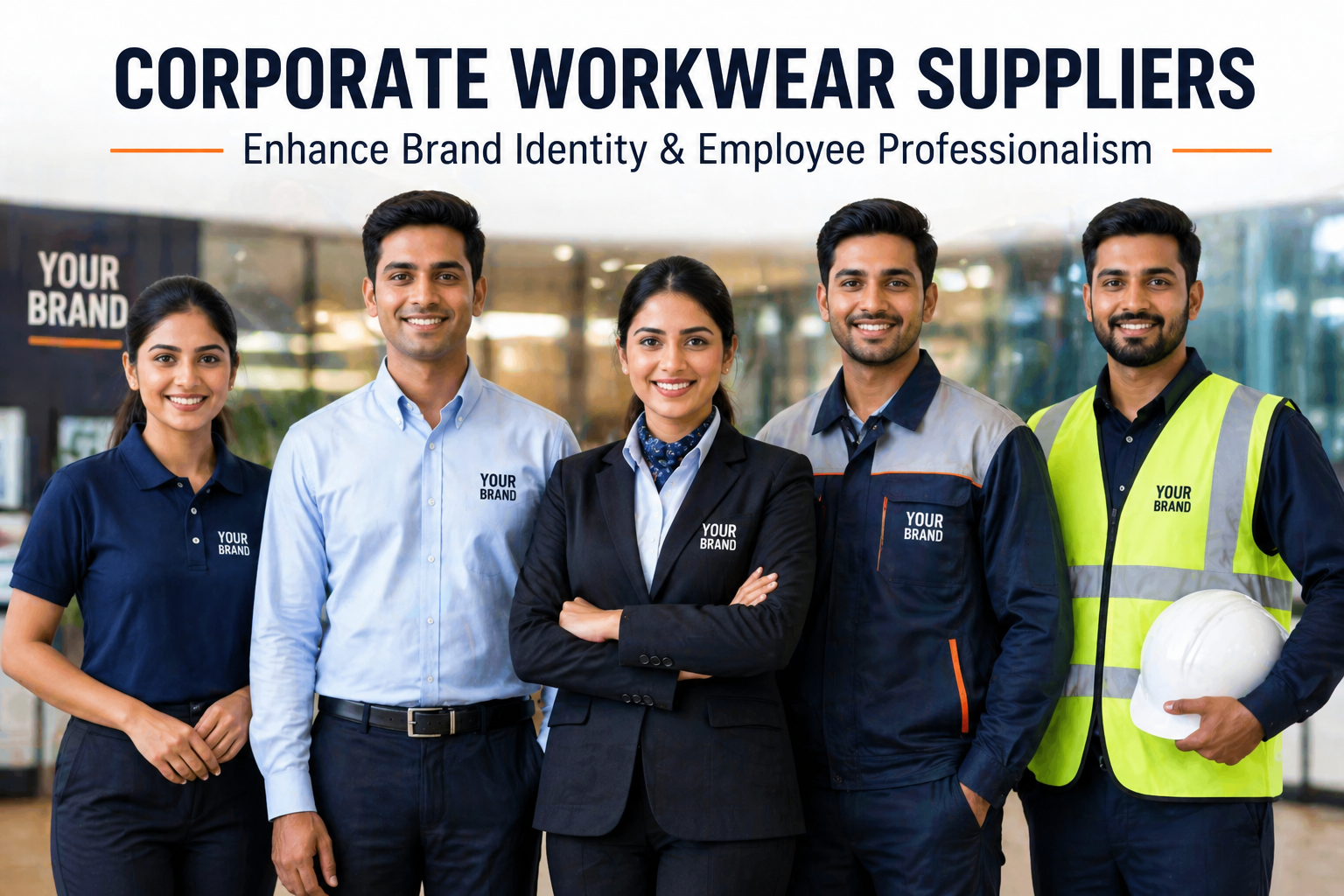
Your employees are your brand ambassadors. Every time they walk into a client meeting, step onto a shop floor, or greet a customer, their appearance sends a message. A well-chosen uniform tells the world that your company is organized, credible, and serious about quality. That is why choosing the right corporate workwear suppliers is not just a buying decision. It is a brand decision.
Think about the last time you visited a hotel, a hospital, or a large retail store. You identified the staff almost instantly. That instant recognition is the quiet power of corporate workwear working for the brand. Research shows that employees in uniform are perceived as more trustworthy and professional, which directly affects customer confidence and, ultimately, revenue.
This guide covers everything you need to know, from what corporate workwear suppliers actually do to how the right clothing choice shapes brand identity, improves employee morale, and supports compliance across industries.
What Are Corporate Workwear Suppliers?
Corporate workwear suppliers are businesses that design, manufacture, and distribute professional clothing for organizations. They serve clients across sectors, including hospitality, healthcare, retail, logistics, banking, and manufacturing.
Unlike generic clothing retailers, corporate workwear suppliers offer:
- Bulk ordering with consistent quality across all units
- Custom branding options such as embroidered logos, company colors, and branded labels
- Fabric selection tailored to job function, climate, and safety requirements
- Compliance with industry standards for protective and specialized garments
- Ongoing inventory management and replenishment services
Armstrong Products is one such supplier in India, offering a wide range of corporate workwear, industrial uniforms, high-visibility clothing, and safety footwear. You can explore their full range at
Armstrong Products is one such supplier in India. You can explore their full clothing range.
The Role of Corporate Workwear in Brand Identity
Brand identity is built through every touchpoint, your logo, your website, your tone of communication, and yes, how your people look. Corporate workwear suppliers help bring the visual element of your brand to life in the physical world.
1. Color Consistency Signals Professionalism
Colors are powerful brand cues. Blue builds trust. Red conveys energy. Green suggests care. When your corporate workwear matches your brand palette, it creates a cohesive visual identity that customers recognize across locations, departments, and touchpoints.
A company with staff dressed in mismatched or casual clothing gives an impression of disorganization. In contrast, consistent workwear aligned to brand colors creates an image of structure and reliability.
2. Logo Placement Increases Brand Visibility
Embroidered or printed logos on uniforms function as mobile advertisements. Every time an employee is in public commuting, at a client site, or attending an industry event, they carry the brand forward. Corporate workwear suppliers typically offer a range of customization options, including chest embroidery, sleeve prints, and back panel branding.
3. Department-Specific Uniform Creates Structure
Organizations that use different uniform styles or colors across departments make it easy for customers and colleagues to identify who to approach. This is critical in industries like healthcare, hospitality, and large retail operations. A well-structured corporate wardrobe communicates clear roles and hierarchy without a single word being spoken.
How Corporate Workwear Builds Employee Professionalism
Professionalism is not just about skills; it is also about presentation. The way employees dress influences how clients perceive a business and can also affect employees’ confidence at work. Wearing professional, well-designed uniforms helps create a polished image, encourages a sense of responsibility, and reinforces a consistent workplace culture.
Eliminates Daily Wardrobe Decisions
When employees know exactly what to wear, they arrive at work prepared and focused. There is no wasted mental energy on clothing choices, no anxiety about whether an outfit meets dress code expectations. Corporate workwear suppliers make this easy by providing standardized garments that employees simply put on and go.
Creates a Sense of Team Belonging
Shared uniforms reinforce that every individual is part of a larger collective. This sense of belonging is especially powerful during onboarding, when new employees are still finding their footing. A uniform immediately signals: you are part of this team.
Supports Safety and Compliance
In industrial, construction, or healthcare settings, corporate workwear is not just aesthetic; it is functional. Flame-resistant fabrics, high-visibility materials, anti-static finishes, and protective footwear are all part of the corporate workwear mix. Reliable corporate workwear suppliers ensure garments meet relevant industry and safety standards.
For roles that require protective clothing, explore Armstrong’s range of Work Wear and High Visibility Wear, designed specifically for demanding environments.
Industries That Rely Most on Corporate Workwear Suppliers
Corporate workwear suppliers serve a diverse range of industries. Here is a look at some of the most significant:
Hospitality and Food Service
Hotels, restaurants, and catering companies depend on uniforms to project cleanliness, professionalism, and brand personality. From kitchen wear to front-desk attire, every garment reflects on the establishment. Armstrong Products offers dedicated Kitchen Wear designed for hygiene and comfort in food preparation environments.
Healthcare and Medical
Medical professionals need garments that are hygienic, durable, and easy to move in. Corporate workwear suppliers in this space focus on antimicrobial fabrics, easy-care materials, and clear role distinction through color coding.
Manufacturing and Industrial
Factory and warehouse environments require clothing that protects workers without restricting movement. This includes coveralls, high-visibility vests, and safety footwear. The right corporate workwear suppliers can provide garments that meet OSHA and local regulatory standards.
Retail and Customer Service
In retail settings, staff uniforms help customers instantly identify who can help them. Brand-aligned uniforms in electronics stores, supermarkets, and fashion chains reinforce consistency across multiple locations.
What to Look for When Choosing Corporate Workwear Suppliers
Selecting the right supplier is critical. Here are the key factors to evaluate:
Fabric Quality and Durability
Corporate uniforms are worn daily and washed frequently. Fabrics must hold their color, shape, and structural integrity through repeated use. Ask suppliers about GSM (grams per square meter) ratings, fabric composition, and care instructions.
Customisation Capability
Can the supplier embroider your logo accurately? Do they offer multiple branding methods, such as print, embroidery, and woven labels? Can they match your brand’s Pantone colors? A capable corporate workwear supplier should handle all of this in-house or through verified partners.
Minimum Order Quantities and Scalability
Whether you are outfitting 20 employees or 2,000, your supplier needs to accommodate your volume. Check minimum order requirements and confirm that quality remains consistent whether you order 50 or 500 pieces.
Compliance with Safety Standards
For specialized roles, garments must meet specific safety certifications. Corporate workwear suppliers working in industrial and healthcare sectors should be familiar with relevant standards and able to provide documentation.
Delivery Timelines and After-Sales Support
Uniform programs do not end at the first order. Employees join and leave, garments wear out, and requirements change. Choose suppliers who offer reliable reorder processes, sizing exchanges, and responsive customer support.
Customization: Turning Workwear Into a Brand Asset
Customization is where corporate workwear suppliers add the most distinctive value. A plain polo shirt becomes a brand statement the moment your logo, colors, and identity are applied to it.
Common customization options include:
- Embroidery: Durable and professional, ideal for logos on chest pockets and collars
- Screen printing: Cost-effective for large designs on back panels and event-specific clothing
- Heat transfer printing: Suitable for detailed, multi-color designs
- Woven labels: High-quality internal labels that add a premium feel
- Reflective tape and piping: Functional and brand-aligned for high-visibility requirements
Armstrong Products supports customization through its Private Label / OEM services, catering to businesses that want branded workwear produced to their exact specifications.
Sustainability in Corporate Workwear: A Growing Priority
Sustainability is now a genuine business concern. Organizations are under increasing pressure from clients, employees, and regulators to reduce their environmental footprint. Corporate workwear suppliers are responding with eco-friendly fabric options, reduced-waste production methods, and take-back schemes.
Key sustainability considerations when sourcing corporate workwear:
- Recycled polyester or organic cotton content in fabrics
- Low-impact dyes that reduce water usage in manufacturing
- Durable construction that reduces replacement frequency
- Suppliers with documented ESG (Environmental, Social, Governance) commitments
Choosing sustainable workwear also signals to employees and customers that the organization takes corporate responsibility seriously, a factor that increasingly influences purchasing decisions and talent retention.
The Link Between Workwear and Employee Retention
This connection is often overlooked. When a company invests in quality corporate workwear, it sends a clear message to employees: we value how you represent us, and we respect your comfort on the job.
Poor-quality uniforms that are uncomfortable, ill-fitting, or aesthetically misaligned with the brand communicate the opposite: that the organization does not take pride in its people. The result is lower morale and, over time, higher turnover.
Corporate workwear suppliers who offer size-inclusive ranges, ergonomic designs, and fabric options suited to different working conditions make it easier for organizations to look after their workforce through clothing choices.
Armstrong Products: Your Corporate Workwear Partner in India
Armstrong Products has been supplying corporate workwear, industrial safety clothing, and protective equipment to leading organizations across India for decades. Their client list includes major names in energy, infrastructure, and manufacturing.
Their product range spans:
- Corporate Wear for office and professional environments
- Work Wear for industrial and on-site roles
- High Visibility Wear for outdoor and roadside workers
- Rain Wear and Winter Wear for weather-specific needs
- Medical Wear for healthcare professionals
- Safety Footwear, including uniform shoes and safety boots
Explore the full Armstrong Products range at armstrongproducts or contact their team directly through the Contact Us page.
Conclusion
Corporate workwear is far more than a dress code. It is a strategic tool that shapes how customers perceive your brand, how employees feel about their role, and how consistently your organization presents itself across every location and interaction.
The right corporate workwear suppliers make this investment simple. They handle the design, production, customization, and delivery, leaving you with garments that work as hard as your team does.
Whether you are setting up a corporate uniform program from scratch or upgrading your existing workwear, Armstrong Products has the expertise, range, and manufacturing capability to support your needs. Explore their Corporate Wear collection to discuss your requirements.
FAQs
Q1. What do corporate workwear suppliers typically offer?
Corporate workwear suppliers provide professionally designed uniforms for businesses across various sectors. Their offerings usually include custom-branded garments, fabric selection, bulk ordering, safety-compliant clothing, and ongoing replenishment services.
Q2. How do corporate workwear suppliers help with brand identity?
They translate your brand colors, logo, and design language into physical garments. Through embroidery, printing, and color matching, they ensure every employee presents a consistent, recognizable image to customers and clients.
Q3. What industries benefit most from corporate workwear?
Hospitality, healthcare, retail, manufacturing, logistics, and banking are among the sectors that rely heavily on corporate workwear. However, any business with customer-facing staff or safety-critical roles can benefit from a structured uniform program.
Q4. How do I choose the right corporate workwear supplier?
Evaluate suppliers on fabric quality, customization capability, compliance with safety standards, minimum order quantities, delivery reliability, and after-sales support. Request fabric samples and references before placing a large order.
Q5. Can small businesses use corporate workwear suppliers?
Yes. Many corporate workwear suppliers offer flexible minimum order quantities suitable for small teams. Starting with a standardized uniform, even for a small team, can significantly improve professional presentation and brand consistency.
Q6. How often should corporate workwear be replaced?
This depends on fabric quality, frequency of use, and the working environment. As a general guide, uniforms in industrial or high-wear environments may need annual replacement, while office-wear may last two to three years. Partnering with a reliable supplier makes reordering straightforward.
Q7. Does Armstrong Products offer customized corporate workwear?
Yes. Armstrong Products offers private label and OEM manufacturing services. Visit their customization page to learn more about branding options.
Q8. What is the difference between corporate wear and industrial workwear?
Corporate wear typically refers to office or customer-facing attire, such as shirts, trousers, blazers, and branded polos. Industrial workwear includes protective garments such as coveralls, high-visibility vests, flame-resistant jackets, and steel-toed footwear, designed to meet safety standards in hazardous environments.