Picture a purchase order for 400 jackets. The tender says hi-vis class 3. The samples arrive in bright yellow with two silver bands across the chest. The sleeves are plain. Your safety lead looks at them once and sends the box back.
That is how many hi-vis class 3 orders go wrong. The jacket looks right from the front. The tape sits on the torso only, so the garment cannot hold the class. A buyer who checks the garment first avoids the return and the argument.
This guide explains class 1, 2, and 3 in plain words. It compares ANSI/ISEA 107 with EN ISO 20471. Then it turns to the buying side. You will see which garments reach hi-vis class 3, which fabrics suit your climate, and what to confirm before a bulk order for the Gulf, Singapore, or tier one markets.
Quick answer: Hi vis class 3 is the highest visibility class in both standards. Under ANSI/ISEA 107, a hi-vis class 3 garment needs at least 1,240 square inches of fluorescent background and 310 square inches of retroreflective tape. Under EN ISO 20471, the minimums are 0.80 m² and 0.20 m². The garment must also cover the torso and the arms or legs. A vest worn alone cannot reach hi vis class 3.
In this guide: what hi vis class 3 means, class 1, 2 and 3 compared, ANSI/ISEA 107 vs EN ISO 20471, garment anatomy, which garment to buy, fabric and climate, the Armstrong hi-vis range, market guide, buying checklist, mistakes, and care.
What Hi Vis Class 3 Means
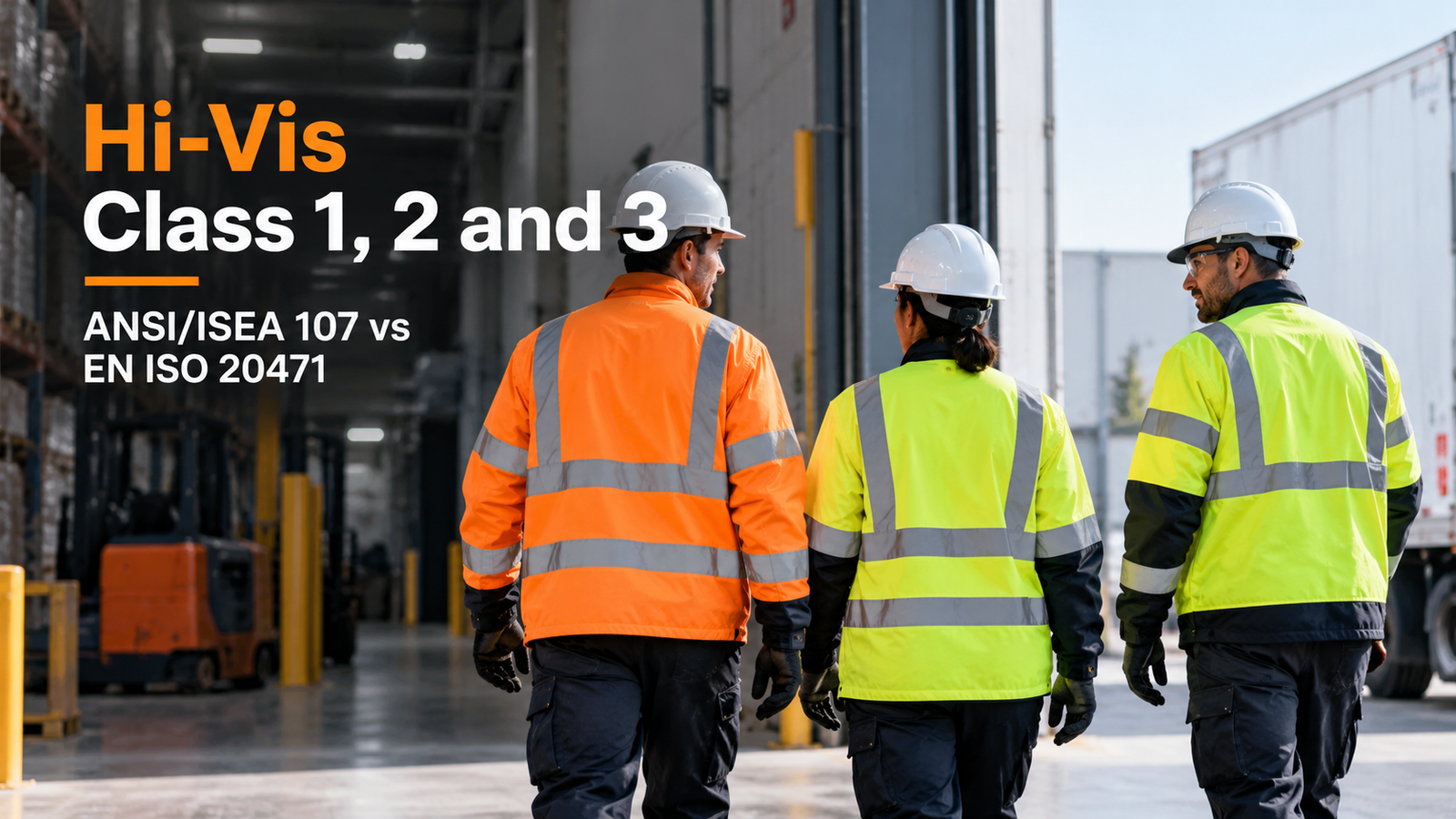
A hi-vis Class 3 garment gives a worker the largest visible area the standards allow. It combines a big block of fluorescent fabric with a large amount of reflective tape. The fabric makes the wearer easy to spot in daylight. The tape throws light back at headlights at night.
The class number is not a quality rank. It measures area. A hi vis class 3 jacket is not “better made” than a class 2 vest. It shows more fluorescent fabric and more tape, and it shows them on the arms as well as the body.
That second point is the one most buyers miss. Hi vis class 3 is about outline. Tape on the sleeves lets a driver see a human shape, even when the worker turns sideways or swings an arm. A driver reads that shape faster than a patch of yellow.
Where hi vis class 3 is used
Hi-vis class 3 suits work with fast traffic, poor light or bad weather. Common examples are highway crews, airport apron staff, port workers and rail workers. Common guidance links hi-vis class 3 to roads where traffic moves above about 50 mph, and to work in rain, fog or dust. Always check the site rules or tender before you assume.
Class 1, 2 and 3 Compared
All three classes use the same idea. A bigger class means more fluorescent fabric and more tape. Hi-vis Class 3 sits at the top. The numbers below come from the standards’ minimum areas.
| Item | Class 1 | Class 2 | Class 3 |
| ANSI/ISEA 107 background | 217 sq in | 775 sq in | 1,240 sq in |
| ANSI/ISEA 107 retroreflective | 155 sq in | 201 sq in | 310 sq in |
| EN ISO 20471 background | 0.14 m² | 0.50 m² | 0.80 m² |
| EN ISO 20471 retroreflective | 0.10 m² | 0.13 m² | 0.20 m² |
| Typical garment | Light vest, low risk | Vest, polo, jacket | Sleeved jacket, parka, coverall |
| Sleeves needed | No | No | Yes, or full trousers (EN) |
The ANSI figures come from the ANSI/ISEA 107 class table published by the South Dakota Department of Transportation. The EN ISO 20471 areas match the minimums listed by the testing lab Centexbel.
Hi-Vis Class 2 vs Class 3 in One Line
A class 2 garment, such as a vest, covers the torso. A hi-vis Class 3 garment covers the torso and the limbs. It asks for about 465 more square inches of background and 109 more square inches of tape than class 2 under ANSI/ISEA 107. That gap is the sleeves.
ANSI/ISEA 107 vs EN ISO 20471
The two standards share the same goal and the same three classes. They differ in where they apply and in a few design rules. Most buyers only need the practical differences.
| Point | ANSI/ISEA 107 | EN ISO 20471 |
| Region | United States, Canada | Europe, UK and many other markets |
| Units | Square inches | Square metres |
| Class 3 background | 1,240 sq in | 0.80 m² |
| Class 3 tape | 310 sq in | 0.20 m² |
| Extra labels | Type O, R or P | Class and tape level marking |
| Supplemental trousers | Class E | Combined set can reach class 3 |
| Fluorescent colours | Yellow-green, orange-red, red | Yellow, orange-red, red |
Two details help at the purchase stage.
First, ANSI uses garment types. Type R is for roadway work. Type O is for off-road work. Type P is for public safety. A hi-vis Class 3 jacket for road crews should be Type R. Second, ANSI lets you pair a Class 2 top with Class E trousers to reach hi-vis Class 3 as a combination. EN ISO 20471 lets a certified jacket and trouser set reach class 3 in a similar way.
The sample you receive should carry the standard number and the class on its label. If it does not, ask why before you approve the order.
Which standard should you ask for?
Match the standard to the market. A US or Canadian site will ask for ANSI/ISEA 107. A UK or European site will ask for EN ISO 20471 Class 3 on a high-visibility Class 3 jacket. Many Gulf tenders for hi vis class 3 also name EN ISO 20471, but the tender text decides. A single garment can sometimes meet both, so say so in your inquiry if your buyer works across regions.
Anatomy of a Hi Vis Class 3 Garment
You can check most of a hi-vis Class 3 garment by eye. Hold the sample up and look at five things.
Sleeves: A hi-vis Class 3 jacket needs long sleeves. Both standards expect tape on the sleeves. Under ANSI/ISEA 107 Class 3, the tape must encircle each sleeve. Under EN ISO 20471 Class 3, a hi-vis Class 3 garment needs sleeves with bands or full-length trouser legs with bands.
Body tape: Look for horizontal bands around the torso, front and back. Front and back should carry about the same amount of tape. A big gap in layout is a warning sign.
Fluorescent fabric: The color should look even. A patchy or dull shade can mean low-grade fabric or a poor dye lot. Compare the sample to a swatch you trust.
Tape width: Under ANSI/ISEA 107, hi-vis Class 3 tape is at least 2 inches wide. Narrow tape cannot meet the area target without extra rows.
Logos and pockets: Large prints, patches and embroidery can cover the required area. A logo that sits over tape or fabric may drop the garment to a lower class. Plan branding before you finalize the pattern, not after.
Which Hi Vis Class 3 Garment Should You Buy?
Not every hi vis class 3 piece suits every job. Pick by task, weather, and how often the worker moves in and out of a vehicle.
| Garment | Reaches class 3? | Best for | Watch for |
| Hi vis class 3 jacket | Yes | Highway, airport apron, rail | Heat in summer |
| Hi vis class 3 parka | Yes, when built to class 3 | Rain, cold, night work | Weight, hood over tape |
| Hi vis class 3 coverall | Yes | Plant, terminal, maintenance | Fit when seated |
| Vest plus Class E trousers | Yes, as a set | Warm sites, hot weather | Both pieces must be worn |
| Vest alone | No, class 2 at most | Light duty, low speed | Not for fast traffic |
Many buyers choose a hi vis class 3 jacket for its mix of coverage and simple wear. A class 3 reflective jacket is also easy to issue, because one piece does the whole job. Others prefer the vest and trouser set for hot sites, because the torso stays lighter. Check what your safety officer will accept, because some sites want the set worn together every shift.
A hi-vis Class 3 coverall suits workers who also face dust, oil or light splash. It keeps the body, arms, and legs visible in one piece. Buyers in oil and gas and heavy industry often use coveralls so that nothing rides up or hides the tape.
Hi Vis Class 3 Fabric and Climate: Choosing for the Gulf, Singapore and Cold Markets
Climate changes the right fabric for a hi-vis Class 3 garment. The class rules stay the same. The cloth under the tape does not.
Hot markets: UAE, Oman, Kuwait, Qatar. Summer shifts are long and hot. A heavy jacket becomes a heat problem fast, and workers unzip or remove it. That defeats the purpose. Choose lightweight polyester knits and breathable mesh panels for body areas, and consider the vest and Class E trouser set where the site allows it. Ventilation under the arms helps a sleeved jacket stay on the worker.
Humid markets: Singapore. Humidity rewards fabrics that dry fast. Polyester dries faster than cotton blends. A sleeved hi vis class 3 top in a light knit is easier to wear through a wet afternoon.
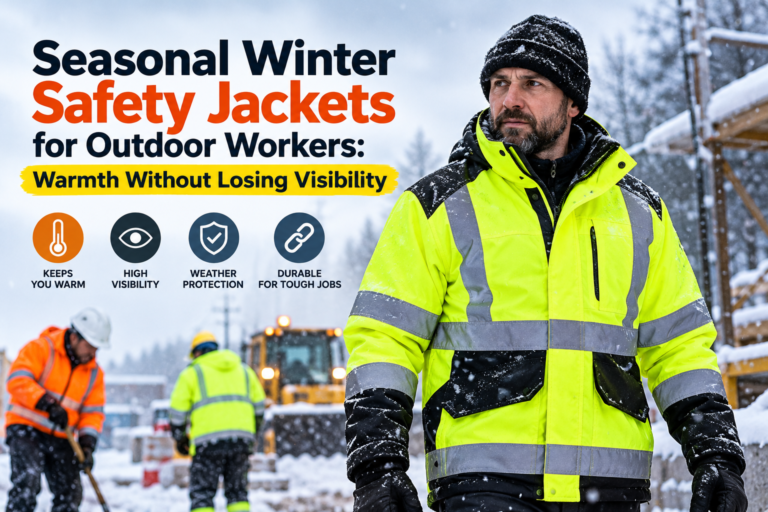
Cold and wet markets: UK, Canada, northern US, parts of Europe. Here the hi vis class 3 jacket often doubles as outerwear. Waterproof woven shells, taped seams, fleece or quilted liners and a hood help. Keep the hood and any collar from covering the tape on the shoulders.
Fabric weight. Ask for the GSM of the shell and the lining on any hi-vis Class 3 jacket spec sheet. A lighter shell breathes better. A heavier shell lasts longer through washing and abrasion. Neither is right for every site, so pick by the job.
If your crew works near flame or heat, as well as traffic, you may need a flame-resistant hi-vis garment. That is a separate fabric question. Our comparison of fire retardant and regular coveralls explains the difference.
Armstrong Hi-Vis Range for Hi Vis Class 3 Requirements
Armstrong Products has manufactured industrial garments, uniforms, and safety clothing since 2009. Production runs from the Boisar, Maharashtra facility, with the corporate office in Powai, Mumbai. The company holds ISO 9001:2015 for quality management and ISO 13688:2013 for general requirements of protective clothing.
The High Visibility Wear range includes the High Visibility Parka Jacket. It is a waterproof, reflective parka in green, sold in sizes S to 3XL. Armstrong builds it for road workers, site managers and outdoor crews. It also sits in the Winter Wear category for cold and wet work.
In your inquiry, state the class and the standard you need: ANSI/ISEA 107 or EN ISO 20471. Say which type of site the garment goes to. That lets the product team match the tape layout and fabric to your target before you sign off a sample.
Buyers who need their own hi vis class 3 pattern, colorway or branding can use the Private Label and OEM service. It covers production from yarn to finished garment. For logos and flags, see Customization and Branding. Print and embroidery positions affect the visible area, so agree on them at the pattern stage.
Hi Vis Class 3 by Market
The class rules do not change between countries. The paperwork and the buyer’s habits do.
| Market | What buyers ask for | Practical note |
| UAE | EN ISO 20471 in most tenders | Confirm the class on each tender line |
| Oman | EN ISO 20471, sometimes ANSI | Contractor specs vary, so ask for the spec at the start |
| Kuwait | Tender and operator rules lead | Clarify the standard before sampling |
| Qatar | Project and contractor rules lead | Match tape layout to the site spec |
| Singapore | Often EN ISO 20471 or ANSI | Check the main contractor’s requirement |
| US and Canada | ANSI/ISEA 107, Type R for roads | Hi vis class 3 Type R needs sleeves with tape |
| UK and Europe | EN ISO 20471 with CE or UKCA marking | Hi vis class 3 needs sleeves or full trousers |
| Australia | AS/NZS 4602.1 | A different standard with its own rules |
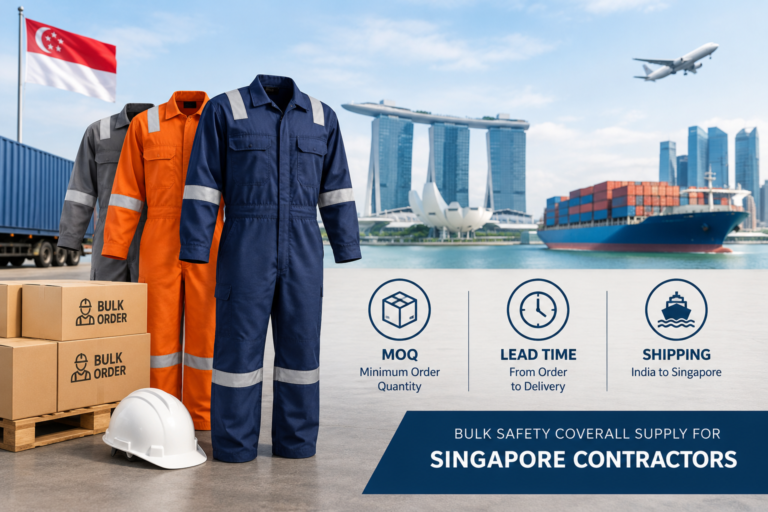
Armstrong supplies hi vis class 3 buyers across the Middle East, Singapore and international markets. You can look at the market pages for UAE, Oman, Kuwait, Qatar and Singapore.
Buying Checklist for Hi Vis Class 3 Garments
Use this list before you approve a sample or a bulk order.
- Name the standard and the class in the order. Write “EN ISO 20471 Class 3” or “ANSI/ISEA 107 Class 3 Type R” on the order, as hi-vis Class 3 buyers should.
- Check the sleeves. A hi-vis Class 3 jacket needs tape that encircles the arm.
- Check the label. It should show the standard, the class, and the size.
- Compare the color with an approved swatch.
- Confirm tape width and tape count on the spec sheet.
- Ask where logos and patches will sit, and whether they cover the required area.
- Ask for the shell and lining GSM.
- Match the fabric to the climate and the working hours.
- Request a pre-production sample in your size range, and check it as a hi vis class 3 buyer would on site.
Common Hi Vis Class 3 Buying Mistakes
Buying a Class 2 vest and calling it hi vis class 3. A vest alone cannot reach hi vis class 3. Pair it with certified trousers, or buy a sleeved garment.
Trusting the label without checking the garment. A label is a claim. The sleeves, the tape, and the layout show whether the claim holds.
Ignoring branding. Large logos can lower the class. Fix their size and placement before cutting.
Picking one fabric for all sites. A heavy hi-vis Class 3 shell that works in Toronto fails in Doha. Split the order by climate.
Skipping the fit test. Sleeves ride up, tape bunches, and jackets pull when a worker reaches or climbs. Test fit with a real task, not a quick try-on.
Care and Replacement of Hi Vis Class 3 Garments
Wash a hi vis class 3 garment by the label. High heat and harsh chemicals shorten the life of the tape. Zip jackets and close hook-and-loop straps before washing. Store garments away from long direct sun.
Check each hi-vis class 3 garment before every shift. Check for faded fabric, peeling tape, torn seams, and stains that cover reflective bands. Replace the garment when the fabric loses its color or the tape cracks. A faded jacket may still look orange to a worker. It looks much weaker to a driver at night.
Key Takeaways
- Hi vis class 3 means the most fluorescent fabric and the most tape the standards ask for, and it needs sleeves or full trousers.
- ANSI/ISEA 107 uses square inches. EN ISO 20471 uses square meters.
- A vest alone never reaches hi vis class 3.
- Match fabric weight to the climate, and plan logo positions at pattern stage.
- Write the standard and the class into every order.
Conclusion
Hi vis class 3 is about area and outline. The garment needs a large block of fluorescent fabric, a large amount of reflective tape, and sleeves or trousers that carry that tape. Both ANSI/ISEA 107 and EN ISO 20471 ask for this. The numbers differ in units, and the rules differ in small details.
A good buyer checks the garment before the label. Check the sleeves, the tape, the color, and the logo positions. Choose the fabric for your climate. Write the standard and class into every order.
If you plan a bulk order of hi vis class 3 jackets, parkas, or sets for the Gulf, Singapore, or a tier one market, request the Armstrong catalog or talk to the product team about your requirement.
FAQs
What is hi vis class 3?
Hi vis class 3 is the highest performance class for high visibility clothing under ANSI/ISEA 107 and EN ISO 20471. The garment carries the largest area of fluorescent fabric and reflective tape, and it covers the torso and the limbs. Under ANSI, the minimums are 1,240 square inches of background and 310 square inches of tape. Under EN ISO 20471, they are 0.80 m² and 0.20 m².
What is the difference between hi vis class 2 vs class 3?
Class 2 covers the torso, as a vest does. Hi vis class 3 adds the arms or legs with reflective tape. That extra coverage raises the required fabric and tape area. A hi vis class 3 garment shows the full outline of the worker, which helps drivers who see the wearer from the side or in motion. Hi vis class 3 suits fast traffic and poor weather.
Is EN ISO 20471 hi vis class 3 the same as ANSI Class 3?
They are close in purpose but not identical. Both are the top class, and both need large fabric and tape areas. The units, labels, and some design rules differ. A garment certified to one standard is not certified to the other. Check the label and the test documents for each standard you need.
Can a vest be hi vis class 3?
A vest worn alone cannot reach hi vis class 3, because it has no sleeves. A Class 2 vest paired with Class E trousers under ANSI, or a vest and trouser set certified together under EN ISO 20471, can reach hi vis class 3 as a combination. Both pieces must be worn together for the class to apply.
Which hi vis class 3 garment suits hot climates?
A lightweight polyester knit jacket with mesh ventilation, or a vest and trouser set where the site permits it. Heavy waterproof shells suit rain and cold, not Gulf summers. Pick the garment by climate and task. Ask the supplier for the fabric weight before you approve the order.
What should I send a manufacturer when I enquire about a hi vis class 3 jacket?
Send the standard and class, the garment type, the color, the size range, the quantity, and the destination market. Add logo details and any climate needs. Share any site specification if you have one. This lets the manufacturer match the tape layout and fabric to your target before sampling starts.