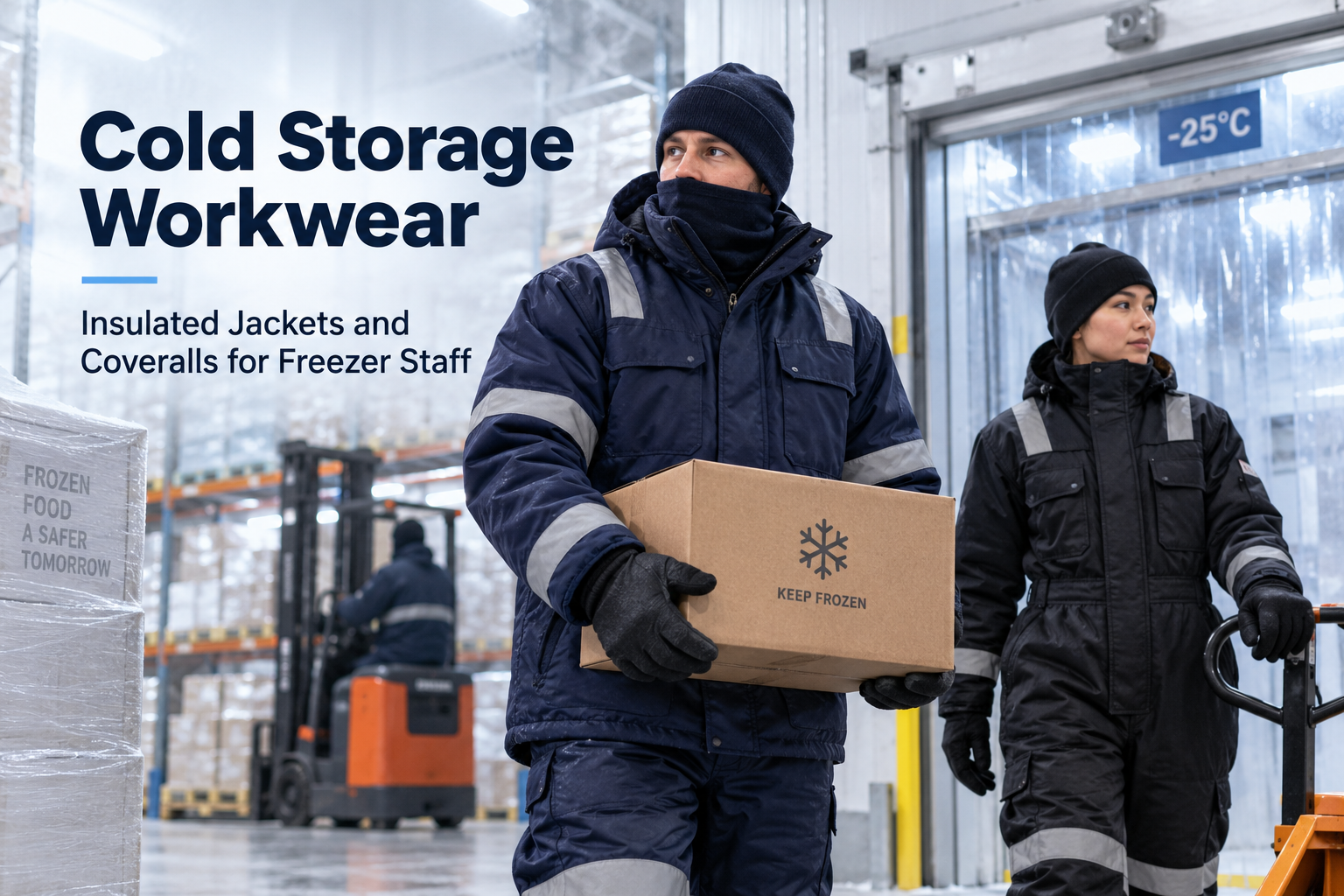
You step through the door of a freezer chamber set near -25°C. The first breath burns. Your gloves feel thin within minutes. An hour into the shift, your jacket is damp on the inside, and damp insulation stops doing its job.
Good cold storage workwear breaks that chain before it starts. It holds body heat, blocks the draft from fans and door cycles, and lets sweat escape. This guide covers insulated jackets, insulated coveralls and bib overalls for freezer staff. It also covers layers, hands, feet, and the checks that matter on bulk orders for the UAE, Oman, Kuwait, Qatar, Singapore, and tier one markets.
Quick answer: Cold storage workwear is insulated, wind-blocking clothing for people who work in chill rooms, cold stores and freezers. A full set has a freezer jacket or coverall, insulated trousers or bibs, a thermal base layer, gloves or mittens, a hat or balaclava and insulated boots. Pick each piece by room temperature, time inside, and how hard the person works.
Key takeaways
- Match the garment to the room. A chill room and a deep freezer need different insulation.
- Insulated coveralls trap the most heat. A freezer jacket with bib overalls vents better and comes off faster.
- Layers matter as much as the shell. Cotton against the skin holds sweat.
- Hands, feet and head lose heat first, so plan those items with the main garment.
- Ask for the shell fabric, insulation rating and seam details before a bulk order.
What Is Cold Storage Workwear?
Cold storage workwear is insulated protective clothing for people who work in chill rooms, cold stores and freezers. It differs from a winter coat in two ways. It stops moving air from fans and door cycles, and it is built for hours of steady exposure. It also carries warehouse features such as pockets you can reach in gloves and reflective tape for forklift aisles.
Pickers, forklift drivers, loaders, quality checkers, and maintenance technicians all wear cold storage workwear. Each job asks for something different. That is why one garment rarely fits every role in the same facility.
Cold Storage Workwear by Temperature Zone
Not every cold storage room needs the same clothing. A regular freezer usually runs between -18°C and -25°C. Chilled rooms stay above freezing, and blast freezers can get much colder. EN 342 covers cold environments at -5°C or below, while EN 14058 deals with temperatures above -5°C. You can use these temperature ranges to work out what cold storage workwear your staff will need.
| Zone | Typical stock | Garment build | Typical wearer |
| Chill room (above -5°C) | Fresh produce, dairy, pharma stock | Light padded jacket or fleece-lined jacket over a thermal base layer | Pickers, packers |
| Cold store (about -5°C to -18°C) | Mixed chilled and frozen goods | Insulated freezer jacket with bib overalls, or insulated coveralls | Loaders, forklift drivers |
| Deep freezer (-18°C and below) | Frozen food, ice cream, bulk frozen goods | Heavy insulated coveralls or freezer suit, hood, mittens, insulated boots | Order selectors, stock handlers |
| Blast freezer (colder) | Product freezing | Full freezer suit, shorter stints, warm-up breaks | Technicians |
Time inside changes the choice too. A person who walks in for ten minutes can wear a lighter jacket than a picker who works a full hour between breaks. Heavy work also makes more body heat, so a fast picker may need less insulation than a driver who sits still on a lift truck.
Freezer Jacket, Bib Overalls or Insulated Coveralls?
This is the first decision on most bulk orders. Each option has a clear job.
| Option | Best for | Strength | Watch out for |
| Freezer jacket with insulated trousers | Pickers and packers who move between rooms | Easy to add or remove at the door | A gap at the waist if the jacket rides up |
| Freezer jacket with bib overalls | Forklift drivers, loaders | Warm chest and kidneys, jacket vents on its own | Two items to size and issue |
| Insulated coveralls | Deep freezer staff, long stints | No gaps, warmest one-piece option | Slow to remove, and hot in warm zones |
| High visibility insulated coveralls | Mixed lift truck and foot traffic | Warmth plus reflective tape in one garment | Fewer color and trim options |
When insulated coveralls win
Insulated coveralls suit people who stay inside the freezer for long stints. There is no waist seam for cold air to find. A hood adds neck cover. Leg zips let the wearer step into boots without a struggle, and a two-way front zip allows venting.
The downside is that the suit can get too warm. Someone moving in and out of a heated loading bay may end up sweating inside it. Once that happens, the base layer gets damp.
When a freezer jacket with bibs wins
With a freezer jacket and bib overalls, workers have more control over what they wear. A driver can open the jacket at the waist and wrists when taking a break. A picker can leave the jacket in the break room and carry on wearing the bibs. For facilities with both warm and cold areas, this combination is generally easier to work with.
What to Check on a Freezer Jacket
Two jackets can look the same on a rail and perform very differently inside a freezer. Check the build.
Shell fabric
Polyester oxford with a PU coating is a common freezer shell. Look at the denier and the coating. A shell that is too stiff cracks at the cuffs and elbows. A shell that is too thin snags on pallet wrap and racking.
Insulation and quilting
Insulation is measured by its fill weight in grams per square metre and its clo value. A higher fill weight helps trap more air, though it also makes the clothing bulkier. The stitching keeps the insulation from shifting inside the garment. Staggered stitching creates fewer areas where cold can pass through compared to straight stitching lines. It’s worth checking the quilt pattern on a sample before buying.
Cuffs, collar and zips
Rib-knit or hook-and-loop cuffs seal the gap above the glove. A high collar lined with fleece protects the neck. A storm flap behind the main zip stops cold air from getting through the teeth. Two-way zips let a seated driver open the hem.
Pockets and reflective trim
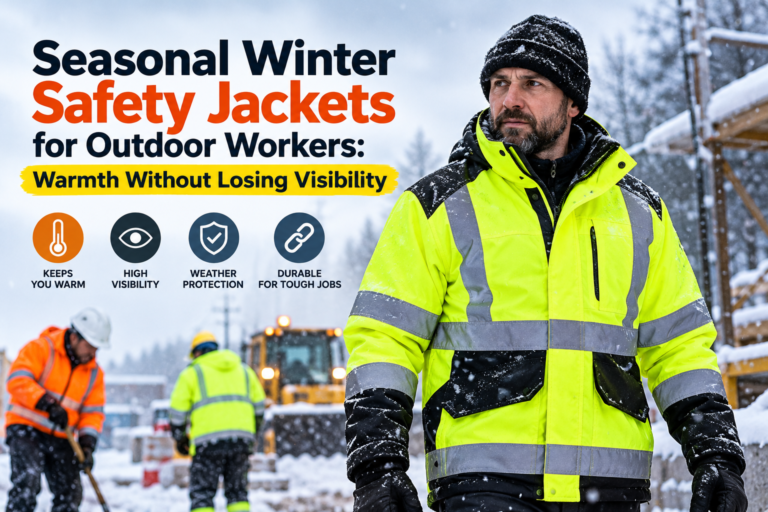
Larger pockets are easier to use when workers have gloves on. Pockets with flaps also help keep handheld scanners from slipping out. Reflective tape is important in aisles where lift trucks turn, as it makes workers easier to see. Fluorescent outerwear with reflective tape gives drivers a better chance of spotting people on foot early.
Layering Under Insulated Coveralls
The shell is only one part of cold storage workwear. The Canadian Center for Occupational Health and Safety notes that several layers protect better than one thick garment, because the air between layers insulates. The same guidance warns that damp clothing loses much of its insulation value.
| Layer | Job | Good choices |
| Base | Wicks sweat away from skin | Thermal underwear in wool, polyester or polypropylene |
| Mid | Adds warm air | Fleece top, quilted vest |
| Outer | Blocks wind and wet | Insulated coveralls or freezer jacket with bibs |
Two details matter. Each outer layer should be a little larger than the one under it, or it will squash the air out of the inner layer. And cotton is a poor base. It takes up sweat and stays wet, so keep cotton hoodies and tees out of freezer shifts.
Dirt also hurts. It fills the air cells in the fiber and cuts insulation, which is one more reason to launder garments on a schedule.
Hands, Feet and Head
Fingers and toes get cold before the core does. A complete set of cold storage workwear treats them as part of the order, not an extra.
Gloves and mittens. CCOHS suggests gloves below 4°C for light work and below -7°C for moderate work. For work below -17°C it suggests mittens when fine finger control is not needed. Scanner work pushes people toward gloves, so give pickers a thin liner under an insulated glove.
Boots and socks. Choose insulated, slip-resistant boots with the toe protection your site requires. Browse the safety shoes and boots range for work footwear. Socks that are too thick make the boot tight, which cuts blood flow. Fit boots with the sock the worker will wear on shift.
Head and neck. A balaclava or neck tube seals the gap between hood and collar. Under a hard hat, a thin liner keeps the ears warm. Check with the helmet maker before adding a liner, since some liners change the fit.
Cold Storage Workwear for UAE, Oman, Kuwait and Qatar
Gulf cold stores have a problem that northern sites rarely meet. Outside air in summer can pass 40°C. A driver loads a truck in that heat, then steps into a -20°C chamber minutes later. Sweat builds up inside the shell, and it chills the wearer once the door closes.
Buyers in the region can fix much of this at the spec stage:
- Choose a freezer jacket with underarm or hem vents, so wearers can cool down before they enter.
- Add a spare base layer to each locker. A dry layer after the loading bay makes a real difference.
- Pick boots with a slip-resistant sole, since frost and meltwater collect near dock doors.
- Use high-visibility insulated coveralls where lift trucks and walkers share aisles.
Armstrong ships workwear to buyers in the UAE, Oman, Kuwait and Qatar. Each page covers supply for that market.
Cold Storage Workwear for Singapore
Singapore is hot and humid throughout the year. Workers often move between warm loading bays and cold rooms several times during a shift, which can leave them sweating. For many jobs, a freezer jacket with bib overalls makes more sense than a one-piece freezer suit. They can take the jacket off as soon as they step out of the cold room.
Cold chain sites there handle food, pharma stock and online retail orders. Staff in these sites wear cold storage workwear for short, repeated stints rather than one long shift. Lighter fill with good wind-blocking often suits them better than a heavy deep-freeze suit. Armstrong also lists a Singapore supply page.
Cold Storage Workwear for US, UK, Canada and Other Tier One Buyers
Rules differ by market, so buyers set their specifications in different ways.
- UK and EU. Garments carry an EN 342 label. It shows the insulation value (Icler), an air permeability class from 1 to 3, and an optional water penetration class. The standard rates the garment, and it needs a thermal base layer for the test. It does not cover hands, feet or head, so those items need their own spec.
- US. OSHA has no standard written for cold work, but it can enforce its General Duty Clause on cold hazards, according to Safety+Health magazine. US buyers usually write a spec around room temperature, insulation rating, and hours inside.
- Canada. Provincial rules and CCOHS guidance cover layers, warm-up breaks, and exposure. Cold work plans there often add work and rest schedules.
Whatever the market, ask the supplier for the insulation test report and the garment care label. Those two documents tell you what the jacket will do and how to keep it doing it.
Armstrong’s Winter Range for Cold Storage Teams
Armstrong Products lists three jackets in its Winter Wear range. Here is where each one fits.
| Jacket | Colours | Sizes | Suggested use |
| Parka Quilted Jacket | Black, Royal Blue | S to 3XL | Chill rooms, yards and outdoor shifts, worn over a thermal base layer |
| High Visibility Parka Jacket | Green | S to 3XL | Dock staff and yard marshals who need reflective cover in cold weather |
| Penguin Skin Jacket | Brown, Gray | S to 3XL | Wet loading bays, as a waterproof PVC layer over warm clothing |
None of the three lists a clo value or a freezer temperature rating. Treat them as cold-weather and wet-weather jackets. They are not deep freezer garments.
A deep freezer order needs a made-to-spec garment. Armstrong’s Private Label and OEM page covers custom manufacturing. Bring the room temperature, shift length and job roles, and ask for a spec that fits them. The High Visibility Wear range is the place to start for reflective trim and fluorescent shells.
Sizing, Fit and Care
Fit decides how well cold storage workwear performs. A jacket that is too tight squeezes the air out of the layers underneath. A jacket that is too loose lets cold air pour in at the hem.
- Size over the layers the worker will wear on shift, not over a T-shirt.
- Ask the wearer to reach overhead, bend, and climb into a lift truck cab. If the garment pulls, go up a size.
- Close the zips and cuffs before judging the fit.
- Issue two sets per person, so one can dry between shifts.
- Wash to the care label and dry fully before the next shift.
- Check zips, cuffs and seams each month, and replace damaged pieces.
Armstrong lists its jackets from S to 3XL, which helps when one site has a wide range of body sizes.
Cold Storage Workwear Buying Checklist
Use this list when you compare quotes for cold storage workwear.
- Record the room temperature and the hours each role spends inside.
- Choose the garment style for each role: jacket and trousers, bibs, or coveralls.
- Ask for the shell fabric, fill weight and quilt pattern.
- Request insulation test data, such as EN 342 results, or a clear statement that none exists.
- Inspect the cuffs, collar, storm flap and zips on a sample.
- Confirm the reflective tape or hi-vis color for your site rules.
- Check the size range against your workforce.
- Order samples before the bulk run and test them on shift.
- Confirm branding, packing and delivery plans before you sign off.
Common Mistakes
- Buying based on thickness. A thick jacket can still lose heat if the cuffs are loose. How well it’s made matters.
- Not thinking about the hands. A picker may have to stop work because their hands are too cold, even when their back feels fine.
- Wearing cotton underneath. Cotton holds sweat and stays damp. That wet fabric can make the cold feel worse.
- Ordering one size runs. A narrow range forces people into the wrong fit.
- Skipping the trial. A sample worn for a full shift shows issues a catalog never will.
Role Guide: Which Set Suits Which Job
| Role | Zone | Suggested set |
| Picker | Chill room to cold store | Freezer jacket, insulated trousers, thin glove liners |
| Forklift driver | Cold store to deep freezer | Freezer jacket with bib overalls, mittens or heavy gloves |
| Order selector | Deep freezer | Insulated coveralls, hood, insulated boots |
| Dock loader | Dock and cold store | High visibility insulated coveralls or hi-vis jacket with bibs |
| Maintenance technician | Mixed | Freezer suit or coveralls with leg zips, balaclava |
Bulk Orders, OEM and Private Label
Armstrong Products has made industrial garments since 2009. The factory sits in Boisar, Maharashtra, and the corporate office is in Powai, Mumbai. The company holds ISO 9001:2015 and ISO 13688:2013 certificates, which it shows on its website.
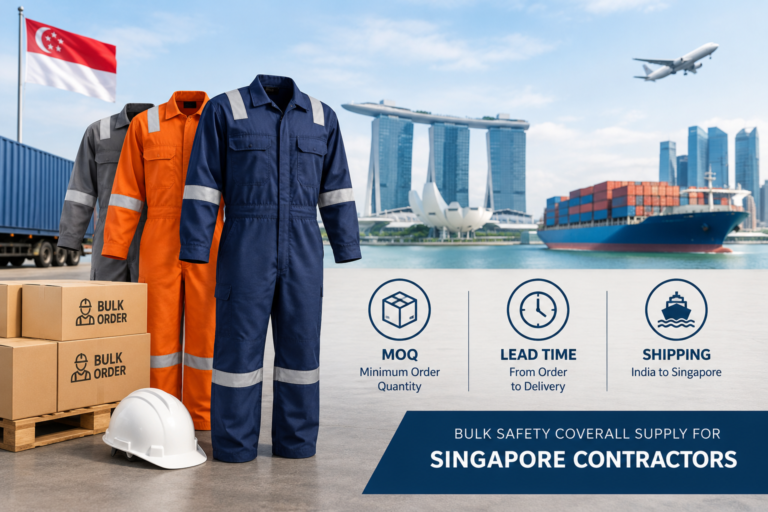
For buyers of cold storage workwear, the practical value is in the services around the garment. Armstrong offers customization and branding, OEM and private label manufacturing, and sample requests before a bulk order. Distributors in Oman, Kuwait, Saudi Arabia, the UAE, Qatar and Singapore handle regional supply.
Conclusion
The right cold storage workwear keeps a freezer shift safe and productive. Match the garment to the room, choose a freezer jacket or insulated coveralls by how long people stay inside, and never skip the hands, feet and head. Check the shell, the fill and the zips on a sample before you commit to a bulk order.
If your team needs help scoping cold storage workwear for a Gulf, Singapore or tier one facility, you can request a catalogue, discuss a bulk requirement or ask about a made-to-spec garment. The team at Armstrong Products will walk you through samples and delivery. Contact Us with your room temperature and headcount to start.
FAQs
What is cold storage workwear?
Cold storage workwear is insulated clothing for staff in chill rooms, cold stores and freezers. It includes jackets, bib overalls, coveralls, thermal layers, gloves and boots. It blocks wind, traps body heat, and carries features such as reflective tape and glove-friendly pockets. The right set depends on room temperature, hours inside, and the job each person does.
What should freezer staff wear in a cold storage warehouse?
Staff working in freezers need thermal innerwear, a fleece layer, and a freezer jacket with insulated trousers or bibs. Full insulated coveralls are another option. They should also wear insulated gloves or mittens, a warm hat or balaclava, and insulated boots with slip-resistant soles. For colder rooms or longer working hours, thicker clothing and more frequent breaks may be needed. A jacket and trouser set is usually easier for staff who move between different temperature zones.
What is the difference between a freezer jacket and a freezer suit?
A freezer jacket protects the upper body and is worn with insulated trousers or bibs. A freezer suit covers the body from neck to ankle, either as a one-piece garment or a matching jacket and bib set. A separate jacket is easier to remove when moving into warmer areas, while a one-piece suit keeps cold air from getting in around the waist. The choice usually comes down to how often workers switch between warm and cold areas.
Are insulated coveralls better than a jacket and bib overalls?
Insulated coveralls are often better for workers who spend long periods inside a freezer. With no opening at the waist, they help keep body heat in. A jacket and bib set is more convenient for staff who regularly move between cold and warmer areas, as the jacket can be removed easily. Both work well, depending on how long workers stay inside and how often they change zones.
What does EN 342 mean for cold storage workwear?
EN 342 is a European standard for clothing that protects against cold at or below -5°C. The label shows an insulation value, an air permeability class and, if tested, a water penetration class. It rates the garment only, so buyers still need to choose gloves, boots and headwear on their own.
Can cotton coveralls work as cold storage workwear?
Plain cotton coveralls give little insulation, and cotton holds sweat, so they do not suit freezers. CCOHS advises against cotton for cold work for that reason. Cotton coveralls may work as an outer layer in mild chill rooms when worn over a synthetic or wool base, but deep freezer staff need purpose-built insulated coveralls.
How many layers should a freezer worker wear?
Most workers do well with three layers. Wear something that absorbs and moves sweat away from the skin first, followed by a warm middle layer and an insulated jacket or suit. If the work gets physically demanding, the middle layer can come off. Make sure each layer has a little extra room so the clothing doesn’t press everything together and reduce insulation.
How do Gulf buyers handle the heat-to-freezer swing in cold storage workwear?
Buyers in the UAE, Oman, Kuwait and Qatar choose jackets with vents, issue spare base layers, and set up a short cool-down stop before entering a freezer. A bib and freezer jacket set also helps, since the jacket can come off in the loading bay. Slip-resistant boots help near wet dock doors.
Which Armstrong jackets suit cold storage teams?
Armstrong’s Winter Wear range lists the Parka Quilted Jacket, the High Visibility Parka Jacket and the Penguin Skin Jacket. They fit chill rooms, yards and wet docks, worn over thermal layers. None of the three states a freezer rating, so deep freezer teams should ask about a made-to-spec garment. Share your room temperature and shift length first.
Does Armstrong make custom cold storage workwear?
Armstrong offers OEM and private label manufacturing, along with customization and branding for bulk orders. A freezer-grade garment is a made-to-spec request. Share the room temperature, hours inside, and job roles with the team, and ask for samples to test before you confirm the full order. A trial shift shows fit and warmth problems early.