
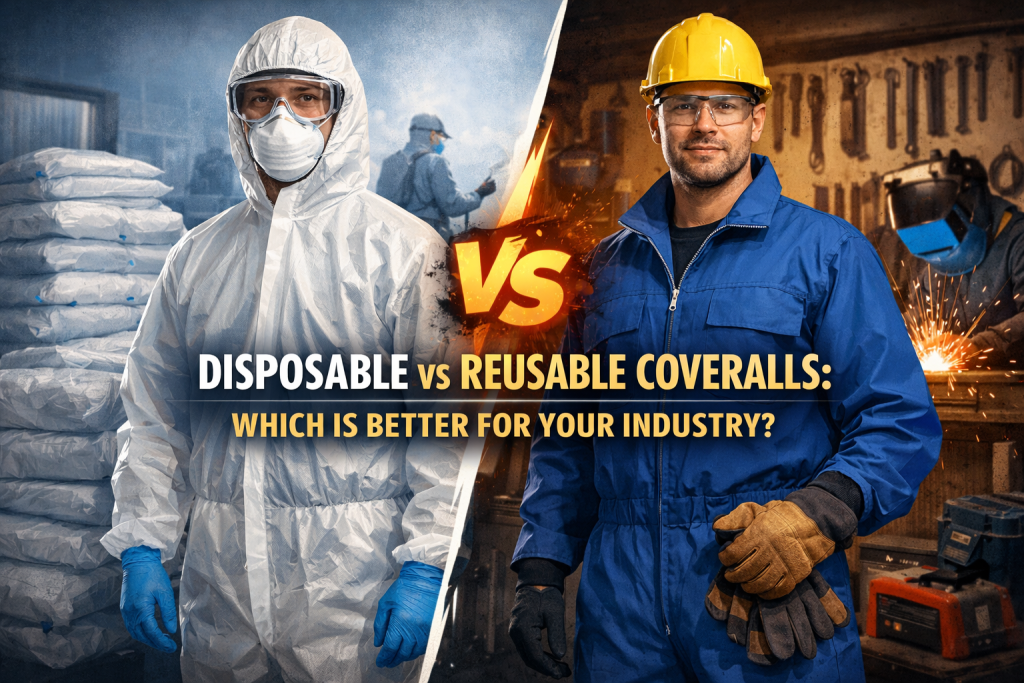
In today’s high-risk industrial environments, protective clothing is not optional—it’s essential. From chemical exposure to dust, heat, and contamination risks, workers rely on industrial safety apparel to stay protected and compliant.
One of the most common questions faced by procurement managers and safety officers is: Should you choose disposable or reusable coveralls?
Both options serve the same purpose—protecting workers—but differ significantly in terms of cost, durability, safety, and application. For businesses searching for disposable coverall manufacturers in India, understanding these differences is crucial for making the right investment.
This guide will help you compare both types and choose the best solution for your industry.
What Are Disposable Coveralls?
Disposable coveralls are single-use protective garments designed to provide full-body coverage against contaminants such as dust, chemicals, and biological hazards.
They are typically made from lightweight, non-woven materials like polypropylene or microporous fabrics, offering a balance of protection and comfort.
Key Benefits of Disposable Coveralls
- High hygiene standards – Eliminates cross-contamination
- No maintenance required – No washing or storage needed
- Lightweight and breathable
- Cost-effective for short-term use
Disposable coveralls are widely used in industries where contamination control is critical. Since they are used once and discarded, they reduce the risk of transferring harmful substances between environments.
Industries That Use Disposable Coveralls
- Pharmaceuticals
- Healthcare & hospitals
- Food processing
- Cleanrooms & laboratories
For these sectors, sourcing from reliable disposable coverall manufacturers in India ensures compliance and consistent quality.
What Are Reusable Coveralls?
Reusable coveralls are durable, multi-use garments designed for long-term use. Unlike disposable options, they are made from stronger materials such as cotton blends, polyester, or specialized protective fabrics.
These coveralls can be washed, maintained, and reused multiple times without losing their protective properties.
Key Benefits of Reusable Coveralls
- Long-term cost savings
- High durability
- Better resistance to wear and tear
- Available in advanced variants like flame resistant coveralls and fire resistant coveralls
Reusable coveralls are ideal for industries where workers face continuous exposure to hazards and require reliable, long-lasting protection.
Industries That Use Reusable Coveralls
- Oil & Gas
- Welding & fabrication
- Construction
- Heavy manufacturing
Disposable vs Reusable Coveralls: Key Differences
| Feature | Disposable Coveralls | Reusable Coveralls |
| Usage | Single-use | Multiple-use |
| Durability | Low | High |
| Hygiene | Excellent | Moderate |
| Maintenance | None | Requires washing |
| Cost | Low upfront | Higher upfront |
| Protection Level | Basic to moderate | High (FR options available) |
Quick Insight
Disposable coveralls are best for hygiene and convenience, while reusable coveralls offer durability and long-term protection.
Which is Better for Your Industry?
Choosing between disposable and reusable coveralls depends on your industry requirements, risk level, and operational needs.
Choose Disposable Coveralls If:
- Your industry requires strict hygiene standards
- There is a high risk of contamination
- Workers frequently change PPE
- Tasks are short-term or temporary
Disposable coveralls are particularly effective in environments like cleanrooms where even minor contamination can affect product quality.
Choose Reusable Coveralls If:
- Your workers face high-risk hazards (heat, fire, heavy work)
- You need durable, long-term protection
- You want advanced protection like flame resistant coveralls
- You aim to reduce long-term PPE costs
Reusable options are ideal for industries with continuous exposure to harsh conditions.
Cost Comparison: Short-Term vs Long-Term Value
When comparing costs, businesses often focus only on the upfront price—but the real value lies in the total lifecycle cost.
Disposable Coveralls
- Lower initial cost
- No maintenance expenses
- Recurring purchase required
- Higher long-term cost for frequent use
Reusable Coveralls
- Higher upfront investment
- Requires washing and maintenance
- Long lifespan
- Lower long-term cost
Reusable coveralls are generally more cost-effective in environments where PPE is used daily, as they reduce the need for constant replacement.
Safety & Compliance Considerations
Safety is the most critical factor when choosing between disposable and reusable coveralls.
Disposable Coveralls
- Protect against dust, particles, and light chemical exposure
- Suitable for low to moderate risk environments
- Ideal for contamination-sensitive industries
Reusable Coveralls
- Provide enhanced protection against heat, fire, and industrial hazards
- Available as fire resistant coveralls
- Meet higher safety standards
For high-risk industries, reusable industrial safety apparel is the preferred choice due to its superior protection capabilities.
Environmental Impact: Sustainability Matters
Sustainability is becoming an important factor in industrial decision-making.
Disposable Coveralls
- Generate more waste
- Require frequent disposal
- Less environmentally friendly
Reusable Coveralls
- Reduce waste
- Support sustainability goals
- Lower environmental impact
Reusable coveralls are a better option for companies aiming to reduce their carbon footprint.
How to Choose the Right Coveralls (Buyer Guide)
Selecting the right coveralls requires evaluating several key factors:
1. Industry Type
- Healthcare → Disposable
- Oil & Gas → Reusable
2. Hazard Level
- Low risk → Disposable
- High risk → Reusable or flame resistant coveralls
3. Frequency of Use
- Occasional → Disposable
- Daily → Reusable
4. Budget
- Short-term → Disposable
- Long-term → Reusable
5. Compliance Requirements
Ensure your coveralls meet industry standards and certifications.
Common Mistakes to Avoid
Many businesses make critical mistakes when selecting coveralls:
- Choosing based only on price
- Ignoring safety requirements
- Using disposable coveralls for high-risk tasks
- Not considering long-term costs
- Overlooking compliance standards
Avoiding these mistakes ensures better safety and operational efficiency.
Why Choose Armstrong for Industrial Safety Apparel?
Armstrong is a trusted name among disposable coverall manufacturers in India, offering a complete range of industrial safety apparel.
What Sets Armstrong Apart
- High-quality disposable and reusable coveralls
- Advanced options like flame resistant coveralls
- Bulk supply capabilities
- Custom solutions for industries
With Armstrong, businesses get reliable protection, durability, and compliance in one place.
Conclusion: Making the Right Choice
There is no one-size-fits-all solution when it comes to coveralls.
- Disposable coveralls are ideal for hygiene, convenience, and short-term use
- Reusable coveralls offer durability, cost savings, and higher protection
The right choice depends on your industry, risk level, and operational needs.
For businesses looking for trusted disposable coverall manufacturers in India or high-quality reusable solutions, investing in the right protective clothing ensures safety, compliance, and long-term efficiency.
FAQs
1. What is the difference between disposable and reusable coveralls?
Disposable coveralls are single-use garments, while reusable coveralls are durable and designed for multiple uses.
2. Are disposable coveralls better than reusable ones?
Disposable coveralls are better for hygiene and contamination control, while reusable coveralls are better for durability and long-term use.
3. When should I use disposable coveralls?
Use disposable coveralls in industries like healthcare, pharma, and food processing where hygiene is critical.
4. Are reusable coveralls cost-effective?
Yes, reusable coveralls are more cost-effective in the long run due to their durability and multiple uses.
5. What industries use flame resistant coveralls?
Industries like oil & gas, welding, and manufacturing use flame resistant coveralls for protection against fire hazards.
6. Are reusable coveralls environmentally friendly?
Yes, reusable coveralls reduce waste and are more sustainable compared to disposable options.
7. How do I choose the right coveralls for my industry?
Consider hazard level, usage frequency, budget, and compliance requirements before selecting coveralls.