A hydrocarbon flash fire burns at 1,000 to 1,900°F and can last up to five seconds, according to OSHA’s 2010 enforcement memo on oil and gas operations. Five seconds sounds short. It is long enough to decide whether a worker walks away with minor burns or faces a long hospital stay. That is why flame resistant clothing oil and gas employers buy gets treated as safety equipment, not as a uniform line item.
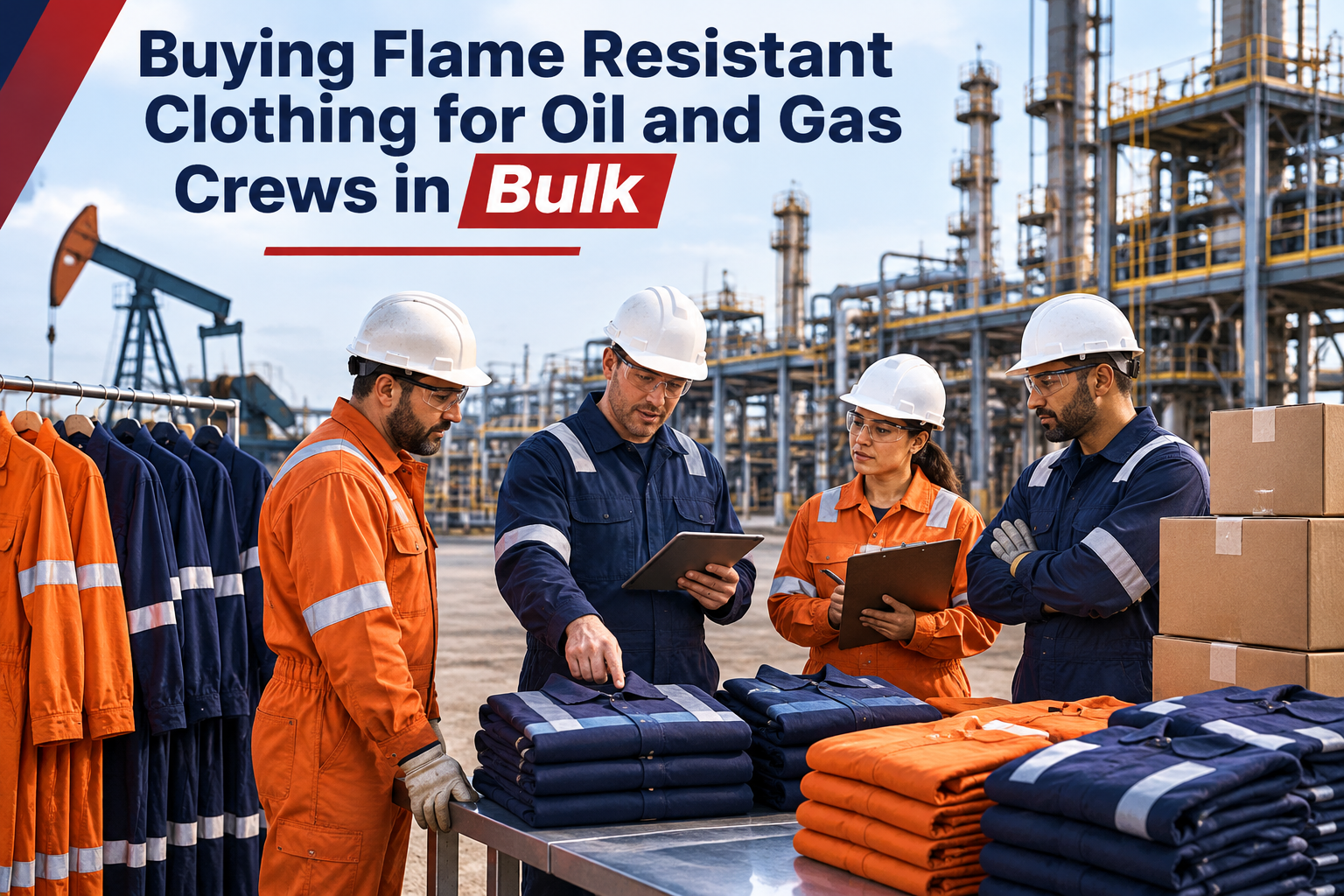
Buying for one person is simple. An order for 150 people across three sites goes wrong in smaller ways. Sizes run short, or a fabric that passed the sample test shrinks by the third wash. Nobody notices until the garments are already in the field.
This guide covers the whole job: what the rules ask for, which fabric to pick, how to plan sizes, and what to put in your RFQ. The spec checklist in section 8 can be pasted into an email as it is.
Planning an order now? Fill in the spec checklist below and send your RFQ to the Armstrong product team. Add the standard your site follows, the crew size and the delivery location. The team reviews it against Armstrong’s fabric range and the test documents available.
Quick answer: what is flame resistant clothing for oil and gas?
Flame resistant clothing oil and gas crews wear is workwear made from fabric that stops burning once the flame source is gone and slows heat transfer to the skin. In the US, buyers usually look for garments tested to NFPA 2112. In Canada, CAN/CGSB-155.20 is the matching flash fire standard.
1. What flame resistant clothing oil and gas crews need
Fire kills fast on a well pad or in a process unit. OSHA’s memo states that 16% of oilfield fatalities come from fires and explosions. Ignition sources include electrical systems, hot work and static electricity. A gas release does not need much help.
The clothing has to match the task. A roustabout near the wellhead, a technician gauging a tank and a welder doing hot work do not face identical exposure, so a single garment spec rarely covers all three.
Flash fire, arc flash and dual hazards
Flash fire and arc flash are different events. A flash fire is a fast, wide burst of flame fed by vapor or gas. An arc flash comes from an electrical fault and delivers a sharp pulse of heat and pressure. Flash fire garments are tested to NFPA 2112 or CAN/CGSB-155.20. Arc flash protection is rated separately under NFPA 70E, and the garment carries an arc rating in cal/cm².
Some crews face both, so the spec should say so. A coverall bought for a pipeline crew may be wrong for an electrician at a compressor station.
Then there are dual hazards, such as chemical splash plus fire. Check that anything worn over an FR coverall, including rainwear and chemical suits, is flame resistant too. A shell that melts on top of an FR layer defeats the layer underneath.
2. Is FR clothing required for oil and gas workers?
In the US, OSHA has no single FR rule written for the oil patch. Citations come under 29 CFR 1910.132. Paragraph (a) covers providing PPE and making sure it is used. Paragraph (d) requires a hazard assessment. Paragraph (h) says the employer pays for it. The 2010 memo applies these to drilling, well servicing and production work.
According to the memo, FR clothing is usually not needed during rig-up and normal drilling, but exposed workers should wear it before drilling into identified gas or hydrocarbon zones. For well servicing, inspectors check swabbing, fracturing, cementing, wireline work and any job on a wellhead or wellbore under pressure. In production, the list includes gauging, hydrocarbon transfer, hot work and tank heating. OSHA also notes that letters of interpretation do not create new employer duties, so read the memo as guidance on how the existing rule gets applied.
Some operators go further than OSHA and require FR clothing for every person on site, regardless of task. Your contractor agreement may say more than any regulation does.
In Canada, workplace safety rules sit with the provinces and territories, and operators add their own requirements. Confirm both before you freeze the spec.
3. Standards to name in your RFQ
A supplier can only quote against a spec that names a standard. A flame resistant clothing oil and gas RFQ that says “FR coverall” and nothing more invites a guess.
| Standard | What it covers | Where it applies |
| NFPA 2112 | Flash fire protective garments: fabric, thread, hardware and labels | US sites |
| NFPA 2113 | Selection, care, use and maintenance of FR garments | Program planning |
| CAN/CGSB-155.20 | Workwear for hydrocarbon flash fire, with optional steam and hot fluid protection | Canadian sites |
| NFPA 70E | Electrical safety and arc ratings | Electrical tasks |
| ASTM F2733 | Flame resistant rainwear | Wet weather gear |
| ANSI/ISEA 107 | High visibility apparel | Roadside and low light work |
NFPA 2112 testing uses an instrumented manikin in a three-second flame exposure. As ISHN’s overview of NFPA 2112 explains, the pass line is 50 percent total predicted body burn under ASTM F1930, with at least 100 thermal sensors on the manikin. The standard also sets requirements for thread, hardware and labels. Compliant fabric alone is not enough.
For Canadian work, the Government of Canada publication for CAN/CGSB-155.20 lists the standard as workwear for protection against hydrocarbon flash fire and optionally steam and hot fluids.
NFPA 2112 is written mainly for manufacturers. For the buyer, NFPA 2113 is the go-to document for choosing, caring for and maintaining the garments. Ask the supplier for test reports from an accredited laboratory, not only a label photograph.
4. Flame resistant clothing oil and gas fabric options
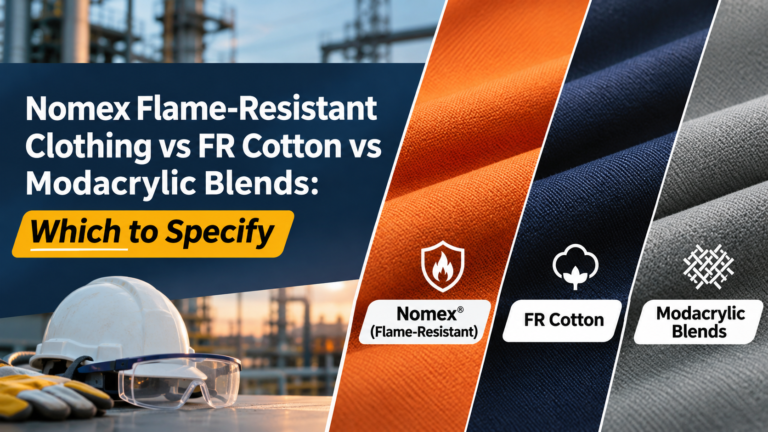
Two words matter most here: treated and inherent. Treated fabric gets its flame resistance from a chemical finish applied to cotton or a cotton blend. Inherent fabric has the flame resistance built into the fibre, so there is no finish to wear off.
| Fabric type | How it resists flame | Feel and comfort | Durability | Best suited to |
| FR treated cotton or cotton blend | Chemical finish on the fabric | Soft, breathable | Depends on correct washing | Hot climates, general field crews |
| Inherent modacrylic blend | Built into the fibre | Light to medium, good with moisture | Holds up through heavy laundering | Mixed crews, frequent wash cycles |
| Inherent aramid blend | Built into the fibre | Firmer hand | High abrasion resistance | Refinery, high heat, rough work |
There’s no single best option for every site. Workers are familiar with treated cotton, so they’re generally more comfortable wearing it. Inherent fabrics, on the other hand, retain their protection even after repeated industrial washing. That makes a difference at sites where hundreds of coveralls go through the same laundry every week.
Fabric weight is worth checking as well. For hot working conditions, lighter fabrics between 200 and 240 GSM are usually a better choice. If the work involves cold fields, look for 280 GSM or higher. Make sure the spec sheet shows the tested GSM, and check that the fabric used in production matches the sample.
5. Garment types for oil and gas crews
Coveralls or two-piece sets?
| Feature | Coverall | Two-piece (shirt and trouser) |
| Coverage | Full body, no waist gap | Gap can open when bending |
| Sizing | One size to get right | Two sizes per worker, easier fit |
| Heat | Warmer in summer | Easier to ventilate |
| Tracking | One garment per person | More pieces to count and wash |
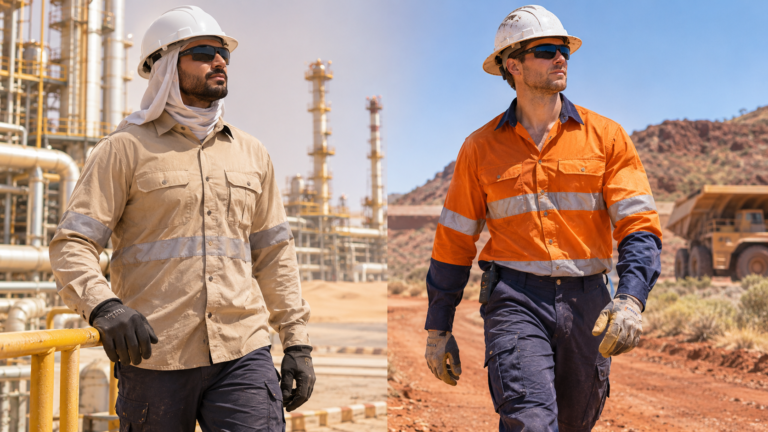
Coveralls are the usual pick for a flame resistant clothing oil and gas program at wellsites and plants, where crews want one layer and no waist gap. Armstrong’s FR coveralls sit under its work wear range, so compare fits there.
Shirts should be tucked in and garments kept zipped or buttoned, because open fronts and loose tails let flame in.
Other pieces in a flame resistant clothing oil and gas program
Hi-vis FR garments are needed where crews work near vehicles or in low light. Armstrong’s high visibility wear range is a place to start, and whatever you pick, the FR spec has to cover the reflective tape too. Cold fields need winter wear that is itself flame resistant, since a standard puffer jacket can melt or burn. Footwear completes the set, and safety shoes and boots should be picked alongside the clothing, not afterwards.
Pay attention to what sits under the FR layer. Synthetic fibres that melt can cause burns even when the outer garment holds. Ask your safety lead what the site rule says about base layers.
6. How to buy flame resistant clothing oil and gas teams need, step by step
- Run the hazard assessment. 1910.132(d) requires it, and it tells you whether the crew needs flash fire only, arc rated gear, or both.
- Write the spec. Name the standard, the fabric type, the weight and the garment style.
- Shortlist fabrics. Two or three candidates are enough. More than that slows the trial.
- Order samples and run a wear trial. Give a handful of workers from different jobs the garments for a few weeks. Collect their feedback on heat, movement and pocket layout.
- Fix the size run. Measure workers where possible rather than guessing from job titles.
- Decide on branding. Logos, patches, reflective tape and embroidery thread should be flame resistant as well. Ask for confirmation in writing.
- Approve the pre-production sample. Compare it against the trial garment before the bulk run starts.
- Check production and documents. Ask for test reports, care instructions and size labels with the shipment.
- Plan the repeat order. Ask how the supplier matches fabric lots so shades do not drift between batches.
Armstrong handles OEM manufacturing, private label work and custom branding for export orders, so steps 6 and 7 can be agreed with the same team that makes the garments.
7. Planning sizes and quantities
Size is where a bulk flame resistant clothing oil and gas order goes wrong. A coverall that binds at the shoulder gets worn open, and an open front is no protection at all.
Collect chest, waist, inseam and height from each worker. Include tall and big sizes, and add women’s cuts if the crew needs them. A single unisex size curve leaves people out.
Plan at least two sets per worker so one can be washed while the other is worn. Crews on heavy rotation or in dirty work may need three. Keep a small reserve of common sizes for new hires and replacements, so nobody waits weeks for a garment.
8. RFQ spec checklist for flame resistant clothing oil and gas orders
Copy this table into your email and fill in the right-hand column.
| # | Item | What to write |
| 1 | Hazard and task | Flash fire only, flash fire plus arc flash, or dual hazard |
| 2 | Standard | NFPA 2112, CAN/CGSB-155.20, NFPA 70E arc rating if needed |
| 3 | Garment type | Coverall, jacket, trouser, rainwear, winter piece |
| 4 | Fabric and weight | Treated or inherent, blend, GSM |
| 5 | Colour and hi-vis | Colour, ANSI/ISEA 107 class, reflective tape |
| 6 | Trims | Zipper, snaps, thread, all flame resistant |
| 7 | Size run | Count by size, plus tall, big and women’s cuts |
| 8 | Branding | Logo method, position, FR patches |
| 9 | Documents | Test reports, care labels, fabric spec sheet |
| 10 | Samples | Number of sizes, trial period |
| 11 | Packing and delivery | Cartons marked by size, delivery site, target date |
| 12 | Repeat orders | Fabric lot matching, reorder schedule |
9. Care, inspection and repair
Good FR garments can still fail if the laundry gets them wrong. An OHS Canada article on FR apparel in oil and gas lists several rules worth printing for the laundry room:
- Follow the manufacturer’s laundering instructions.
- Do not wash FR garments with non-FR clothing.
- Hard water can leave mineral residue that reduces flame resistance, and chlorine bleach works against it.
- Hydrocarbon contamination undermines FR performance, so commercial or onsite laundering is usually better than home washing.
Inspect garments on a schedule. Thin spots, cuts and holes mean the garment goes out of service. Repairs should use like FR materials only, or the garment should be replaced.
10. Common buying mistakes
- Approving a sample, then receiving production in a different fabric.
- Skipping the wear trial because the deadline is close.
- Checking the fabric but not the zipper, thread or tape.
- One size curve for a mixed crew.
- A label accepted as proof when no test report came with it.
- FR garments washed together with ordinary workwear.
- Flash fire garments bought for a job that also involves arc flash.
- No plan for matching the next batch when stock runs out.
11. About Armstrong Products
Armstrong Products has manufactured industrial workwear since 2009. Production runs at its Boisar, Maharashtra facility, and the corporate office is in Powai, Mumbai. The company holds ISO 9001:2015 and ISO 13688:2013 certificates. It supplies bulk and export orders, with OEM, private label and custom branding options.
Tell the team which standard your site follows. They will match it against the fabric options and test documents on hand and flag anything that does not fit before you commit to a bulk run.
Key takeaways
- Name the standard in the RFQ: NFPA 2112 for US flash fire work, CAN/CGSB-155.20 for Canadian work.
- Treat flash fire and arc flash as separate hazards with separate ratings.
- The whole garment must comply, including thread, zippers and labels.
- Run a wear trial. Plan at least two sets per worker.
- Ask for test reports, not only labels.
- Wash FR garments as the maker says, away from ordinary laundry.
- Protection depends on the care routine as much as on the fabric.
Conclusion
Good flame resistant clothing oil and gas orders start before the purchase order. They start with a hazard assessment, a named standard and a spec the supplier can quote against. Then comes the wear trial, a sensible size run and a care routine that keeps the garments working. Use the checklist in section 8 as your starting RFQ, and bring the standard your sites follow when you talk to a manufacturer about a bulk run.
FAQs
1. What fabrics are used for flame resistant clothing in oil and gas?
Most FR garments are made from treated cotton, modacrylic blends or aramid blends. Treated cotton feels soft and comfortable, much like regular cotton. Modacrylic and other inherent fabrics have flame resistance built into the fibres, so washing does not remove a protective finish they rely on. Aramid blends offer better resistance to wear and work well in tough conditions or high temperatures. Before ordering in bulk, try two or three fabric options to see which works best for the climate, washing routine and type of work.
2. Is FR clothing mandatory for oil and gas workers in the US?
OSHA has no single FR rule for the oil patch. Citations come under 29 CFR 1910.132, which requires a hazard assessment, PPE provided at no cost and proof the gear is used. If the assessment finds a flash fire hazard and the employer issues nothing, an inspector can cite the missing flame resistant clothing oil and gas workers needed on that job. Many operators also set their own FR rules, and those can be stricter than the regulation. A contractor may be told to wear FR from the gate onward, even while doing office work on site.
3. What is the difference between NFPA 2112 and CAN/CGSB-155.20?
The US and Canada have their own standards for flash fire workwear. NFPA 2112 is the one used in the US, and part of its testing involves putting an instrumented manikin through a three-second flame exposure. In Canada, CAN/CGSB-155.20 covers clothing worn where hydrocarbon flash fires are a risk. It also includes optional protection requirements for steam and hot fluids. If your crews work in both countries, you may need garments that meet both. List the standards in your RFQ and check with the supplier about the test reports available for each fabric.
4. How is flash fire protection different from arc flash protection?
A flash fire occurs when gas or vapor catches fire. An arc flash, on the other hand, is caused by an electrical event. Flash fire clothing is tested to NFPA 2112 or CAN/CGSB-155.20, while arc flash clothing has an arc rating measured in cal/cm² under NFPA 70E. Some garments meet only one of these requirements, so make sure you’ve accounted for all the hazards your crew could encounter.
5. How many sets of FR clothing should each worker have?
Workers should have at least two sets of workwear. That way, they can wear one while the other is being washed. Three sets may be needed for those working in dusty or dirty conditions, hot weather, or on longer shifts away from home. With too few sets, workers may put off washing their clothes, which can affect how well the garments perform. It’s also worth keeping a few spare sets in commonly used sizes for new employees or anyone needing a replacement.
6. Is inherent FR fabric better than treated FR fabric?
The right choice depends on where and how the garments will be used. Inherent fabrics have flame resistance built into their fibres, making them suitable for frequent industrial washing. Treated cotton tends to be lighter and more comfortable in warm conditions, but it needs to be washed correctly to maintain its protection. Before choosing, check the test reports, feedback from wear trials and how the garments will be laundered.
7. How should FR coveralls be washed?
Always check the manufacturer’s care label before washing FR clothing. Wash these garments separately from regular clothes and avoid chlorine bleach. Hard water can also be a problem, as mineral buildup may affect how well the fabric performs. If the clothing is heavily contaminated with hydrocarbons, use a commercial or onsite laundry instead of washing it at home. Replace garments that have holes, cuts or areas where the fabric has worn thin.
8. What documents should a supplier provide with a bulk flame resistant clothing oil and gas order?
Start by asking for test reports from an accredited lab and a fabric specification sheet that includes the tested GSM. You’ll also need care instructions and labels showing the garment size and fibre content. Get written confirmation that the thread, zippers, patches and any tape used are flame resistant. Keep everything together in your PPE program file. That way, if an inspector, auditor or operator questions your garment selection, you’ll have the paperwork ready instead of digging through old emails.
9. Can FR clothing carry company logos?
Branding is possible, but every added element has to be flame resistant, including the embroidery thread, patches and reflective tape. A non-FR logo can burn or melt and defeat the purpose of the garment. Put logo method and position in the RFQ, and ask the supplier to approve a pre-production sample before the full run.
10. How long should a wear trial run before a bulk order?
Run it long enough for garments to go through several wash cycles, usually a few weeks. Give trial garments to workers across different jobs, then ask about heat, movement, pocket use and fit. Check the garments after washing for shrinkage and shade change. A trial that ends before the first wash misses the problems that show up later.