
Master the workplace safety audit process. Learn how to optimize industrial safety equipment, factory safety equipment, and PPE to ensure 100% compliance in 2026.
In the high-stakes environment of modern manufacturing and heavy industry, an Industrial Safety Supplier is more than a mere vendor—they are a critical partner in the architecture of human survival. As global safety regulations tighten in 2026, these suppliers provide the specialized gear and technical insights necessary to navigate complex hazard landscapes. Today, the trend is shifting from reactive “accident management” to proactive “risk elimination,” putting a massive spotlight on how organizations evaluate their internal safety cultures.
How do you successfully conduct a workplace safety audit? A successful audit requires a systematic examination of the workplace to identify hazards, verify compliance with standards like OSHA or ISO 45001, and ensure that all industrial safety equipment is fully functional and up to date.
Why a Workplace Safety Audit is the Gold Standard of Operations
As we move through 2026, the concept of “safety” has evolved from a back-office administrative task to a front-end business priority. A workplace safety audit is no longer a dreaded annual event; it is a strategic tool used by the world’s most successful companies to ensure operational continuity. With the integration of AI-driven risk assessment and high-performance factory safety equipment, the audit process has become more precise and data-heavy.
For industries ranging from oil and gas to pharmaceutical manufacturing, the audit serves as a reality check. It bridges the gap between what is written in the safety manual and what is actually happening on the factory floor. When conducted correctly, it identifies the “near-misses” that haven’t become accidents yet, allowing management to intervene before a catastrophe occurs.
What is the primary goal of a safety audit?
The primary goal is to identify gaps in your safety program. By systematically reviewing your industrial safety equipment and worker behaviors, you can implement corrective actions that prevent injuries, reduce insurance premiums, and foster a culture where employees feel genuinely valued.
Phase 1: Preparation – Setting the Stage for Success
You cannot effectively manage what you do not measure. Before the actual walkthrough begins, the audit team must gather all relevant documentation. This includes previous incident reports, maintenance logs for factory safety equipment, and training records for all staff members.
Who should be on the audit team?
A mix of internal safety officers and external consultants often yields the best results. An external perspective helps identify “blind spots” that daily workers might miss, while internal staff understand the nuances of the machinery. Furthermore, involving a construction ppe supplier during the planning phase can provide insights into whether your current gear meets the latest 2026 protection standards.
Phase 2: The Physical Inspection – Beyond the Surface
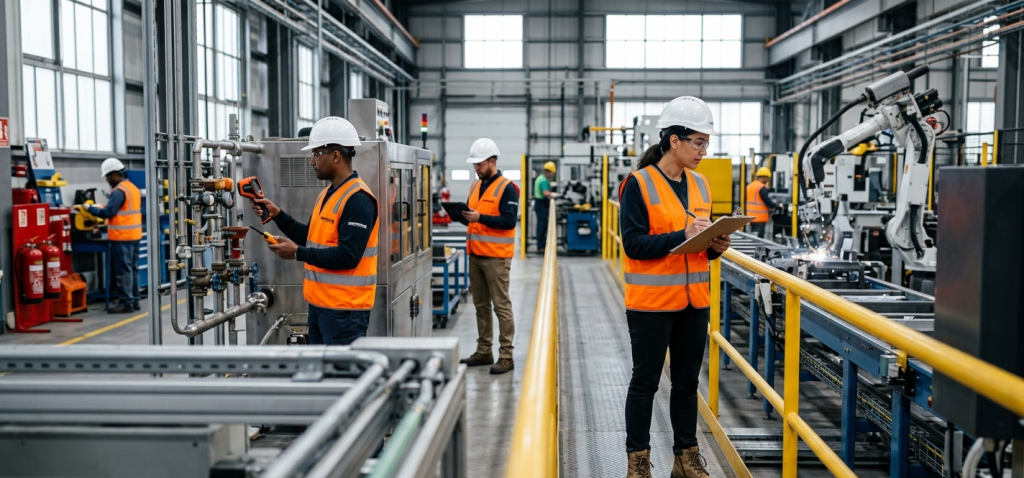
The heart of the workplace safety audit is the physical inspection. This is where the audit team moves through the facility to observe real-time operations. It’s not just about looking for puddles on the floor; it’s about examining the integrity of the industrial safety equipment that protects your most valuable assets—your people.
How do you inspect factory safety equipment effectively?
During the walkthrough, auditors should check the calibration of gas detectors, the expiration dates on fire suppression systems, and the physical condition of machine guards. They must ensure that every piece of industrial safety equipment is not only present but also easily accessible and in perfect working order.
Is your PPE actually protecting anyone?
A major component of the audit involves verifying the quality of personal protective equipment. Are your workers using high-visibility gear that has lost its luminosity? Is the FR (Flame Resistant) clothing from your construction ppe supplier still compliant after 100 washes? A thorough workplace safety audit will flag substandard gear that has been compromised by wear and tear.
Phase 3: Employee Interviews – The Human Element of Safety
Data and machinery only tell half the story. To understand the true safety culture, auditors must speak with the workers on the front lines. These interviews should be non-punitive and focused on uncovering the “why” behind certain behaviors.
- Question: “Do you feel pressured to bypass safety protocols to meet production quotas?”
- Question: “Is the industrial safety equipment provided comfortable enough to wear for a full 12-hour shift?”
- Question: “Has the training provided by our construction ppe supplier been clear and actionable?”
These conversations often reveal that “human error” is actually a “system error”—such as workers not wearing goggles because they fog up, indicating a need for a higher quality industrial safety equipment upgrade.
Phase 4: Reporting and Corrective Action – Closing the Loop
A workplace safety audit without a follow-up plan is just a wasted exercise. Once the audit is complete, the findings must be categorized into “Critical,” “High,” and “Low” priority levels.
What should a safety audit report include?
The report must include clear photographic evidence of hazards, a reference to the specific safety standard being violated, and a suggested corrective action. For instance, if the audit finds that workers are using outdated fall protection gear, the corrective action would be to source new, certified harnesses from a reliable construction ppe supplier.
How do you ensure the audit leads to change?
Assign a “Responsible Person” and a “Due Date” for every corrective action identified. Follow-up audits should be scheduled to verify that the new factory safety equipment has been installed and that staff have been trained on its use.
The Business Case: Why Safety Audits Drive ROI
In 2026, the ROI of a workplace safety audit is undeniable. Companies that prioritize safety see a direct correlation with increased productivity. When a facility is clean, organized, and equipped with the best industrial safety equipment, there is less downtime due to accidents or machinery failure.
Furthermore, a clean audit report is a powerful marketing tool. Global clients today are increasingly auditing their own supply chains. Being able to prove that your facility undergoes a rigorous workplace safety audit regularly makes you a more attractive partner for international contracts. It proves that you are a stable, reliable entity that won’t be shut down by a preventable disaster.
Choosing the Right Partners for Safety Excellence
Navigating the world of industrial safety equipment can be overwhelming. This is why choosing a partner like Armstrong Products is essential. As your Industrial Safety Supplier, we do more than just ship boxes. We help you understand the technical specifications of the factory safety equipment we provide, ensuring that your audit findings result in actual safety improvements.
Whether you need specialized flame-resistant wear or high-altitude fall protection from a trusted construction ppe supplier, our goal is to ensure your organization is always “audit-ready.” Safety is not a destination; it is a continuous journey of improvement.
Conclusion:
Conducting a workplace safety audit is the most powerful way to signal to your employees and your stakeholders that you are a leader in your field. By identifying hazards, investing in premium industrial safety equipment, and maintaining a relationship with a high-caliber Industrial Safety Supplier, you protect your brand’s reputation and your people’s lives.
Don’t wait for an accident to tell you where your safety program is failing. Start your comprehensive workplace safety audit today and build a resilient, future-proof business.
FAQs
Q1: How often should we conduct a workplace safety audit?
Most experts recommend a comprehensive, facility-wide workplace safety audit at least once a year. However, high-risk areas should undergo smaller “spot audits” monthly to ensure factory safety equipment is functioning correctly.
Q2: What is the difference between a safety inspection and a safety audit?
A safety inspection is a physical check of the workplace for hazards. A workplace safety audit is much broader; it examines the entire safety management system, including documentation, training, and policy effectiveness.
Q3: Can our construction ppe supplier help with our audit?
Yes! A specialized construction ppe supplier can review your current inventory and advise whether your gear meets the latest ANSI or EN standards for 2026, which is a key part of the audit process.
Q4: What is the most common failure found in a workplace safety audit?
The most common failure is often related to “Hazard Communication” and the improper maintenance of industrial safety equipment. Workers often have the gear but aren’t fully trained on its specific safety limitations.
Q5: Are safety audits legally required?
While specific “audit” laws vary by region, agencies like OSHA and the Factory Act require employers to maintain a safe workplace. A regular workplace safety audit is the best way to prove you have exercised “due diligence” in the eyes of the law.
Q6: Why is Armstrong Products considered a top Industrial Safety Supplier?
We prioritize the marriage of comfort and protection. Our industrial safety equipment is designed for the rigors of 2026 industrial environments, ensuring that safety gear is something workers want to wear, not something they are forced to wear.