
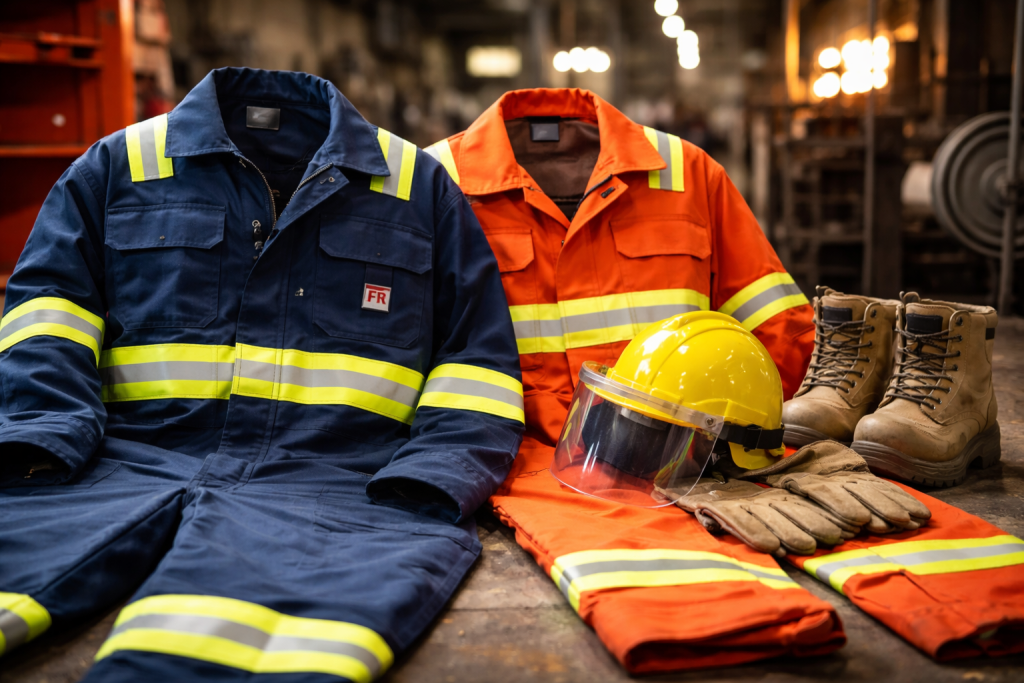
Why Flame Resistant Clothing Matters in Industrial Safety
In high-risk industrial environments, fire hazards are a constant threat. From arc flashes to flash fires and heat exposure, workers require reliable protection to stay safe.
This is where flame resistant clothing plays a critical role. However, many buyers confuse it with flame retardant clothing, assuming both offer the same level of protection.
In reality, choosing the wrong flame resistant apparel can lead to serious safety risks. This guide will help you clearly understand the differences and select the right apparel flame resistant solution for your industry.
What is Flame Resistant Clothing?
Flame resistant clothing refers to garments made from fabrics that are inherently resistant to ignition. These fabrics are engineered to self-extinguish when exposed to flames, reducing burn injuries.
Unlike treated fabrics, flame resistant apparel maintains its protective properties throughout its lifespan.
Key Features of Flame Resistant Clothing
- Self-extinguishing capability
- Does not melt or drip
- Long-lasting protection
- Ideal for hazardous environments
Because of its durability, flame resistant clothing is widely used in industries where fire hazards are frequent.
What is Flame Retardant Clothing?
Flame retardant clothing is made from regular fabrics treated with chemical coatings to resist fire. These treatments slow down ignition and reduce flame spread.
While flame retardant clothing provides basic protection, its effectiveness can decrease over time, especially after repeated washing.
Key Features of Flame Retardant Clothing
- Slows flame spread
- Lower initial cost
- Temporary protection
- Requires proper maintenance
Flame Resistant vs Flame Retardant Clothing: Key Differences
| Feature | Flame Resistant Clothing | Flame Retardant Clothing |
| Protection Type | Inherent | Chemical treatment |
| Durability | Permanent | May reduce over time |
| Safety Level | High | Moderate |
| Cost | Higher upfront | Lower upfront |
For long-term safety, flame resistant clothing is the preferred choice in most industries.
Which is Better: Flame Resistant Apparel or Flame Retardant Clothing?
When safety is the top priority, flame resistant apparel offers superior protection.
It is specifically designed for:
- Continuous exposure to fire hazards
- High-temperature environments
- Critical industrial operations
On the other hand, flame retardant clothing is suitable for:
- Low-risk environments
- Occasional exposure
- Budget-sensitive applications
Industries That Require Flame Resistant Clothing
The demand for flame resistant clothing is highest in industries such as:
- Oil & Gas
- Electrical & Utilities
- Welding & Fabrication
- Manufacturing
In these sectors, using flame resistant apparel is essential for compliance and worker safety.
How to Choose the Right Flame Resistant Apparel
Choosing the right apparel flame resistant solution depends on several factors:
1. Hazard Level
High-risk environments require flame resistant clothing, not just flame retardant options.
2. Safety Standards
Ensure compliance with:
- NFPA 70E
- NFPA 2112
- ASTM F1506
3. Usage Frequency
- Daily use → Flame resistant clothing
- Occasional use → Flame retardant clothing
4. Durability
Flame resistant apparel offers better long-term value due to its durability.
5. Comfort
Modern flame resistant clothing is designed for breathability and comfort.
Common Mistakes to Avoid
When buying flame resistant clothing, avoid these mistakes:
- Confusing flame resistant with flame retardant
- Ignoring certifications
- Choosing low-cost options for high-risk jobs
- Not considering long-term durability
- Improper garment maintenance
Why Choose Armstrong for Flame Resistant Clothing?
Armstrong is a trusted provider of flame resistant clothing designed for industrial safety.
- Premium-quality flame resistant apparel
- Certified and compliant products
- Bulk supply capabilities
- Customized industrial solutions
With Armstrong, businesses can invest in reliable flame resistant clothing that ensures safety and durability.
Conclusion
Understanding the difference between flame resistant clothing and flame retardant clothing is essential for making the right safety investment.
While both offer protection, flame resistant apparel provides long-lasting, reliable safety for high-risk environments.
Choosing the right apparel flame resistant solution not only improves worker safety but also ensures compliance and operational efficiency.
FAQs
1. What is the difference between flame resistant clothing and flame retardant clothing?
Flame resistant clothing is inherently resistant to fire, while flame retardant clothing is chemically treated to slow down flames.
2. Is flame resistant clothing better than flame retardant clothing?
Yes, flame resistant clothing offers more durable and reliable protection, especially in high-risk environments.
3. Does flame retardant clothing lose effectiveness over time?
Yes, flame retardant clothing can lose its protective properties after repeated washing and wear.
4. Is flame resistant clothing fireproof?
No, flame resistant clothing is not fireproof but is designed to resist ignition and self-extinguish.
5. Where is flame resistant apparel used?
Flame resistant apparel is used in industries like oil & gas, electrical, welding, and manufacturing.
6. How long does flame resistant clothing last?
The lifespan of flame resistant clothing depends on usage and care, but its protective properties remain intact for a long time.
7. What standards should flame resistant clothing meet?
Flame resistant clothing should comply with standards like NFPA 70E, NFPA 2112, and ASTM F1506.