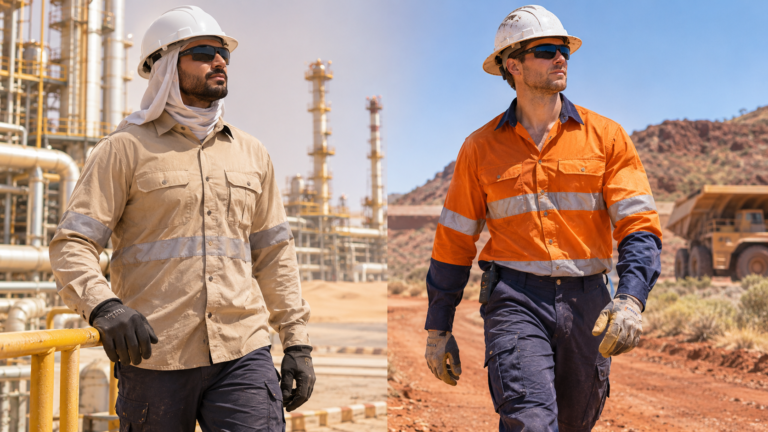
Picture a safety manager who approves 400 FR coveralls for a plant turnaround. The fabric passes every test on paper. By week two, workers have rolled up their sleeves because the suits run hot. The protection on the data sheet no longer matches what is on the worker.
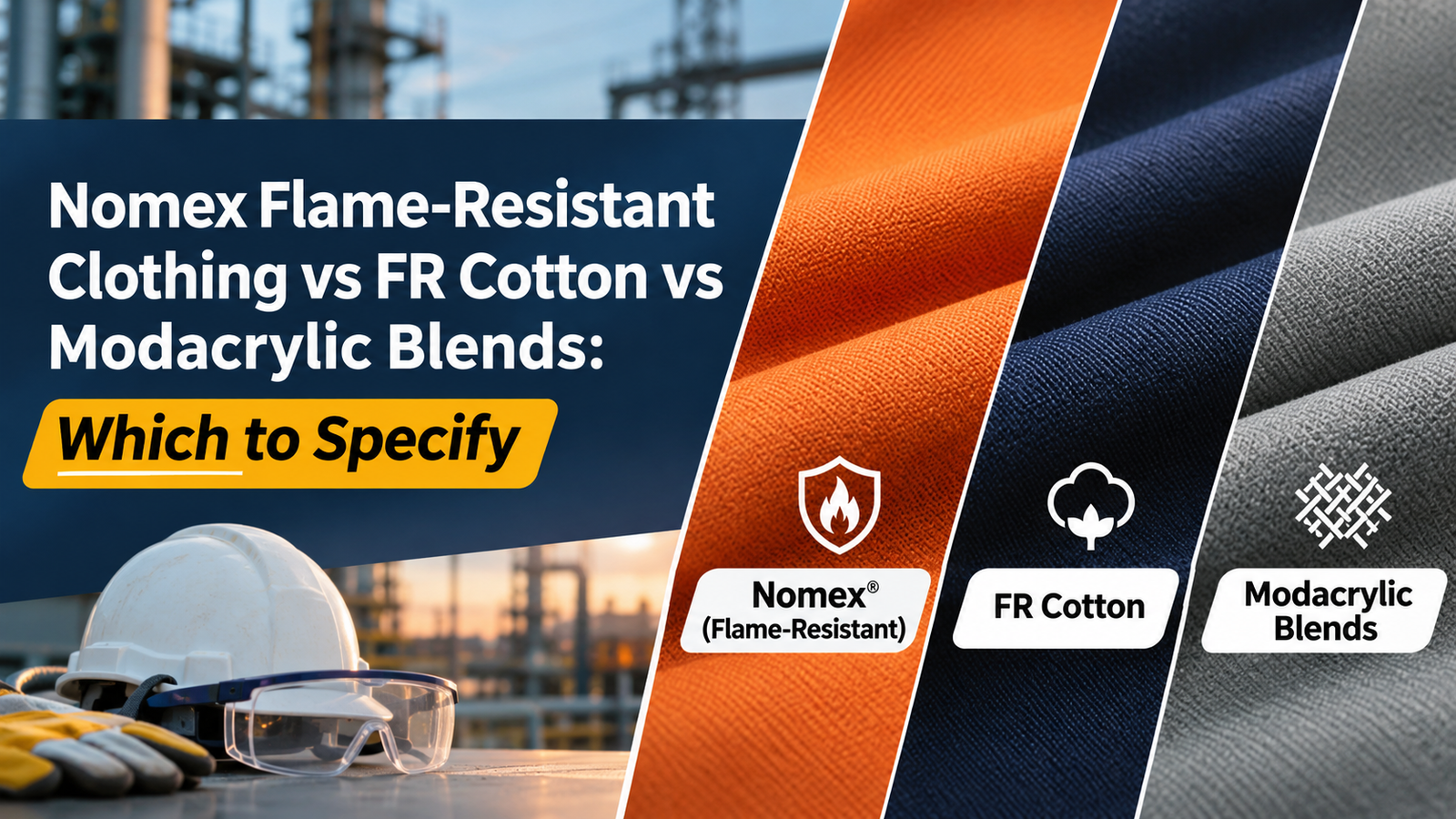
That gap is why fabric choice matters. Nomex flame resistant clothing, FR cotton and modacrylic blends all protect against flash fire and arc flash. They work in different ways, and they feel different on a ten-hour shift.
This guide compares the three side by side. You will see how each fabric works, where it fits, where it falls short, and what to write into a specification so the garment you receive matches the hazard you assessed. It is written for buyers in the US, Canada and Australia, and the same logic applies to export orders in the Gulf.
Quick answer
- Nomex flame-resistant clothing is a better choice for high-risk environments where garments need to withstand repeated washing and provide protection that’s part of the fiber itself.
- FR cotton works well for workers who prefer the feel of regular cotton and face hazards such as flash fires, arc flashes, or molten metal splashes, especially when garments are replaced more frequently.
- Pick a modacrylic blend when comfort drives wear compliance and the hazard is moderate to high but not extreme.
Want the full comparison on one page? Request our fabric comparison PDF and send your RFQ through the Armstrong contact page. Share your hazard, quantity and destination country, and the team will respond with options.
What is nomex flame resistant clothing?
Nomex is the brand name of an inherently flame resistant aramid fiber made by DuPont, according to the DuPont Nomex FAQ. The flame resistance sits in the molecular structure of the fiber. Washing cannot remove it, and wear cannot rub it off.
When flame reaches the fabric, the fiber swells and thickens. That forms a barrier between the heat and the skin. The fabric does not melt or drip.
Makers rarely use Nomex alone. A common Nomex IIIA blend is 93 percent Nomex, 5 percent Kevlar and 2 percent other fiber. Listed coverall weights include 4.5 oz and 6 oz. Lighter weights suit hot climates. Heavier weights add thermal protection.
Nomex flame resistant clothing comes as coveralls, shirts, pants and jackets. Buyers usually file them under IFR coveralls, short for inherent flame resistant coveralls, because the protection belongs to the fiber.
Ordinary work clothes do not offer this. Cotton can ignite and keep burning. Nylon and polyester can melt and stick to skin. An arc blast can also tear apart cotton and polyester-cotton clothing, which leaves the skin exposed.
Inherent vs treated FR fabrics
Every FR fabric falls into one of two groups.
Inherent FR fabrics use fibers that resist flame at the molecular level. Aramid and modacrylic belong here. Protection lasts for the life of the garment.
Treated FR fabrics start with a fiber such as cotton, then receive a chemical finish. Cotton burns by nature, so the finish does the protecting. TenCate’s guide explains that the finish bonds through the fabric and lasts the life of the garment when the garment is cared for correctly. See TenCate’s FR fabric guide for the full breakdown.
The two camps disagree on one point. DuPont argues that treated fabrics rely on a chemical reaction during a fire, and that heat transfer to the wearer rises as the chemicals activate. TenCate argues that treated fabrics give excellent protection and fit roles with high garment turnover. Both statements come from fabric makers with a product to sell. Read the test data, not the sales line.
Nomex vs FR cotton vs modacrylic blends at a glance
| Factor | Nomex (aramid) | FR cotton (treated) | Modacrylic and cotton blend |
| Source of flame resistance | Built into the fiber | Chemical finish bonded to cotton | Modacrylic fiber is flame resistant, cotton adds comfort |
| Feel on the body | Older constructions run stiffer, newer blends are softer | Closest to regular cotton | Soft, dries fast |
| Laundering | Protection cannot wash out, avoid chlorine bleach for fabric strength | Bleach and some additives can damage the finish, follow the care label | Protection sits in the fiber, follow the care label |
| Typical roles | Severe flash fire, arc flash, high heat | Steel and metal, utilities, oil and gas with higher turnover | Utilities, refinery, general industrial where comfort drives wear |
| Molten metal splash | Check test data by weight | Strong, common in steel and metal settings | Check test data for your blend |
| Service life | DuPont estimates 125+ industrial washes | Replaced more often in high-exposure roles | Ask for wash-cycle test data |
When each fabric is the right call
When nomex flame resistant clothing is the right call
Choose it when exposure is severe or frequent. Refinery turnarounds, flash fire risk in upstream work and live electrical tasks all fit.
Nomex flame resistant clothing keeps its protection for the life of the garment. DuPont says industrial launderers estimate that Nomex garments can be washed and worn more than 125 times, and that they may last three to five times longer than conventional or chemically dependent garments. Treat those figures as supplier claims. Ask for test data on the exact fabric you plan to buy.
Nomex flame-resistant clothing doesn’t shrink much. According to DuPont, initial shrinkage is around 1–3%, which helps garments keep their size even after repeated washing.
Comfort can be an issue, though. Older aramid fabrics tend to feel stiffer and warmer than cotton, making them less appealing to workers in humid conditions. Lightweight fabrics and aramid blends with FR rayon can improve comfort, but it’s worth testing how they feel when worn.
Care of nomex flame resistant clothing still needs discipline. Remove oil and grease before each wear, because flammable soil acts as fuel. Skip chlorine bleach. It will not strip the protection, but it weakens the fabric. Repair tears with Nomex-compatible fabric, thread and patches.
When FR cotton fits
FR cotton starts as ordinary cotton, and a chemical treatment makes it flame resistant. Vestis notes that untreated cotton is highly flammable, so the treatment carries the whole job. Cotton and nylon blends are also common, and they add abrasion resistance.
TenCate says treated fabrics handle molten metal splash well and serve as the standard in many steel and metal settings. Utilities and oil and gas operators also use them for arc flash protection.
Workers like the feel. It behaves like regular cotton, which helps with acceptance on day one.
Washing these garments needs a bit more attention. DuPont warns against using chlorine bleach and certain laundry additives, as they can remove the flame protection from treated fabrics. It’s best to stick to the care label and note how many times each garment has been washed. Clothes worn in jobs with greater exposure tend to wear out sooner, so replacements should be arranged before they’re needed.
When a modacrylic blend fits
Modacrylic is a synthetic fiber with flame resistance built in. Vestis describes it as durable, comfortable, easy to dye and fast to dry. Mills blend it with cotton to get a cotton feel with fiber-level protection. One blend from a US mill uses 55 percent modacrylic and 45 percent long staple cotton.
This family often wins on wear compliance. Workers keep the garment on because it feels like regular workwear. A garment that stays buttoned protects better than a stronger fabric left open.
The limit is heat headroom. Nomex flame resistant clothing handles the most extreme exposure, so it leads for severe hazards. Modacrylic blends suit moderate to high hazards. Always check the arc rating value, such as ATPV, for the exact fabric weight and blend ratio. Without that number, you are guessing.
Standards that shape your choice
Fabric selection follows the standard your site or client names. These are the ones buyers meet most often.
- NFPA 2112 covers flame resistant garments for protection against flash fire. Vestis says garments need third-party testing and certification before sale.
- NFPA 70E covers electrical safety in the workplace. It sets category levels that define the arc rating clothing needs for each task.
- ASTM F1506 sets performance requirements for flame resistant textiles worn by electrical workers exposed to momentary electric arc.
- ASTM D6413 is the vertical flame test used to certify FR fabrics.
- ISO 11612 and ISO 11611 cover heat and flame protection and welding protection. ISO 11612 also carries molten metal codes, with D1 to D3 for aluminum and E1 to E3 for iron.
- CAN/CGSB 155.20 is the Canadian standard for flame resistance.
Meeting one standard does not mean meeting another. A garment can carry NFPA 2112 certification and still lack an arc rating for 70E work. Check each certificate against each hazard.
Buyers in Australia and the Gulf should read the tender or client specification closely. It may point to ISO or EN references rather than NFPA.
Choosing by hazard
| Hazard | Fabric to shortlist | What to verify |
| Flash fire in oil and gas or petrochemical work | Nomex blends or modacrylic blends, treated cotton where the program allows | NFPA 2112 certificate and wash-count test data |
| Arc flash in utilities and electrical work | Any of the three at the right arc rating | ASTM F1506 and the arc rating value for the fabric weight |
| Welding and molten metal splash | Heavier FR cotton or aramid blends | Molten metal test result, such as ISO 11612 D and E codes |
| Combustible dust | Any certified FR fabric | Cleaning routine, since soil and residue reduce protection |
| Hot climate with mixed hazards | Lightweight aramid blend or modacrylic blend | Wear trial on the hottest shift |
Choosing by industry
- Oil and gas: flash fire risk drives the choice. Nomex flame resistant clothing and modacrylic blends are common picks, and treated cotton works where the program allows.
- Utilities and electrical: Choose clothing based on its arc rating and the category identified in your NFPA 70E risk assessment.
- Steel and metal: For molten metal splash hazards, heavier FR cotton or aramid blends are worth considering.
- Mining: Methane and combustible dust hazards require certified FR clothing, along with strict laundering practices.
- Chemical and manufacturing plants: Check for possible solvent and chemical exposure. FR clothing alone does not protect against chemicals.
- Construction and hot works: Cutting and grinding produce sparks, so treated cotton or suitable FR blends are worth considering, especially when workers need to wear them all day.
Comfort and wear compliance
TenCate warns that improper wear, such as rolling sleeves or untucking shirts, can raise the risk of serious injury in an incident. Comfort is a safety feature.
Alibaba’s seller guide reports that workers consistently find FR fabrics heavier and less breathable than regular workwear. That complaint is why lighter blends exist. Lighter nomex flame resistant clothing now sits alongside modacrylic options.
Run a wear trial before you place a bulk order. Put 10 to 20 workers in sample garments for two weeks, including the hottest shift. Ask about heat, movement and closures. Then specify the winner.
Check what workers wear underneath. Melting synthetic underlayers can injure the skin even when the FR shell holds. Pair FR coveralls with high visibility wear that is also FR rated when the job needs both. Armstrong lists high visibility wear as its own category.
Care and laundering by fabric
Vestis says FR clothing needs to be completely clean before it can be worn again. Even a small amount of oil left on a coverall can make it more likely to catch fire. Soap left behind after washing and minerals from hard water can also reduce the protection it provides.
- Nomex flame-resistant clothing: Regular home or industrial washing is fine. Avoid chlorine bleach and make sure all oil and grease are removed.
- FR cotton: Follow the care label, skip bleach and fabric softeners, and keep track of how many times the garment has been washed.
- Modacrylic blends: follow the care label and avoid high heat settings the maker warns against.
Many sites send FR garments to an industrial laundry with an FR-specific wash process. Ask your laundry partner which fabrics it handles before you finalize the specification.
FR coverall specification checklist
Use this list when you write the RFQ.
- Hazard assessment result, including flash fire, arc flash or molten metal exposure.
- Standard and certificate each garment must meet.
- Fabric family, blend ratio and weight in oz or GSM.
- Arc rating value, if electrical tasks apply.
- Wash-count test data at your required cycle count.
- Thread, zipper, label and trim materials. Vestis notes that threads must be FR and must not melt at 500°F for 70E compliance.
- High visibility requirements and the standard behind them.
- Sizing range and fit for your workforce.
- Laundering method, in-house or industrial.
- Branding method. Use FR-compatible embroidery thread for logos.
Common mistakes to avoid
- Treating all FR fabrics the same. Inherent and treated fabrics don’t perform in the same way.
- Overlooking wash-count data. A certificate based on an unwashed fabric doesn’t tell you much about how it will hold up after a year.
- Wearing a synthetic underlayer that can melt beneath an FR outer garment.
- Ignoring thread, zippers and trims. A coverall is only as flame resistant as its weakest component.
- Choosing by weight alone. Two fabrics at the same weight can carry different arc ratings.
- Skipping the wear trial, even for nomex flame resistant clothing.
- Assuming one standard covers every hazard.
Bulk, OEM and export notes
Armstrong Products, founded in 2009, manufactures in Boisar, Maharashtra, with its corporate office in Powai, Mumbai. The company holds ISO 9001:2015 and ISO 13688:2013 certificates and works with buyers across North America, the UK and the Middle East. It lists flame retardant wear within its workwear range for industrial buyers.
Buyers who want their own label can review OEM and private label manufacturing. Logo and branding options sit on the customization and branding page. For full PPE kits, pair FR coveralls with safety shoes and boots from the same supplier.
Samples are available before a bulk order, and minimum order quantities depend on the product and the level of customization.
Key takeaways
- Nomex flame resistant clothing suits severe hazards and long wash life.
- FR cotton suits steel, metal and high-turnover roles where cotton feel matters.
- Modacrylic blends suit moderate to high hazards where comfort drives wear.
- Certificates, arc ratings and wash-count data matter more than fiber names.
- Wear-test before you buy in bulk.
Conclusion
Choosing the right fabric makes a big difference to how an FR program performs on the job. Nomex flame resistant clothing offers built-in protection and holds up well after repeated washing, making it a good fit for high-risk environments. FR cotton feels familiar to wear and works well in steel, metal and jobs with frequent staff turnover. Modacrylic blends offer a comfortable option for workers facing moderate to high hazards.
Before placing a bulk order, review the hazards at your site. Check the required standards, arc ratings and wash-count data, then have workers try the clothing. For a side-by-side PDF comparison, request the fabric comparison and submit your RFQ through the Request Bulk Quote form on the Armstrong website.
FAQs
What is Nomex flame-resistant clothing made of?
Nomex is DuPont’s brand name for a meta-aramid fiber. Makers weave it alone or blend it with other fibers. A common Nomex IIIA blend is 93 percent Nomex, 5 percent Kevlar and 2 percent other fiber. Because the flame resistance sits inside the fiber, washing does not remove it. Listed coverall weights include 4.5 oz and 6 oz.
Is Nomex better than FR cotton?
Neither wins everywhere. Nomex flame resistant clothing holds its protection for the life of the garment and suits severe hazards. FR cotton feels like regular cotton and fits roles with higher garment turnover, such as steel and metal work. Match the fabric to your hazard assessment, your climate and your wash program. Then check the certificate for the exact fabric weight you plan to buy.
Does Nomex melt or drip?
Nomex fiber does not melt or drip. DuPont says the fiber swells and thickens when flame reaches it, which forms a barrier that stays supple until it cools. Regular nylon and polyester behave differently, because they can melt and stick to skin. That is why workers should avoid melting synthetic underlayers beneath an FR shell.
What is the difference between inherent and treated FR fabric?
The difference between inherent and treated FR fabrics is how they resist flames. Inherent FR fabrics are made with fibers such as aramid and modacrylic, which are flame-resistant by nature. Treated FR fabrics, on the other hand, use materials like cotton that have been given a chemical finish for protection. Both types must pass flame tests to be certified. Inherent fabrics keep their flame resistance even after washing, while treated fabrics need more careful handling. Certain laundry additives can affect the protective finish, so always check the care label.
Is modacrylic as protective as Nomex?
Modacrylic has flame resistance built into its fibers, so the protection isn’t just a surface treatment. Aramid fibers like Nomex can withstand more extreme heat, making them a better choice for severe exposure. Modacrylic blends are well suited to moderate and high-risk environments, especially when comfort helps workers wear their protective clothing consistently. Rather than choosing based on fiber type alone, check the arc ratings and flash fire test results for the fabric you’re considering.
How many washes does FR clothing last?
It depends on the fabric, the laundering method and the work. Garments must keep their flame resistance through a set number of wash cycles to be certified. Vestis lists 25 wash-and-dry cycles in the tests it describes for electrical-use garments. DuPont says industrial launderers estimate that nomex flame resistant clothing can pass 125 washes. Ask your supplier for test data at the wash count your program needs.
Which FR fabric is most comfortable in hot weather?
Comfort depends on weight, weave and moisture handling more than on fiber name. FR cotton feels the most like regular cotton. Modacrylic blends are soft and dry fast. Lightweight aramid constructions and aramid blends with FR rayon have also improved. Run a wear trial on your hottest shift. Uncomfortable garments lead workers to roll sleeves and open fronts, which weakens the protection.
Which standards apply in the US and Canada?
In the US, NFPA 2112 covers flash fire garments, NFPA 70E covers electrical safety and arc rated clothing selection, and ASTM F1506 sets requirements for FR textiles worn by electrical workers. ASTM D6413 is the vertical flame test. In Canada, CAN/CGSB 155.20 is the flame resistance standard. Meeting one standard does not mean meeting another, so confirm each certificate.
Can FR cotton be used for arc flash work?
FR cotton can protect against arc flash when the garment carries an arc rating suited to the task and meets ASTM F1506. TenCate notes that utilities and oil and gas operators use treated fabrics for arc flash protection. Check the arc rating value for the exact weight, because lighter fabrics usually carry lower ratings.
What should I include in an RFQ for FR coveralls?
List the hazards from your assessment, the standard each garment must meet, the fabric family and weight, the arc rating if needed, sizes, quantities, branding needs and your delivery country. Add the wash count and laundering method your program uses. Ask for the certificate and test data with the quote. Armstrong Products takes bulk requirements through the Request Bulk Quote form on its website.