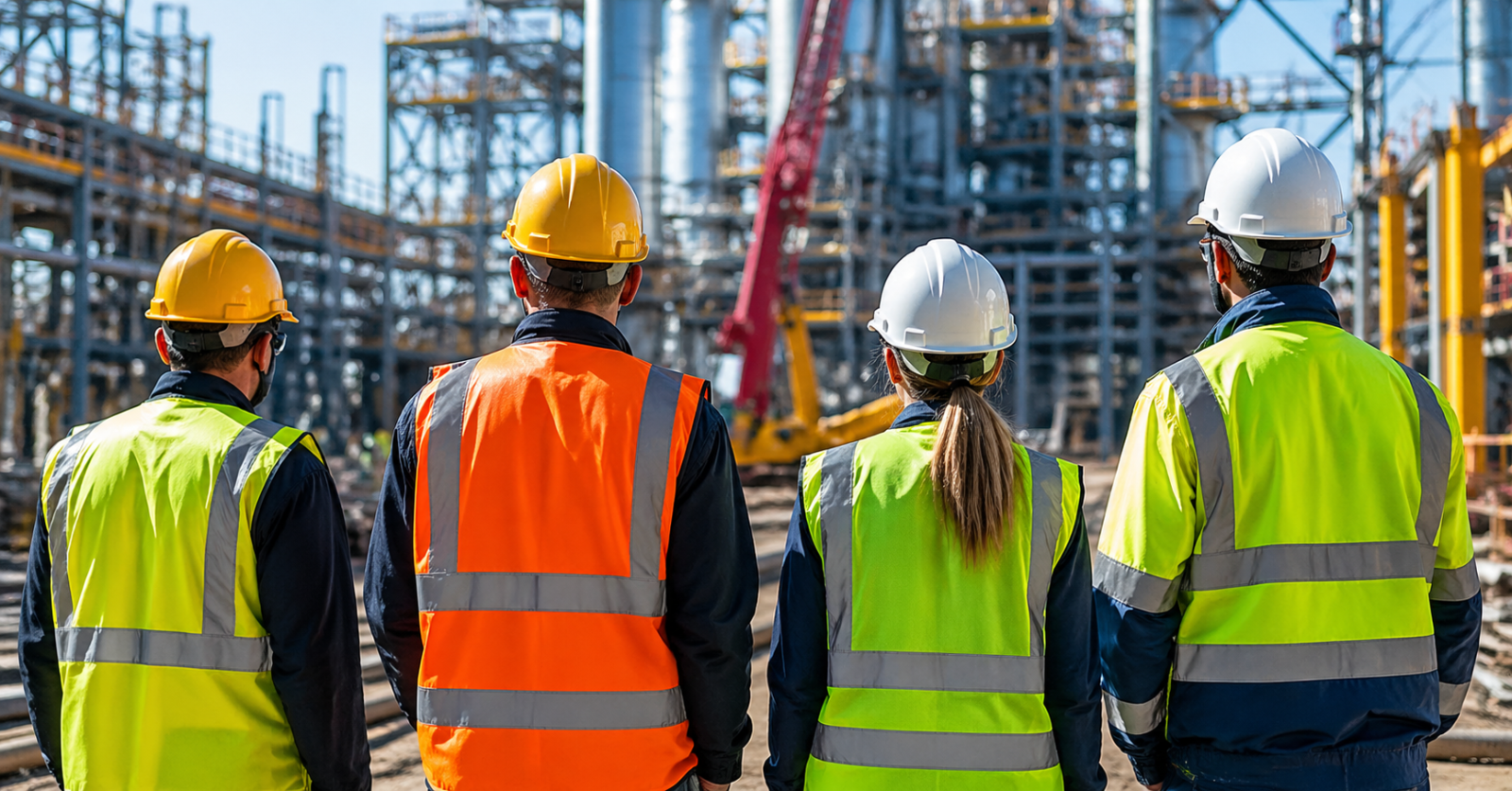
Every year, millions of workers suffer injuries that could have been prevented. Many of these injuries happen simply because the right safety clothing PPE was not worn, or not worn correctly. In industries where risks are real and constant, safety clothing PPE is not a formality. It is the barrier between a worker and serious harm.
This guide covers everything you need to know about safety clothing PPE: what it is, why it matters, which types exist, how different industries use it, and how to choose and maintain it.
What Is Safety Clothing PPE?
Safety clothing PPE stands for Personal Protective Equipment. It refers to any garment or wearable gear designed to protect the body from physical, chemical, thermal, biological, or electrical hazards.
Safety clothing PPE includes items such as:
- Coveralls and work suits
- High-visibility jackets and vests
- Flame-resistant clothing
- Chemical-resistant suits
- Rainwear and thermal gear
- Safety footwear and boots
- Gloves, hard hats, and eye protection
Together, these items form a complete protective system. No single piece of safety clothing PPE covers every risk. That is why it is always used as a full ensemble.
At Armstrong Products, we manufacture and supply a wide range of safety clothing and work wear for industries across India. Our products are built to meet the real demands of high-risk environments.
Why Is Safety Clothing PPE Important in High-Risk Industries?
1. It Prevents Workplace Injuries and Fatalities
The primary purpose of safety clothing PPE is to protect workers from harm. High-risk industries, such as construction, oil and gas, mining, chemical processing, and manufacturing, expose workers to falling objects, chemical splashes, extreme heat, electrical shocks, and more.
Proper safety clothing PPE reduces the chance of injury significantly. A worker wearing flame-resistant coveralls in a refinery is far safer than one in standard clothing during a flash fire event.
2. It Protects Against Long-Term Health Hazards
Not all workplace dangers are immediate. Exposure to chemicals, dust, radiation, or extreme temperatures over time can cause chronic health conditions. Safety clothing PPE acts as a shield against repeated exposure, reducing the risk of occupational diseases.
3. It Ensures Legal Compliance
In India, the Factories Act, 1948, and various industry-specific regulations require employers to provide workers with appropriate safety clothing and PPE. Non-compliance can lead to legal penalties, work stoppages, and reputational damage.
Beyond India, international standards such as ISO 13688 (for protective clothing) and EN ISO standards govern the design and performance of safety clothing PPE. Certified products give workers and employers confidence that the gear meets tested safety thresholds.
4. It Builds a Culture of Safety
When an organisation invests in quality safety clothing, PPE, it sends a message. It tells every worker that their well-being matters. This improves morale, reduces absenteeism, and leads to more productive workplaces.
Types of Safety Clothing PPE for High-Risk Industries
Work Wear and Coveralls
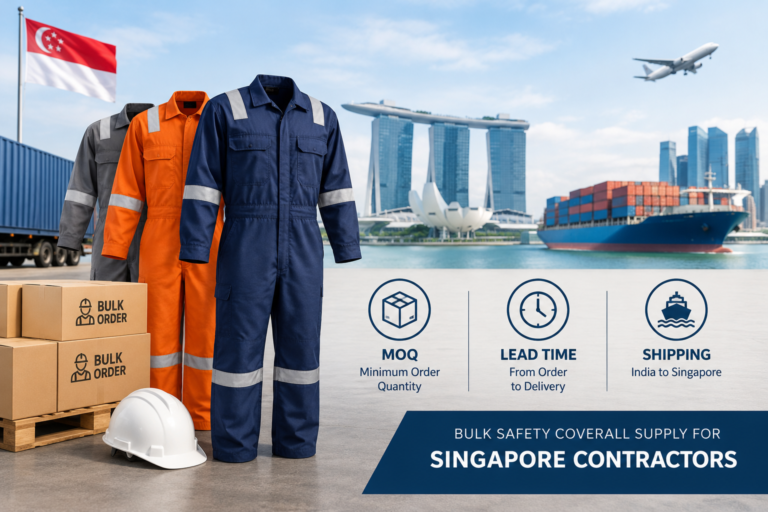
Workwear is the foundation of safety clothing PPE. Coveralls, shirts, and trousers made from durable poly-cotton or 100% cotton protect against general workplace hazards such as abrasion, dirt, and minor splashes.
Explore our work wear range designed for industrial and field applications.
High-Visibility Clothing
Workers in road construction, airports, railways, and logistics face the risk of being struck by vehicles or moving machinery. High-visibility safety clothing PPE — including vests, jackets, and coveralls with reflective tape — makes workers visible even in low-light conditions.
Our high-visibility wear collection meets ANSI/ISEA and EN ISO standards for visibility performance.
Flame-Resistant (FR) Clothing
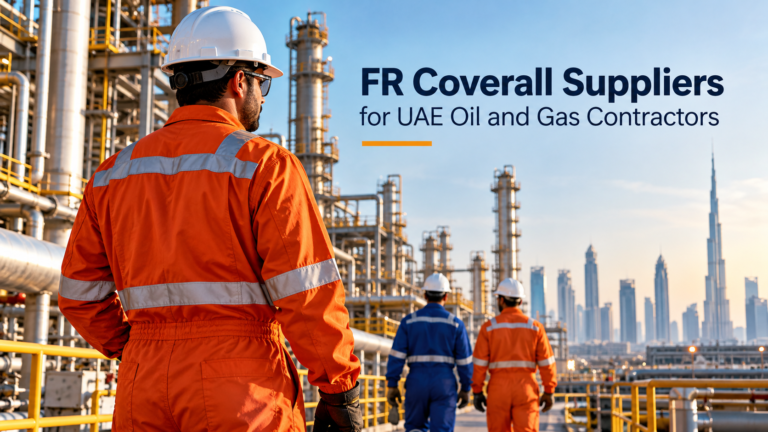
Workers in oil refineries, petrochemical plants, and electrical utilities face risks of fire and arc flash. Flame-resistant safety clothing PPE is made from materials that self-extinguish and resist ignition, buying critical seconds in an emergency.
FR-rated coveralls and jackets are a non-negotiable requirement in these environments.
Chemical-Resistant Clothing
Chemical-resistant protective clothing keeps workers handling acids, solvents, pesticides, and other hazardous substances. These suits are made from materials such as PVC, neoprene, or Tyvek, depending on the specific chemical hazard.
The right chemical-resistant gear must match the specific substance being handled; no single material protects against all chemicals.
Rain Wear
Outdoor workers in construction, agriculture, logistics, and utilities face exposure to rain and wet conditions. Waterproof safety clothing PPE prevents hypothermia, skin conditions, and reduced dexterity, all of which affect both safety and productivity.
Browse our range of rainwear built for Indian monsoon conditions.
Winter and Thermal Wear
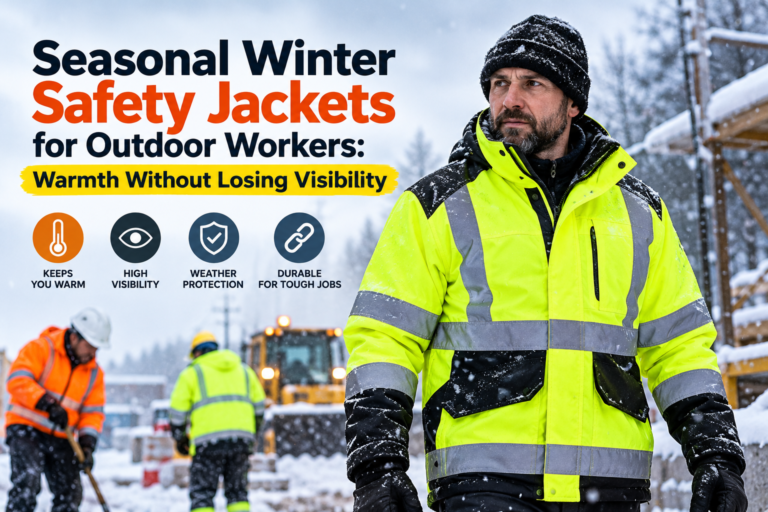
Cold storage workers, those working at high altitudes, and workers in cold-climate regions need insulated protective clothing. Thermal gear maintains body temperature, preventing cold stress and improving alertness during work.
Our winter wear range provides both warmth and freedom of movement.
Medical and Healthcare Wear
Healthcare workers need PPE that protects against biological hazards, including viruses, bacteria, and bodily fluids. Gowns, scrubs, and disposable protective suits form the core of medical protective wear.
Check out our dedicated medical wear collection for hospital and clinical environments.
Safety Footwear
A full PPE setup is incomplete without the right footwear. Safety shoes and boots protect against crushing injuries, punctures, slips, electrical hazards, and chemical exposure.
View our safety shoes and boots for construction, manufacturing, and industrial use.
Industry-Specific Requirements for Safety Clothing PPE
Construction
Construction workers face multiple hazards at once: falling objects, sharp materials, electrical cables, moving machinery, and working at height. PPE on construction sites typically includes hard hats, high-visibility vests, safety boots with steel toecaps, and protective gloves.
Oil and Gas
In offshore platforms and refineries, safety clothing PPE must address fire, chemical exposure, and high-pressure hazards. FR coveralls, chemical splash suits, and flame-resistant gloves are standard. Anti-static properties are critical in environments where static sparks could trigger explosions.
Mining
Mining exposes workers to dust, heavy machinery, vibration, extreme temperatures, and collapse risks. Protective equipment in mining includes high-visibility coveralls, thermal layers, steel-capped boots, and dust-resistant respiratory protection.
Healthcare
Medical professionals and support staff use safety clothing PPE to prevent cross-contamination. This includes disposable gowns, gloves, face shields, and shoe covers. The COVID-19 pandemic highlighted how critical medical safety clothing, PPE, is for protecting frontline workers.
Manufacturing and Fabrication
Factory workers face cutting hazards, heat, sparks, and chemical exposure. PPE in manufacturing typically includes FR clothing, cut-resistant gloves, safety footwear, and protective aprons.
How to Choose the Right Safety Clothing PPE
Choosing safety clothing PPE is not a one-size-fits-all decision. Follow these steps:
Step 1: Conduct a Hazard Assessment: Identify the specific hazards present in the work environment. Different risks require different types of PPE.
Step 2: Match PPE to the Hazard: Refer to relevant IS (Indian Standard) or EN ISO standards to select PPE rated for the identified hazard.
Step 3: Check the Fit: Ill-fitting protective equipment is dangerous. It can restrict movement, create gaps in protection, or cause discomfort that leads workers to remove it. Always ensure the correct size.
Step 4: Verify Certification Look for ISO, CE, or BIS certification marks on your PPE. These confirm that the product has been independently tested.
Step 5: Involve the Workers: Workers who help choose their safety clothing, PPE, are more likely to wear it consistently. Their input on comfort and usability is valuable.
Proper Care and Maintenance of Safety Clothing PPE
Protective equipment must be maintained to remain effective. Follow these guidelines:
- Inspect before every use. Check for tears, worn seams, faded reflective tape, or chemical contamination.
- Clean according to manufacturer instructions. Improper washing can damage FR coatings or reduce water resistance.
- Store correctly. Keep PPE away from direct sunlight, heat sources, and chemicals when not in use.
- Replace when damaged. Damaged gear offers reduced protection. Replace it immediately.
- Keep records. Keep a log of PPE issued, inspected, and replaced for each worker.
Common Mistakes to Avoid with Safety Clothing PPE
Even well-intentioned organisations make errors when it comes to safety clothing PPE. Avoid these:
Using the wrong type of PPE for the job. A high-visibility vest does not protect against chemical splashes. Always match PPE to the specific hazard.
Skipping hazard assessments. Without a formal assessment, critical risks can be missed, and workers may go without the protective equipment they actually need.
Buying uncertified products. Low-cost, uncertified PPE may look adequate but fail when it matters most. Always purchase from trusted suppliers.
Ignoring fit. Safety clothing PPE that is too large or too small reduces protection and comfort.
Not training workers. Workers must know how to put on, wear, maintain, and remove safety clothing PPE correctly. Improper donning and doffing can transfer contamination.
Conclusion
Safety clothing PPE is far more than a regulatory requirement. It is a practical commitment to protecting the people who do the hardest, most hazardous work. In high-risk industries, the right safety clothing PPE can mean the difference between a safe day at work and a life-changing injury.
From work wear and high-visibility jackets to flame-resistant coveralls and safety boots, every piece of safety clothing PPE has a specific role. Choosing, fitting, and maintaining it correctly ensures it delivers the protection it promises.
Armstrong Products has been supplying quality safety clothing and PPE to India’s leading organisations since 2009 — trusted by companies such as ONGC, L&T, Adani, and JSW. Our range is certified, durable, and designed for the real conditions workers face every day.
Visit our contact page to discuss your requirements or request a bulk quote.
FAQ
Q1. What does PPE stand for in safety clothing?
PPE stands for Personal Protective Equipment. Safety clothing PPE refers specifically to garments and wearable gear designed to protect the body from workplace hazards.
Q2. Who is responsible for providing safety clothing and PPE at the workplace?
Under the Factories Act, 1948, and other applicable regulations in India, employers are responsible for providing appropriate safety clothing and PPE to their workers at no cost. Workers are required to wear it.
Q3. How often should safety clothing PPE be replaced?
There is no fixed schedule. Safety clothing PPE should be replaced whenever it is damaged, contaminated, or no longer meets the required performance standard. Regular inspection helps determine when replacement is needed.
Q4. Can the same safety clothing PPE be used for different hazards? Not always. Some items, like safety shoes, cover multiple risks. But specific safety clothing PPE — such as chemical-resistant suits — is designed for particular hazards. Using the wrong gear can give workers a false sense of security.
Q5. Is flame-resistant clothing the same as fireproof clothing?
No. Flame-resistant safety clothing PPE self-extinguishes when the ignition source is removed. It reduces burn injuries but does not make the wearer fireproof. No safety clothing PPE is completely fireproof.
Q6. What certifications should I look for in safety clothing PPE?
Look for ISO 13688 for general protective clothing performance, EN 471 or ISO 20471 for high-visibility wear, and EN ISO 11612 for heat and flame protection. In India, BIS certification is also relevant for many categories of safety clothing and PPE.
Q7. Can safety clothing PPE be customised with company branding?
Yes. Many manufacturers, including Armstrong Products, offer customisation and branding on safety clothing PPE. This is common for large organisations and project sites where worker identification is important.
Q8. What is the difference between disposable and reusable safety clothing PPE?
Disposable safety clothing PPE is meant for single use and is discarded after. It is common in healthcare and chemical handling. Reusable safety clothing PPE is washed and maintained between uses and is more cost-effective for general industrial use.