
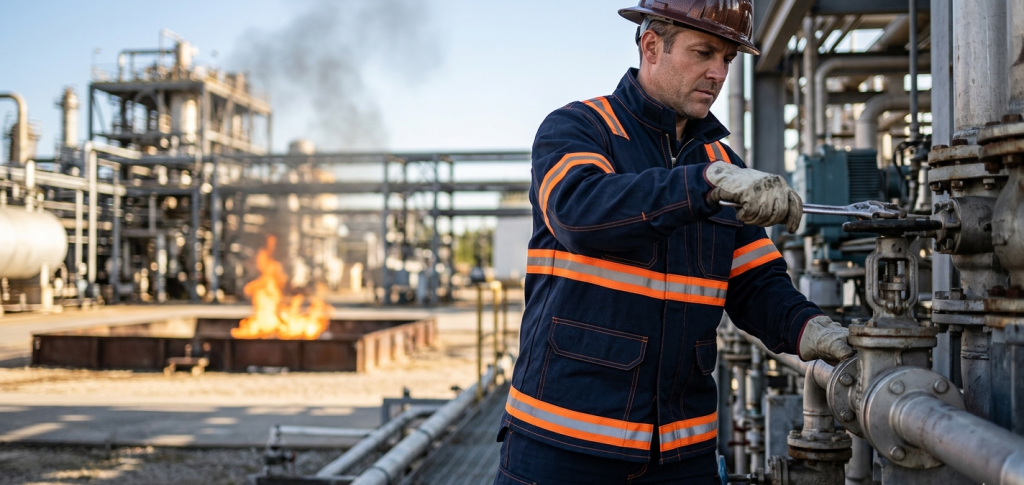
In the high-stakes, fast-paced world of heavy industry, an Industrial Safety Supplier is more than just a vendor; they are a frontline partner in risk mitigation and human life preservation. These specialized providers deliver the critical gear that stands as the final barrier between a dedicated worker and a life-altering injury. As we navigate the complexities of 2026, the demand for high-performance protection is trending upward. Global safety mandates have become significantly more stringent, and forward-thinking businesses have come to a sobering realization: “standard” clothing is a massive liability in high-risk zones.
How does fire resistant wear protect workers? It functions by self-extinguishing upon the removal of a flame source and resisting ignition entirely. This provides a critical thermal barrier that prevents catastrophic skin grafts and severe burns during flash fires, molten metal splashes, or electrical arc flashes.
Why is Fire Resistant Wear Non-Negotiable in 2026?
As we move further into 2026, the definition of “workplace safety” has undergone a radical evolution. Modern fire resistant wear is no longer defined by the heavy, stiff, and suffocating fabrics of the past. Today, it is a sophisticated blend of advanced material science, nanotechnology, and ergonomic design. For industries like oil and gas, chemical processing, metal smelting, and electrical utilities, this apparel is not just a uniform—it is the last line of defense in an environment where margins for error are zero.
The primary role of fire resistant wear is to prevent the “body burn” percentage from reaching fatal levels. Unlike conventional fabrics—such as polyester or standard cotton, which can melt into the skin or continue to burn like a wick long after the heat source is gone—FR (Flame Resistant) technology ensures the fabric stops burning the moment the flame is removed. This gives workers those precious, life-saving seconds they need to evacuate a hazardous area safely and minimizes the trauma to the body.
How does industrial safety apparel prevent second-degree burns?
By utilizing inherently flame-resistant fibers like Aramid or specially treated high-grade cotton blends, industrial safety apparel creates an insulating air gap between the fabric and the skin. This gap significantly slows the transfer of thermal energy, keeping the wearer’s body temperature within a survivable range even during intense, sudden heat exposure.
The Business Case: Compliance, ROI, and Employee Morale
Investing in premium industrial safety wear is often viewed through the narrow lens of “upfront cost,” but savvy HSE (Health, Safety, and Environment) managers in 2026 view it as a high-return investment. When you look at the macro-level of business operations, the cost of a jacket is negligible compared to the cost of a single workplace accident.
1. Legal Compliance and Global Standards
Regulatory bodies like OSHA and the standards set by NFPA 2112 are stricter than they have ever been. In today’s litigious and highly regulated environment, non-compliance doesn’t just risk lives; it risks massive fines, astronomical legal fees, and total shutdowns. By sourcing your gear from a reputable Industrial Safety Supplier, you ensure that your documentation is air-tight and your workers are protected by law.
2. Reduced Downtime and Durability
High-quality fire resistant wear is engineered for longevity. While cheaper alternatives might fray or lose their protective properties after a few washes, premium industrial safety apparel withstands rigorous industrial laundering. This durability means fewer replacement cycles, less administrative overhead for re-ordering, and significantly lower long-term costs for the procurement department.
3. The Psychology of Safety: Boosting Morale
Worker confidence is an underrated metric of productivity. When a team knows they are wearing the best industrial safety wear available—gear that fits well, breathes, and offers real protection—their focus remains entirely on the task at hand. This psychological “safety net” reduces anxiety and directly translates to higher on-site efficiency and lower turnover rates.
Is industrial workwear and supplies just an expense?
Absolutely not. It is a strategic asset. High-grade industrial workwear and supplies reduce insurance premiums and mitigate the astronomical costs associated with workplace accidents, including workers’ compensation claims and long-term rehabilitation. In the eyes of a CFO, PPE is an insurance policy that pays dividends in operational continuity.
Selecting the Right Industrial Safety Supplier: What to Look For?
Not all safety gear is created equal, and the market is unfortunately flooded with sub-par imitations. When sourcing fire resistant wear, the choice of supplier is just as important as the fabric itself. At Armstrong Products, we emphasize that a partner should offer more than just a product; they should offer a guarantee of performance and a legacy of trust.
What certifications should you verify?
Your fire resistant wear must meet or exceed international benchmarks. Look for certifications such as EN ISO 11612 (protection against heat and flame), NFPA 2112 (protection against flash fire), and IEC 61482 (protection against the thermal hazards of an electric arc). A reputable Industrial Safety Supplier will provide transparent test data, third-party lab results, and material origins to ensure the gear performs as promised under extreme duress.
Can industrial safety wear be customized?
Yes, and in 2026, customization is a standard requirement. Modern manufacturing allows for industrial safety wear that includes corporate branding, integrated high-visibility strips, and specialized pocketing for tools or communication devices. The key is ensuring that these modifications—like using FR threads for embroidery—do not compromise the flame-resistant integrity of the garment. This allows your team to maintain a professional corporate identity while staying 100% protected.
The Science of Survival: Understanding FR Technology
The magic of fire resistant wear lies in the molecular architecture of the fabric. To make an informed purchasing decision, it is vital to understand the two main categories of protection:
Inherently FR Fabrics
Fibers like Nomex®, Kevlar®, or Modacrylic are flame-resistant by nature. Their chemical structure is engineered at the molecular level to be non-combustible. The protection cannot be washed out, worn away, or negated by heavy use. This type of industrial safety apparel is the gold standard for high-risk environments where long-term durability is the priority.
Treated FR Fabrics
These garments start as natural fibers (typically high-quality cotton) and are chemically altered through a specialized process to create a permanent flame-retardant bond. While extremely effective and often more breathable or cost-effective, they require strict adherence to laundering protocols to ensure the treatment remains intact.
Choosing between these options depends on your specific work environment—whether your team faces chemical splashes, electric arcs, or extreme radiant heat. Integrating the right industrial workwear and supplies ensures that your Personal Protective Equipment (PPE) is perfectly matched to the specific thermal hazards of your facility.
The Evolution of Comfort: Why 2026 is Different
For decades, the biggest complaint from workers was that fire resistant wear was too hot and too heavy. In 2026, that narrative has changed. Thanks to innovations in moisture-wicking technology and dual-hazard fabric blends, industrial safety wear is now as comfortable as premium athletic gear.
Modern industrial safety apparel features:
- Active Moisture Management: Pulling sweat away from the skin to prevent “steam burns” under the fabric during a heat event.
- Four-Way Stretch: Allowing for a full range of motion, which is critical for workers climbing ladders or navigating tight spaces.
- Lightweight Breathability: Reducing the risk of heat exhaustion—a hazard that is often just as dangerous as fire in industrial settings.
By prioritizing comfort, an Industrial Safety Supplier ensures that workers actually wear their gear correctly, rather than rolling up sleeves or unzipping jackets, which would otherwise leave them vulnerable to injury.
Leading the Way with Armstrong Products
In the modern industrial landscape, “good enough” is a dangerous mindset that leads to tragedy. Upgrading your inventory to include certified, high-performance fire resistant wear is a statement of organizational values. It shows that you value your people, your reputation, and your operational continuity above all else.
By partnering with a dedicated Industrial Safety Supplier like Armstrong Products, you ensure that your workforce is equipped with the latest advancements in industrial safety apparel. We don’t just sell clothing; we provide a comprehensive safety solution tailored to the unique rigors of your industry.
From the first thread to the final inspection, our industrial workwear and supplies are designed to withstand the harshest conditions on Earth. Don’t wait for a “near-miss” or a catastrophic incident to prove the worth of your safety program. Make the switch to superior industrial safety wear today and set a new, uncompromising standard for safety in your organization.
FAQs
Q1: How often should fire resistant wear be replaced?
Fire resistant wear should be retired immediately if it has any holes, tears, or thin spots, or if it has been contaminated with flammable substances like grease, oil, or fuel that cannot be removed. Generally, inherently FR garments last 3–5 years, while treated garments may lose efficacy after 50–100 industrial washes. Regular inspections by safety officers are crucial.
Q2: Can I wash industrial safety wear at home?
While possible, it is highly discouraged. Home detergents often contain bleach, fabric softeners, or starches that can coat the fibers and actually fuel a fire, or degrade the protective properties of the industrial safety apparel. Professional industrial laundering is the only way to guarantee the continued integrity of the FR treatment.
Q3: Does fire resistant wear protect against arc flash?
Only if it is specifically rated for it. You must check the garment for an Arc Thermal Performance Value (ATPV) or Energy Breakopen Threshold (EBT) rating. While most fire resistant wear provides some protection, arc flash-specific gear is tested to withstand the intense pressure and radiant heat unique to electrical explosions.
Q4: Is fire resistant wear uncomfortable in hot climates?
Not with modern technology. Today’s industrial workwear and supplies utilize lightweight, breathable fibers and moisture-wicking technology. These advancements offer high-level protection without the “heavy suit” feel, keeping workers cool, dry, and safe even in extreme summer temperatures.
Q5: What is the difference between flame resistant and flame retardant?
“Flame Resistant” usually refers to inherently non-flammable fibers (like Nomex) that are naturally resistant to catching fire. “Flame Retardant” refers to fabrics that have been chemically treated to achieve similar properties. Both are essential components of high-quality fire resistant wear, but they have different lifespans and care requirements.
Q6: Why choose Armstrong Products as your primary Industrial Safety Supplier?
We combine decades of manufacturing expertise with ISO-certified processes to deliver fire resistant wear that meets the most demanding global safety standards. Our commitment to innovation and quality ensures your team is protected by the best industrial safety apparel available, ensuring they return home safely every single day.
Q7: Can I wear synthetic undergarments under my FR clothing?
Absolutely not. You should only wear non-melting natural fibers like cotton, silk, or wool (or FR-rated base layers) under your industrial safety wear. Synthetic fabrics like polyester or nylon can melt under the FR jacket during a heat event, causing severe skin burns even if the outer jacket remains intact.
Q8: How does FR gear impact a company’s bottom line?
High-quality industrial workwear and supplies act as a risk-management tool. By preventing injuries, companies avoid the massive costs of litigation, OSHA fines, increased insurance premiums, and the loss of skilled labor. It is a proactive investment in the company’s financial and operational health.