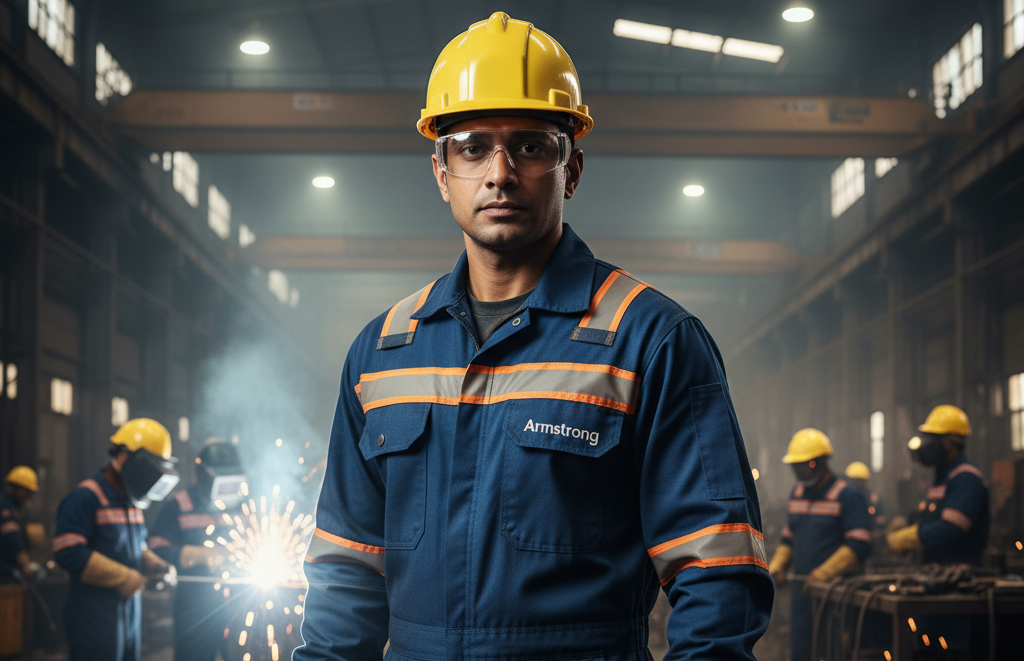
When Clothing Is the Last Line of Defence
Fire is one of the most immediate and unforgiving hazards in industrial environments. In oil and gas, petrochemical plants, steel mills, power utilities, and construction sites, a flash fire or ignition event can happen without warning.
When it does, the garment a worker is wearing determines what happens next.
Regular workwear ignites and continues to burn. It can melt onto skin. It turns a survivable incident into a life-threatening one. Fire-retardant PPE clothing is engineered to do the opposite; it resists ignition, limits flame spread, and self-extinguishes the moment the heat source is removed.
That difference between a garment that burns and one that does not is the difference between a minor incident and severe, permanent burns.
This guide covers everything industrial workers, safety managers, and procurement teams need to know about fire-retardant PPE clothing: what it is, the standards it must meet, the fabrics used, the garment types available, how to choose the right option for your industry, how to maintain it correctly, and what to watch out for when buying.
What Is Fire Retardant PPE Clothing?
Fire-retardant PPE clothing refers to protective garments designed to resist ignition, slow flame spread, and self-extinguish once the flame source is removed. These garments do not prevent all burns. What they do is dramatically reduce the severity and extent of burns, and that gives the wearer time to escape or be rescued.
Two terms are often used together but mean different things:
Flame retardant (FR): Refers to clothing that has been chemically treated to resist ignition. The base fabric, typically cotton or a cotton blend, is not inherently resistant but gains its protective properties from a chemical finish applied during manufacturing.
Flame-resistant: Refers to clothing made from fibres that are inherently non-flammable. The protection is built into the molecular structure of the fibre itself, not added as a coating.
In industrial practice, both types fall under the broad category of fire-retardant PPE clothing. Both resist ignition. Both self-extinguish. The difference lies in where the protection comes from, and this affects durability, wash-life, and long-term performance.
Fire-retardant PPE clothing is used across many industries:
- Oil and gas — flash fire risk from hydrocarbons
- Petrochemical plants — chemical ignition and thermal exposure
- Power utilities and electrical contractors — arc flash and thermal hazards
- Steel and metal manufacturing — molten metal splash and radiant heat
- Welding and fabrication — spark, spatter, and open flame exposure
- Construction — flame exposure during cutting, grinding, and hot works
- Mining — methane and dust ignition environments
Fire Retardant vs Fire Resistant: Why the Distinction Matters
This distinction has practical implications for how long a garment protects, how it should be maintained, and what it costs over its service life.
Chemically Treated Fire Retardant Clothing
Chemically treated fire-retardant PPE clothing starts as a natural fibre, most often cotton or a cotton blend. A phosphorus-based or nitrogen-based chemical treatment is applied to the fabric during finishing. This treatment slows ignition and promotes self-extinguishing.
The limitation is durability. If the garment is washed with bleach, fabric softeners, or starch, the chemical treatment degrades. Over time and with incorrect laundering, a chemically treated fire-retardant garment can lose a significant portion of its protective performance.
Cost: Generally lower upfront cost than inherently resistant alternatives.
Durability: Protective properties depend on correct care throughout the garment’s life.
Inherently Flame-Resistant Clothing
Inherently flame-resistant clothing is made from fibres where the fire resistance is part of the molecular structure, such as Nomex, Kevlar, Modacrylic, and other aramid-based materials. These fibres cannot be burned away, washed away, or worn away. The protection stays constant from the first use to the last.
When exposed to extreme heat, inherently resistant fibres do not melt or drip. They form a char layer that acts as an additional insulating barrier between the flame and the wearer’s skin.
Cost: Higher upfront cost, but protective properties do not degrade with washing.
Best for: High-risk environments where consistent, long-term protection is non-negotiable.
Standards That Govern Fire Retardant PPE Clothing
Fire-retardant PPE clothing must meet specific testing standards before it can be sold or used as certified protective wear. These standards specify performance requirements, testing methods, labelling, and care instructions.
EN ISO 11612 — Protective Clothing Against Heat and Flame
EN ISO 11612 is the primary international standard for fire-retardant PPE clothing used in industrial environments. It covers protective clothing made from flexible materials designed to protect against heat and flame.
The standard tests garments across six performance areas, each assigned a letter code:
- A — Limited flame spread
- B — Convective heat
- C — Radiant heat
- D — Molten aluminium splash
- E — Molten iron splash
- F — Contact heat
Garments are rated against each applicable hazard with a number indicating the performance level. A coverall marked A1 B1 C2, for example, meets limited flame spread requirements, a Level 1 convective heat rating, and a Level 2 radiant heat rating. Buyers should match the letter and number codes to the specific hazards on their site.
EN ISO 14116 — Limited Flame Spread
EN ISO 14116 applies to clothing with limited flame spread performance garments suitable for environments with occasional and brief contact with small flames rather than sustained or severe thermal exposure. The standard uses a three-tier index system: Index 1, Index 2, and Index 3.
Index 3 provides the highest protection. The standard evaluates afterflame time, afterglow time, and the formation of holes in the fabric. Physical requirements, such as tensile strength, tear strength, and seam strength, are also specified to ensure the garment holds together under real working conditions.
NFPA 2112 — Flash Fire Protection
NFPA 2112 is the U.S. standard governing flame-resistant clothing for protection against short-duration thermal exposures from flash fires. It is the standard most directly relevant to oil and gas workers, petrochemical personnel, and others in environments where flash fire is a primary hazard.
To comply with NFPA 2112, garments must pass the ASTM D6413 vertical flame test, the ASTM F1930 instrumented manikin test, and the ASTM F2700 heat transfer performance test. Fabrics must achieve a predicted body burn of 50% or less in the manikin test.
NFPA 2113 — Selection, Care, Use and Maintenance of FR Garments
NFPA 2113 is the companion standard to NFPA 2112. Where 2112 covers garment performance, 2113 governs how employers select, issue, use, and maintain fire-retardant PPE clothing across its service life. It provides guidance on hazard assessment, garment selection, training requirements, and care programmes.
EN ISO 11611 — Welding and Allied Processes
EN ISO 11611 is specifically relevant for fire-retardant PPE clothing worn during welding, cutting, and allied processes. It specifies minimum safety requirements for protection against molten metal spatter, harmful radiation, and short-duration contact with flame. Garments are classified into Class 1 (lower risk welding) and Class 2 (higher risk welding with greater spatter and radiant heat).
EN 340 — General Requirements
EN 340 sets the baseline general requirements for all protective clothing sizing, ergonomics, innocuousness, and labelling. Fire-retardant PPE clothing sold within European and many international markets must meet EN 340 in addition to the specific performance standard relevant to its hazard classification.
Types of Fire Retardant PPE Clothing
Fire-retardant PPE clothing covers a range of garment types. Each serves a specific purpose based on the thermal hazard, the work environment, and the level of coverage required.
1. FR Coveralls and Boiler Suits
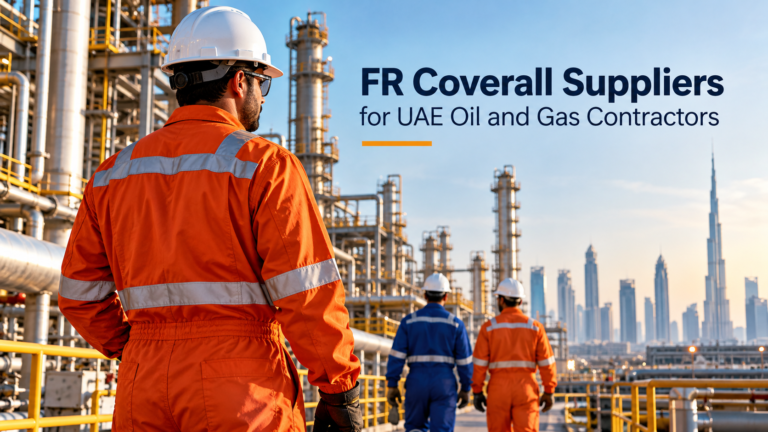
FR coveralls are the most widely used form of fire-retardant PPE clothing in industrial settings. A single garment covers the entire body from neck to ankle, eliminating gaps at the waist that occur with separate shirts and trousers. Coveralls are available in single-layer and multi-layer constructions for varying levels of thermal protection.
Boiler suits are a closely related garment type — essentially a coverall with a workwear-oriented design including reinforced knees, multiple tool pockets, and adjustable cuffs. Both are used in oil and gas, petrochemical, power, and construction environments.
Best for: Oil rigs, refineries, power plants, and construction hot works.
Standards: EN ISO 11612, NFPA 2112.
Armstrong Products supplies FR work wear coveralls and boiler suits built for site conditions.
2. FR Shirts and Trousers
FR shirts and trousers are worn as a two-piece system. They offer more flexibility than coveralls — workers can replace individual pieces as they wear out. FR shirts must be worn tucked in at all times to prevent gaps in protection at the waist.
The fire retardant PPE clothing rating for a shirt-and-trouser system is determined by the lower-rated garment. Both pieces must meet the thermal protection requirement for the task.
Best for: Sites where workers move between tasks or need to adapt to changing conditions during a shift.
3. FR Jackets and Outerwear
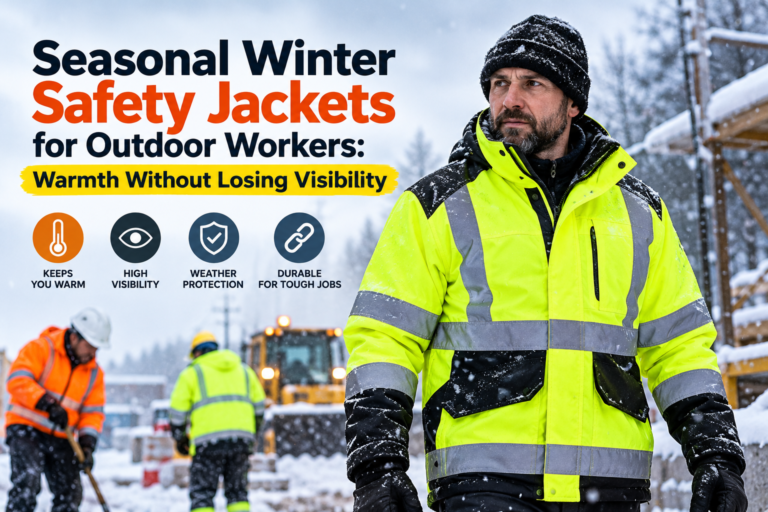
FR jackets are used over base layers or FR shirts in cold environments, or as outer garments for tasks requiring additional thermal insulation. They must be fire-retardant PPE clothing in their own right; a standard jacket worn over an FR shirt removes the flame protection at every point where the jacket material is the outermost layer.
Best for: Cold-weather sites, outdoor plants, workers in environments where both thermal and weather protection are required.
Armstrong Products offers winter wear options for industrial and construction environments.
4. FR Base Layers
FR base layers are worn directly against the skin beneath FR coveralls or outer garments. They serve two purposes. First, they add to the system’s total thermal protection. Second, they prevent any meltable fabric from being in contact with skin if the outer garment is breached.
This is critical: never wear a non-FR base layer beneath fire-retardant PPE clothing. Synthetic base layers — polyester, nylon, spandex — melt at arc flash and flash fire temperatures, fusing to the skin and causing burns far more severe than the initial incident.
Rule: Every layer worn in a thermal hazard environment must be fire-retardant or 100% untreated natural cotton.
5. FR Hi-Visibility Clothing
Workers in outdoor industrial environments, such as power line crews, road construction teams, and utility workers near traffic, need both thermal protection and high visibility. FR hi-visibility garments combine fluorescent background fabric and retroreflective tape with inherently resistant or treated FR materials, meeting both EN ISO 20471 (high visibility) and EN ISO 11612 or NFPA 2112 (thermal protection) simultaneously.
Best for: Outdoor energy infrastructure, road utilities, industrial sites with traffic exposure and thermal hazards.
Armstrong Products carries hi-visibility workwear for outdoor industrial environments.
6. FR Rain Wear
Thermal hazards exist in all weather conditions. Standard waterproof jackets are made from polyester or nylon — meltable materials that cannot be worn over fire-retardant PPE clothing. FR rainwear uses inherently resistant or treated FR outer shells with waterproof membranes and sealed seams to provide protection from both rain and flame without compromising the garment system’s thermal rating.
Best for: Outdoor oil and gas sites, power utilities, construction hot works in monsoon or wet conditions.
Fabrics Used in Fire Retardant PPE Clothing
The fabric determines the garment’s protection level, weight, comfort, wash-life, and suitability for specific hazards. Understanding the fabric choices helps safety managers and procurement teams make better decisions.
Nomex
Nomex is a meta-aramid fibre developed by DuPont. It is inherently flame resistant; the fire protection is part of the fibre’s chemical structure and cannot be burned, washed, or worn away. Nomex resists temperatures up to 370°C without melting. Under extreme heat, it forms a char layer that provides additional insulation.
Nomex is lightweight relative to its protection level, making it well-suited for garments worn over long shifts. It is the fabric of choice for coveralls and suits in high-risk flash fire environments.
Kevlar (Para-Aramid)
Kevlar is a para-aramid fibre with exceptional tensile strength, approximately five times stronger than steel by weight. It is inherently flame-resistant and also provides cut and abrasion resistance. In fire-retardant PPE clothing, Kevlar is most often blended with other fibres rather than used alone, adding structural strength to garments in environments with mechanical hazards alongside thermal risks, such as mining, automotive manufacturing, and heavy fabrication.
Modacrylic Blends
Modacrylic is an inherently flame-resistant synthetic fibre. Blended with cotton, Tencel, or wool, modacrylic produces soft, comfortable fabrics with good thermal protection at relatively low fabric weight. Modacrylic blends are popular for daily-wear fire-retardant PPE clothing base layers, shirts, and lightweight coveralls where comfort across long shifts is a key consideration.
FR Cotton
FR cotton is standard cotton treated with a flame-retardant chemical finish, typically a phosphorus-based compound. It is the most widely used fabric for fire-retardant PPE clothing at entry to mid-range protection levels. It is comfortable, breathable, and significantly more affordable than inherently resistant alternatives.
Key limitation: The flame-retardant treatment in FR cotton degrades with incorrect washing. Bleach, fabric softeners, and starch must never be used. Over time, incorrectly maintained FR cotton may lose its protective properties.
Nomex-Cotton and Aramid Blends
Blending inherently resistant fibres with natural fibres produces garments that balance protection, comfort, and cost. Common blends include Nomex/cotton, Nomex/modacrylic, and aramid/cotton. Blended fabrics offer better breathability and softness than pure Nomex while retaining most of the thermal performance.
What Must Never Be Worn
Polyester, nylon, acetate, and spandex melt under flash fire conditions. These fabrics fuse to the skin, creating burns far more severe than the thermal event itself. They must not be worn as any outer layer garment or base layer in any environment where fire-retardant PPE clothing is required.
How to Choose the Right Fire Retardant PPE Clothing
Step 1: Identify the Thermal Hazard
Different industrial environments present different types of thermal risk. Flash fire in oil and gas is a short-duration, high-intensity event. Radiant heat in steel mills is sustained and intense. Arc flash in electrical work is extremely sudden and localised. Welding spatter is intermittent but cumulative. Each hazard requires a different standard and performance level.
Before selecting fire-retardant PPE clothing, identify the specific hazard type present on your site. This determines which standard applies and what performance level is required.
Step 2: Match the Standard to the Hazard
Use the hazard profile to identify the correct standard:
- Flash fire — NFPA 2112
- General heat and flame — EN ISO 11612
- Limited flame contact — EN ISO 14116
- Welding and allied processes — EN ISO 11611
- Arc flash clothing — ASTM F1506 or IEC 61482
On sites with multiple overlapping hazards, for example, a petrochemical plant with both flash fire and arc flash risk, garments may need to meet more than one standard simultaneously.
Step 3: Select Fabric Based on Risk Level and Shift Duration
For high-risk environments with sustained thermal exposure, inherently resistant fabrics (Nomex, aramid blends) offer the most reliable long-term protection. For lower-risk environments or tasks with intermittent flame contact, FR cotton or modacrylic blends may provide the appropriate protection at a lower cost.
Consider how long workers wear the garment each day. A lighter, more breathable fabric increases the likelihood that workers will wear fire-retardant PPE clothing correctly and consistently when it is comfortable.
Step 4: Verify Certification on the Garment Label
Every piece of fire-retardant PPE clothing must carry a label showing the applicable standard, the performance level achieved, care instructions, and the certifying body. A garment without a proper certification label should not be used as certified protective wear, regardless of what the supplier states.
Step 5: Ensure Correct Fit
Fire-retardant PPE clothing must cover all exposed skin in the thermal hazard zone. Coveralls must be fully fastened. Trouser legs must overlap footwear. Shirt sleeves must reach the wrist. Gaps in coverage mean gaps in protection. Under updated OSHA standards effective January 2025, employers are legally required to ensure all PPE fits each individual worker correctly.
Step 6: Train Workers on Correct Use and Care
The best fire-retardant PPE clothing fails if it is not worn correctly or maintained properly. Workers must understand how to wear the garment with no gaps, how to inspect it before each shift, which care products to avoid, and when to request a replacement. Training at the point of issue and regular refreshers are both required.
Caring for Fire Retardant PPE Clothing
Proper care is not optional. For chemically treated garments, incorrect laundering directly degrades the flame-retardant properties. For inherently resistant garments, improper care affects garment integrity and longevity even if the fibre protection remains.
Washing
Wash fire retardant PPE clothing in warm water using a mild, pH-neutral detergent. Do not exceed 60°C for most woven FR fabrics. Turn garments inside out before washing. Launder separately from standard workwear and personal clothing.
Never use: Chlorine bleach, fabric softeners, starch, or optical brighteners. These substances destroy the flame-retardant chemical treatment in FR cotton and can compromise the surface integrity of inherently resistant fabrics.
Drying
Tumble dry at low heat or air dry away from direct sunlight. Extended UV exposure degrades certain FR fibres over time. Do not dry at high heat — this can damage seams and fabric structure.
Pre-Use Inspection
Before each shift, inspect fire retardant PPE clothing for tears, holes, frayed seams, thinning at stress points (knees, elbows, seat), faded labels, and contamination from flammable substances such as oil, grease, or fuel. A garment contaminated with a flammable liquid creates a serious hazard and must be removed from service, laundered, or discarded before reuse.
Replacement
Quality fire-retardant PPE clothing typically lasts 12 to 18 months under regular industrial use. Inherently resistant garments last longer than chemically treated alternatives, particularly where correct care is maintained. Replace any garment with physical damage, missing or illegible certification labels, or visible wear at seams and stress points.
Industries That Require Fire Retardant PPE Clothing
Oil and Gas
Flash fire is the primary thermal hazard in oil and gas. Workers on rigs, in refineries, and at gas processing facilities face exposure to ignitable hydrocarbon vapours. NFPA 2112-compliant fire-retardant PPE clothing is a mandatory baseline for all site personnel in these environments. Coveralls made from Nomex or FR cotton blends are standard.
Petrochemical and Chemical Manufacturing
Chemical plants present both flash fire and sustained thermal hazards. Workers handle flammable and reactive materials across multiple stages of production. Fire retardant PPE clothing must meet EN ISO 11612 requirements — and in facilities with electrical hazards, must also meet arc flash standards.
Power Generation and Electrical Utilities
Power plant workers and electrical utility staff face arc flash and thermal hazards simultaneously. Their fire-retardant PPE clothing must meet both EN ISO 11612 (or NFPA 2112) and IEC 61482 or ASTM F1506 for arc flash performance. Single garments that meet both standards simultaneously are available and are increasingly the standard in this sector.
Steel and Metal Manufacturing
Radiant heat from furnaces and molten metal splashes are the dominant hazards in steel manufacturing. EN ISO 11612 D and E codes covering molten aluminium and molten iron splash are relevant here. Heavy-duty FR coveralls with reinforced panels at splash-risk zones are commonly specified.
Welding and Fabrication
Welders are exposed to sparks, molten spatter, and radiant heat from the arc. EN ISO 11611 Class 1 or Class 2 fire-retardant PPE clothing is required, depending on the welding process and risk level. Cotton and Nomex-blend coveralls, boiler suits, and FR jackets are the standard garment types.
Construction
Construction workers performing hot works, cutting, grinding, gas welding, and burning require fire-retardant PPE clothing for the duration of those tasks. FR coveralls and boiler suits are the most practical solution for construction hot-works personnel.
Conclusion
Fire retardant PPE clothing is not a product category where close enough is acceptable. The difference between a garment that meets the standard and one that does not is the difference between a worker who escapes a flash fire with minor burns and one who does not escape at all.
Choosing the right fire-retardant PPE clothing means starting with the hazard, not the price tag. Identify the specific thermal risk on your site. Match it to the correct standard. Choose the fabric that delivers reliable protection across the garment’s full service life. Verify certification on every label. Ensure every layer in the system is fire-retardant. Train workers to wear and maintain their garments correctly.
For chemically treated garments, maintenance is part of the protection. For inherently resistant garments, the protection is permanent, but proper care still determines how long the garment holds up physically.
Sites that take fire-retardant PPE clothing seriously, from hazard assessment through to garment replacement schedules, have workers who go home safely. Sites that treat it as a procurement checkbox create exposure they cannot afford.
Need fire-retardant PPE clothing for a bulk order or custom-branded workwear programme? Contact Armstrong Products to discuss specifications, volumes, and delivery timelines.
FAQs
1. What is the difference between fire-retardant and fire-resistant clothing?
Fire retardant clothing is made from standard natural fibres — typically cotton — that have been chemically treated to resist ignition and self-extinguish. Fire-resistant clothing is made from inherently non-flammable fibres such as Nomex or aramid, where the protective properties are built into the fibre’s molecular structure. Both types self-extinguish when the flame source is removed. The key difference is durability: inherently resistant clothing retains its protection throughout the garment’s life, while chemically treated clothing can lose protective properties if laundered incorrectly.
2. Which industries require fire-retardant PPE clothing?
Fire-retardant PPE clothing is required in any industry where workers face thermal hazards from fire, flash fire, arc flash, molten metal, or radiant heat. Key industries include oil and gas, petrochemical manufacturing, power generation and electrical utilities, steel and metal production, welding and fabrication, and construction hot works.
3. How do I know which standard applies to my site?
The applicable standard depends on the type of thermal hazard present. EN ISO 11612 covers general heat and flame protection. EN ISO 14116 covers limited flame spread for lower-risk environments. NFPA 2112 covers flash fire protection specifically. EN ISO 11611 covers welding environments. For arc flash, ASTM F1506 or IEC 61482 apply. Sites with multiple hazard types may need garments that comply with more than one standard.
4. Can I wash fire-retardant PPE clothing at home?
Yes, with the correct products and method. Use warm water and a mild, pH-neutral detergent. Never use chlorine bleach, fabric softeners, starch, or optical brighteners; these degrade the flame retardant treatment in chemically treated garments. Turn garments inside out, wash separately from regular clothing, and tumble dry at low heat or air dry. Always follow the care label on the specific garment.
5. How long does fire-retardant PPE clothing last?
Quality fire-retardant PPE clothing typically lasts 12 to 18 months under regular industrial use. Inherently resistant garments such as Nomex last longer than chemically treated FR cotton alternatives, particularly where washing frequency is high. Replace any garment showing physical damage, wear at seams, contamination with flammable substances, or illegible certification labels.
6. Can I wear a regular jacket over fire-retardant PPE clothing?
No. Any garment worn as the outermost layer in a thermal hazard environment must also be fire-retardant PPE clothing. A standard polyester or nylon jacket worn over an FR coverall means the outer layer, the first point of contact in a fire event, is a meltable material. All layers in the garment system, from base layer to outer garment, must be fire-retardant or made from 100% untreated natural cotton.
7. What does an EN ISO 11612 garment label mean?
EN ISO 11612 labels include letter and number codes identifying which thermal hazards the garment has been tested against and at what performance level. For example, A1 indicates limited flame spread performance at the lowest level. B2 indicates convective heat protection at Level 2. C3 indicates radiant heat protection at the highest level. Match the codes on the label to the specific hazards your workers face on site.
8. Does Armstrong Products supply fire-retardant workwear for bulk orders?
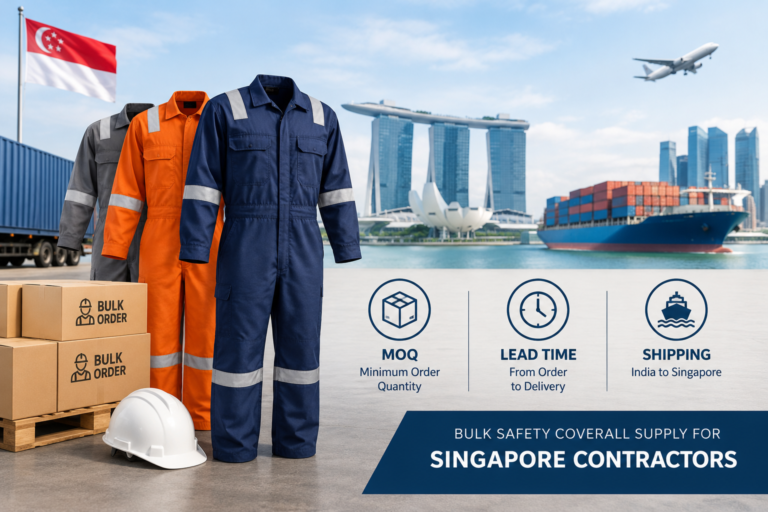
Armstrong Products supplies industrial workwear, coveralls, boiler suits, hi-visibility garments, rainwear, and winter wear for bulk industrial and construction orders across India. Custom branding and OEM manufacturing options are also available. Visit armstrongproducts.co.in/clothing/work-wear/ for the full range.