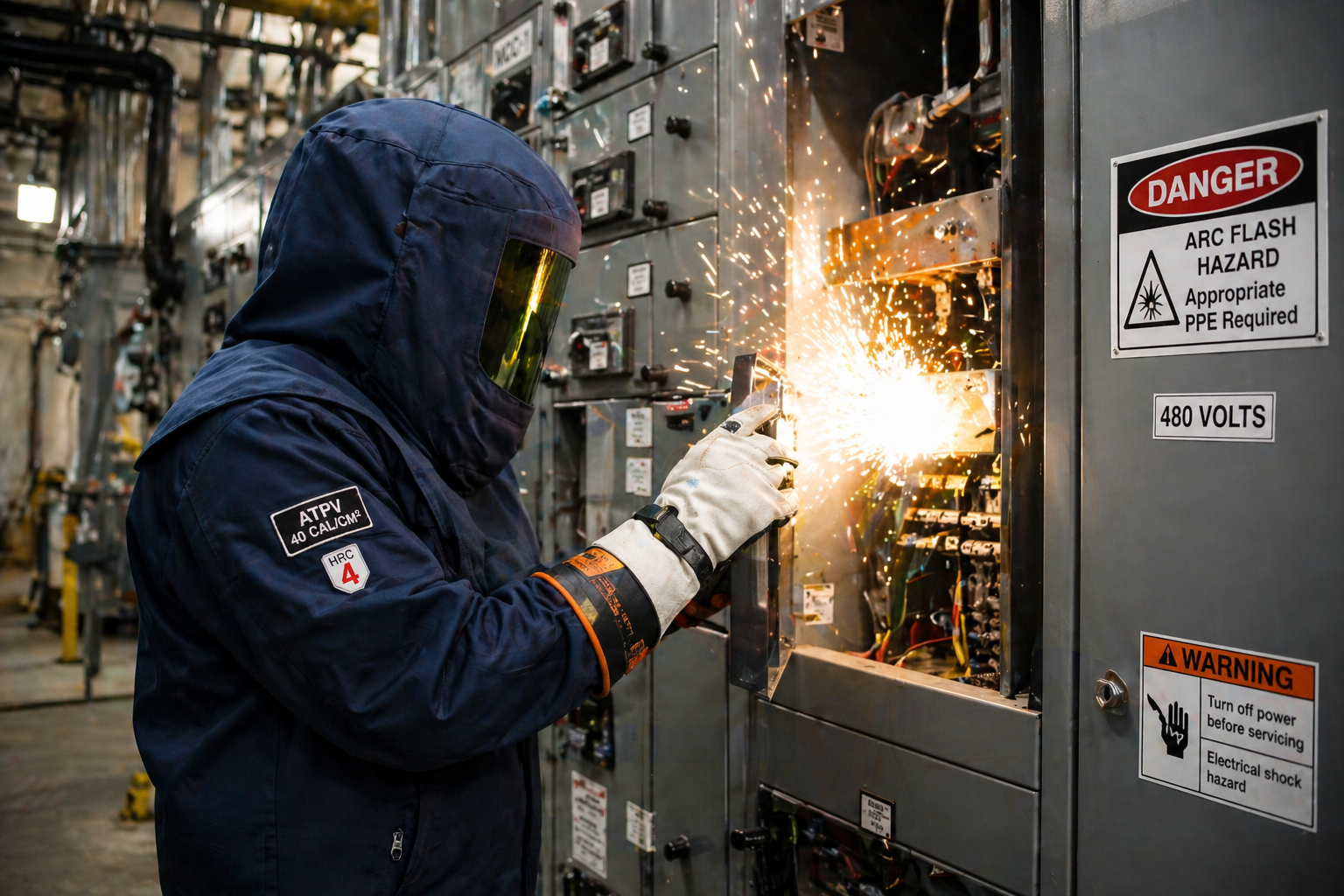
An arc flash releases enormous thermal energy in a fraction of a second. Temperatures at the arc point can exceed 35,000°F, enough to cause severe second- and third-degree burns on unprotected skin within milliseconds.
Every 30 minutes, an electrical worker suffers a serious arc flash injury. A large portion of those injuries involve burns, and burns are precisely what the right electrical PPE clothing is designed to prevent.
The garments workers wear for an electrical task are often the deciding factor between a close call and a life-altering injury. This is not about compliance paperwork. It is about whether protective fabric stands between a worker’s skin and thousands of degrees of radiant heat.
This guide covers everything about electrical PPE clothing, what it is, the standards behind it, the fabrics used, how to choose the right garment for your hazard level, how to layer correctly, and how to maintain arc-rated workwear through its full service life.
What Is Electrical PPE Clothing?
Electrical PPE clothing refers specifically to garments tested and rated to protect the wearer from the thermal effects of arc flash events. This is a distinct and more demanding category than general flame-retardant workwear.
The critical distinction is this: all arc-rated (AR) clothing is flame-resistant (FR), but not all FR clothing is arc-rated. A flame-resistant garment resists ignition and self-extinguishes. An arc-rated garment goes further it has been laboratory-tested against a specific amount of arc flash energy and carries a documented performance rating in calories per square centimetre (cal/cm2).
Using standard FR workwear on a task that requires arc-rated clothing is not just a compliance gap. It is a genuine exposure risk.
Electrical PPE clothing includes:
- Arc-rated coveralls and boiler suits
- Arc-rated shirts and trousers
- Arc flash suit jackets and matching trousers
- Arc-rated hoods and balaclavas (head and face coverage, not a separate equipment item — these are garments)
- Arc-rated base layers worn beneath outer coveralls
- Hi-visibility arc-rated jackets for outdoor electrical work
Standards That Govern Electrical PPE Clothing
NFPA 70E — Standard for Electrical Safety in the Workplace
NFPA 70E is the primary standard governing electrical safety and the selection of electrical PPE clothing in industrial and commercial environments. The 2024 edition requires employers to conduct arc flash risk assessments and select arc-rated garments that match the calculated incident energy at each specific work point.
In November 2024, OSHA released updated arc flash safety guidance for the first time in nearly 20 years. The update specifically addressed the widespread underuse of appropriate arc-rated clothing, identifying it as a leading factor in preventable arc flash injuries.
ASTM F1506 — Performance Specification for Arc-Rated Clothing
ASTM F1506 is the U.S. performance standard for arc-rated clothing and materials. It sets requirements for flame resistance, arc rating, tensile strength, seam integrity, and durability. All electrical PPE clothing claiming arc-rated status must first pass the vertical flame test under ASTM D6413, then undergo arc rating testing.
IEC 61482 — International Arc Flash Clothing Standard
IEC 61482 is the internationally recognised standard for arc flash protective clothing, referenced across Europe, Asia, and international project specifications. Garments certified to IEC 61482-2 carry Class 1 (4 kA arc current) or Class 2 (7 kA arc current) ratings. This standard is particularly relevant for projects operating under European or international procurement requirements.
EN ISO 11612 — Clothing Against Heat and Flame
EN ISO 11612 applies to protective clothing intended to guard against heat and flame, including the thermal hazards associated with electrical arc flash. It is commonly referenced alongside IEC 61482 for electrical PPE clothing used in power generation, utilities, and industrial construction environments.
EN 340 — General Requirements for Protective Clothing
EN 340 sets baseline requirements for all protective garments sizing, material innocuousness, and labelling. Any electrical PPE clothing sold in compliance with European standards must also meet EN 340 as a foundation requirement.
Understanding Arc Ratings on Electrical PPE Clothing
Every arc-rated garment carries a label showing its arc rating in cal/cm2. This number is determined by laboratory testing and represents the garment’s tested protective performance. Two values define this rating:
Arc Thermal Performance Value (ATPV)
ATPV is the incident energy level at which a garment provides a 50% probability of preventing the onset of a second-degree burn. A coverall rated at 8 cal/cm2 ATPV can withstand up to 8 cal/cm2 of arc flash incident energy before the risk of a second-degree burn reaches 50%.
Energy Breakthrough Threshold (EBT)
EBT is the incident energy level at which a garment has a 50% probability of physically breaking open, forming a hole or an opening that exposes the skin beneath. A garment’s arc rating is whichever value comes first: ATPV or EBT.
The 1.2 cal/cm2 Reference Point
The minimum incident energy that causes a second-degree burn on unprotected skin is 1.2 cal/cm2. NFPA 70E uses this as the threshold at which arc-rated electrical PPE clothing becomes mandatory. Any task with calculated incident energy at or above this level requires properly rated arc clothing, not just FR workwear.
Types of Electrical PPE Clothing and Their Applications
1. Arc-Rated Coveralls and Boiler Suits
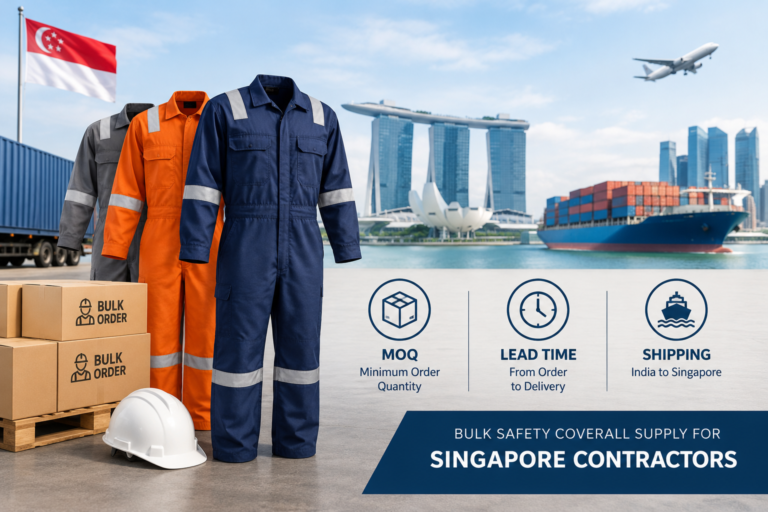
Arc-rated coveralls are the most practical form of daily electrical PPE clothing for industrial workers. A single garment covers the torso, arms, and legs. They are available in single-layer and multi-layer configurations to achieve ratings from 4 cal/cm2 up to 40 cal/cm2 or higher for heavy-duty applications.
Best for: Plant maintenance, switchgear inspections, motor control centre work, general industrial electrical tasks.
Standard reference: ASTM F1506, IEC 61482.
2. Arc-Rated Shirts and Trousers
Arc-rated shirts and trousers are worn as a two-piece system. They offer more flexibility for workers who move between tasks with different hazard levels. The shirt and trousers must both be arc-rated, and the shirt must remain tucked at all times so there are no gaps in body coverage.
Best for: Workers who need flexibility across varying tasks on the same site.
Note: The arc rating of a two-piece shirt-and-trouser system is determined by the lower-rated garment. Both must meet the required arc rating for the task.
3. Arc Flash Suit Jackets and Trousers
Arc flash suits are multi-layer, heavier-duty electrical PPE clothing designed for higher incident energy tasks. They consist of an arc-rated jacket and arc-rated trousers worn together, often over an arc-rated base layer. Arc flash suits are used where calculated incident energy levels require 25 cal/cm2 or greater protection.
Best for: High-voltage switchgear work, exposed bus bar tasks, and large fault current environments.
Construction: Typically Nomex or Nomex-blend multi-layer fabric systems.
4. Arc-Rated Base Layers
Arc-rated base layers, thermal undershirts, and underlayer trousers are worn directly against the skin beneath outer arc-rated coveralls or suits. They serve two purposes: they add to the combined system arc rating when properly tested combinations are used, and they prevent any meltable fabric from being in contact with the skin in the event of outer garment failure.
Important: Base layers must be arc-rated or made from 100% untreated natural cotton. Meltable synthetic base layers, such as polyester, nylon, and spandex, are prohibited under arc flash clothing at all times.
5. Hi-Visibility Arc-Rated Jackets
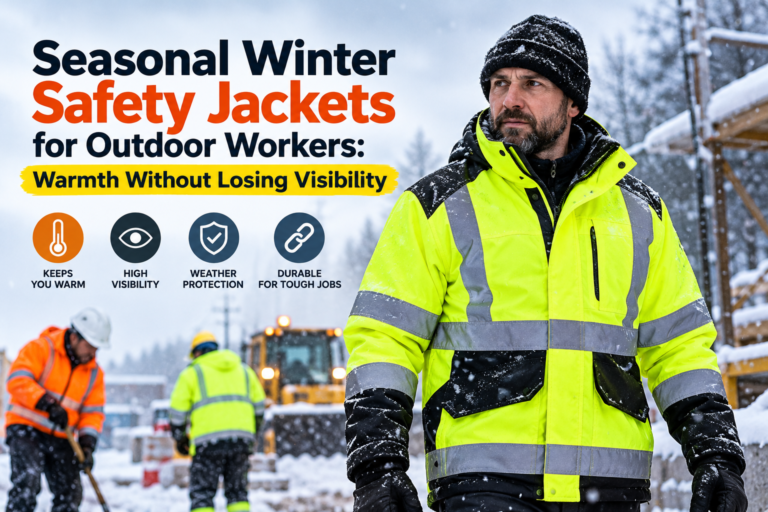
Outdoor electrical workers, power line maintenance crews, substation teams, and roadside utility workers often need both arc flash protection and high visibility. Hi-vis arc-rated jackets combine fluorescent background fabric and retroreflective tape with arc-rated materials, meeting both EN ISO 20471 (high-visibility) and IEC 61482 or ASTM F1506 (arc rating) simultaneously.
Best for: Outdoor switchyard work, overhead line work, any electrical task near moving vehicles or plant equipment.
6. Arc-Rated Rain Wear
Outdoor electrical work does not stop in poor weather. Arc-rated rain jackets and overtrousers provide waterproofing without compromising the arc-rated protection of the system beneath. Standard waterproof jackets are made from polyester or nylon, both meltable fabrics that cannot be worn over arc-rated clothing. Arc-rated rainwear uses FR or inherently resistant outer shells with sealed or taped seams.
Best for: Outdoor substation work, overhead line maintenance, and any electrical task in monsoon or wet conditions.
Fabrics Used in Electrical PPE Clothing
The fabric determines the arc rating potential, weight, comfort, durability, and wash-life of electrical PPE clothing. Understanding the fabric helps you make better procurement decisions.
Nomex — Inherently Flame-Resistant Aramid
Nomex fibres are inherently non-flammable. The flame resistance is built into the chemical structure of the fibre not applied as a surface treatment. Nomex will not burn, melt, or drip under arc flash conditions. The arc rating does not degrade with washing.
Nomex is lightweight relative to its protection level, which makes it easier to wear for full shifts. It is the fabric of choice for arc flash suits, arc-rated hoods, and high-performance coveralls in Category 3 and Category 4 environments.
Aramid Blends
Aramid fibres, including Kevlar variants, offer high tensile strength alongside inherent flame resistance. Blended with cotton or modacrylic fibres, aramid blends provide a balance of protection, comfort, and cost. They are common in everyday arc-rated shirts and trousers used at lower incident energy levels.
Modacrylic Blends
Modacrylic is an inherently flame-resistant synthetic fibre. Blended with cotton, Tencel, or other natural fibres, modacrylic produces soft, comfortable fabrics that are well-suited to daily-wear electrical PPE clothing base layers, arc-rated shirts, and lightweight coveralls. Modacrylic blends achieve competitive arc ratings at relatively low fabric weights, making them popular for workwear that must be worn for extended periods.
Flame-Retardant Treated Cotton (FR Cotton)
FR cotton is a standard cotton fabric treated with phosphorus-based or nitrogen-based chemical flame retardants. The treatment slows ignition and promotes self-extinguishing. FR cotton can achieve arc ratings qualifying for ASTM F1506 certification and is widely used in lower-level arc-rated shirts, trousers, and coveralls.
Key limitation: The flame-retardant treatment in chemically treated cotton can degrade with incorrect washing. Bleach, fabric softeners, and starch must never be used on FR cotton electrical PPE clothing.
What Must Never Be Worn
Polyester, nylon, acetate, and spandex fabrics melt under arc flash temperatures and fuse to the skin, creating burns far more severe than the arc event itself. These fabrics must not be worn as any outer layer garment or base layer in arc flash environments. OSHA specifically prohibits meltable underlayers beneath arc-rated workwear.
How to Layer Electrical PPE Clothing Correctly
Workers facing higher incident energy levels often need to layer arc-rated garments to achieve the required system arc rating. Layering works only when every layer in the system is arc-rated or made from non-meltable natural fibre.
A common system pairs an arc-rated base layer shirt (4 cal/cm2) with an arc-rated coverall (20 cal/cm2). The combined system provides a higher total arc rating but only because both garments are arc-rated. The combination must also be a tested pairing from the manufacturer, not an assumed arithmetic total.
The non-negotiable rule: Every layer worn in an arc flash environment must be arc-rated or 100% untreated natural cotton. One non-rated layer in the system compromises the entire protective value.
When assessing combined arc ratings, refer to the manufacturer’s tested combination data. Do not assume ratings are simply additive.
Selecting the Right Electrical PPE Clothing for Your Site
Step 1: Complete an Arc Flash Risk Assessment
An arc flash risk assessment calculates the incident energy at each work point panel, switchgear, motor control centre, or distribution board using methods from IEEE 1584 or NFPA 70E Informative Annex D. This establishes the arc flash boundary and the minimum arc rating required for electrical PPE clothing at each location.
Step 2: Match Garment Arc Rating to Calculated Incident Energy
Select electrical PPE clothing with an arc rating equal to or greater than the calculated incident energy at the work point. Do not select a lower-rated garment because it is lighter or cheaper. The rated value must meet or exceed the hazard level there is no margin for compromise.
Step 3: Check the Garment Label for Standard Compliance
Every arc-rated garment must carry a label showing its arc rating in cal/cm2, the applicable standard (ASTM F1506 or IEC 61482), and care instructions. A garment without a proper arc-rating label should not be used for electrical work, regardless of what the seller claims.
Step 4: Verify Proper Fit
Electrical PPE clothing must cover all skin within the arc flash boundary without gaps. Shirt sleeves must reach the wrist. Trouser legs must overlap footwear. Coveralls must be fully fastened at the collar and cuffs. Any gap in fabric coverage is a gap in protection.
Under updated OSHA standards effective January 2025, employers are legally required to ensure that all PPE, including protective clothing, properly fits each individual worker.
Step 5: Train Workers Before Use
Workers must understand why their arc rating matters, how to dress correctly with no gaps, how to inspect the garment before each shift, and when to take a garment out of service. OSHA requires formal PPE training at the time of issue and retraining every three years or after any change in tasks or equipment.
Caring for Electrical PPE Clothing
Proper maintenance keeps arc-rated workwear performing to its rated value. Incorrect laundering is the most common cause of protective degradation in chemically treated garments.
Washing
Wash arc-rated clothing in warm water, not exceeding 60°C for most woven fabrics, using a mild detergent. Turn garments inside out. Launder separately from regular workwear.
Never use: Chlorine bleach, fabric softeners, or starch. These destroy flame-retardant chemical treatments in FR cotton and can affect surface properties in inherently resistant fabrics.
Drying
Tumble dry at low heat or air dry away from direct sunlight. Prolonged UV exposure degrades certain flame-resistant fibres over time.
Pre-Use Inspection
Before each shift, inspect arc-rated workwear for tears, frayed seams, holes, thinning fabric at knees and elbows, faded labels, and any contamination from flammable substances. Oil, grease, and fuel contamination on an arc-rated garment creates a fire hazard. The garment must be removed from service and laundered or discarded before reuse.
Replacement
Quality electrical PPE clothing typically lasts 12 to 18 months under regular industrial use. Nomex and inherently resistant garments retain their arc rating longer than chemically treated alternatives. Replace any garment with physical damage, illegible arc-rating labels, or visible wear at stress points.
Conclusion
Electrical PPE clothing is a precisely specified category of protective workwear. The right garment is determined by calculated incident energy at the work point, not by general preference or habit.
Selecting the wrong fabric, wearing a lower arc rating than the hazard demands, layering a meltable base layer beneath an arc-rated coverall, or failing to maintain workwear correctly any of these errors can turn what should be a protected task into a serious burn injury.
The answer is straightforward. Conduct a proper arc flash risk assessment. Select arc-rated electrical PPE clothing that meets or exceeds the calculated hazard. Verify compliance on the garment label. Ensure every layer is arc-rated or natural fibre. Train workers to dress correctly and inspect before each use.
Workers who wear correctly selected and well-maintained electrical PPE clothing are protected from one of the most severe thermal hazards in industrial environments. Workers who wear the wrong garment are not, regardless of how well everything else on the site is managed.
To equip your electrical teams with certified arc-rated and protective workwear built for Indian industrial environments, explore Armstrong Products.
FAQs
1. What is the difference between FR clothing and arc-rated clothing?
FR (flame-resistant) clothing resists ignition and self-extinguishes when a flame source is removed. Arc-rated (AR) clothing meets all FR requirements and has additionally been tested against arc flash incident energy, receiving a specific cal/cm2 rating. Every arc-rated garment is FR, but not every FR garment is arc-rated. Electrical work near exposed energised parts requires arc-rated clothing — FR workwear alone does not meet this requirement.
2. What does cal/cm2 mean on a workwear label?
Cal/cm2 stands for calories per square centimetre. It measures the thermal energy from an arc flash event. The arc rating on your clothing tells you the maximum incident energy the garment can absorb before the wearer risks a second-degree burn. The higher the cal/cm2 value, the greater the thermal protection.
3. Can I wear a regular cotton shirt under arc-rated coveralls?
Untreated 100% natural cotton is acceptable as an underlayer because it will not melt. However, it does not contribute to the arc rating of the system. You must never wear polyester, nylon, spandex, or any meltable synthetic fabric beneath arc-rated clothing. OSHA prohibits meltable underlayers in all arc flash environments.
4. How often should electrical PPE clothing be replaced?
Most arc-rated workwear lasts 12 to 18 months under regular industrial use. Inherently resistant fabrics like Nomex retain their protective properties longer than chemically treated FR cotton. Replace garments immediately if they are torn, contaminated with flammable substances, show significant seam wear, or if the arc-rating label is missing or illegible.
5. Does washing reduce the arc rating of electrical PPE clothing?
For inherently resistant fabrics such as Nomex and aramid blends, the arc rating is permanent and does not wash out. For chemically treated FR cotton, repeated laundering with incorrect products — bleach, fabric softeners, or starch — degrades the flame-retardant treatment and reduces protective performance. Always follow the care label on the specific garment.
6. Can two arc-rated garments be layered to increase the protection level?
Yes, layering arc-rated garments can increase the combined system arc rating. However, the total is not simply additive. Manufacturers provide tested combination ratings for their specific fabric systems. Always refer to documented combination data from the garment manufacturer rather than calculating totals independently.
7. What garments does Armstrong Products supply for electrical workwear?
Armstrong Products supplies work wear coveralls, boiler suits, hi-visibility workwear, rain wear, winter wear, and corporate uniforms for industrial and construction environments. The range is available for bulk orders with custom branding and OEM options. Visit armstrongproducts.co.in/clothing/ to explore the full collection.
8. Is arc-rated clothing required for all electrical work?
Arc-rated electrical PPE clothing is required whenever a worker is within the arc flash boundary of exposed energised electrical parts and the calculated incident energy at that point equals or exceeds 1.2 cal/cm2. Below this threshold, workers should still avoid meltable fabrics and wear long-sleeved natural fibre workwear but arc-rated garments are not mandated by NFPA 70E.